



Planting and Growing king begonia

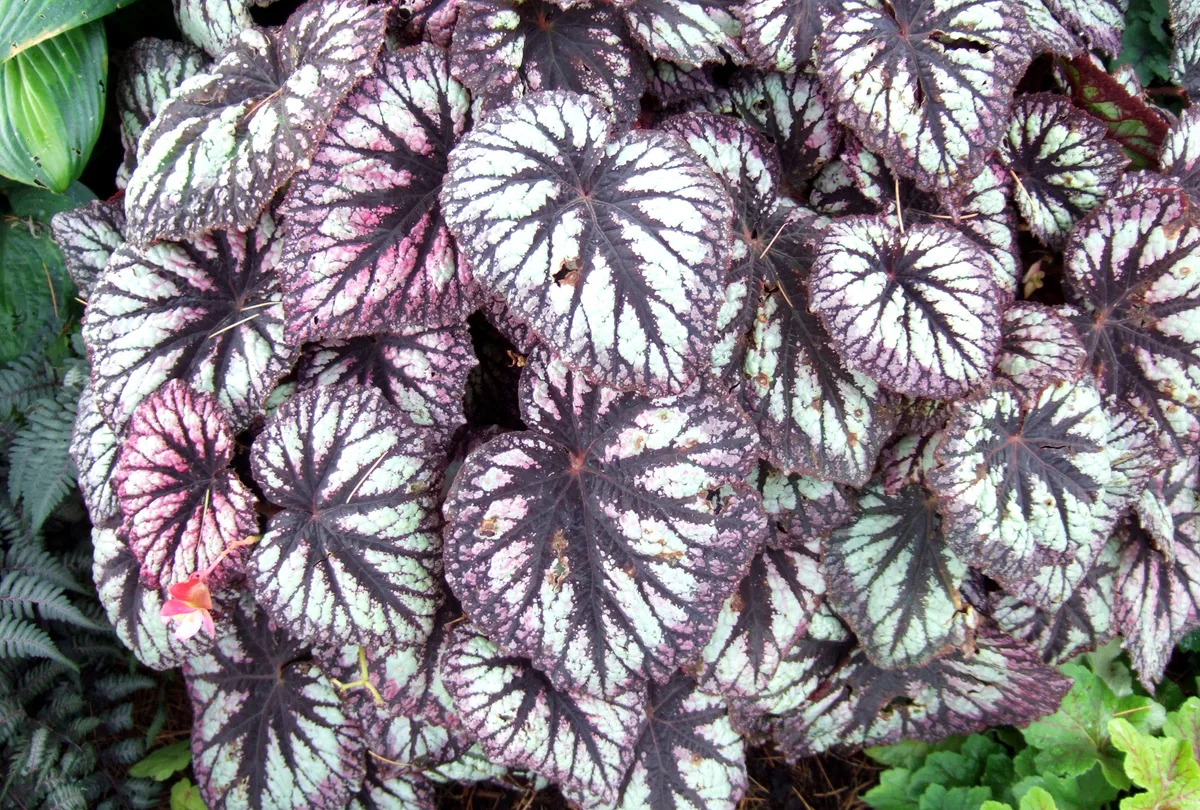
| Care difficulty | 4 / 5 |
|---|---|
| Watering schedule | Moderate regular watering, allowing brief slight drying between soakings |
| Sunlight requirements | Partial shade |
| Ideal temperature | 15 – 25 °C |
| Soil type | Chalk · Loam · Sand |
| Soil pH | Acid · Alkaline · Neutral |
| Soil moisture | Well drained |
| Fertilizing | Balanced perennial feed every four weeks from spring through summer |
| Toxicity | Ornamental bulbs - not to be eaten. Wear gloves and other protective equipment when handling |
How to Water king begonia?
Painted-leaf begonia thrives in a humid environment, mimicking its native tropical rainforest habitat. It has a balanced water requirement, neither too dry nor too wet. The plant prefers watering every week to maintain optimal moisture levels. As an evergreen species, painted-leaf begonia can retain water well throughout the year, making it ideal for indoor growth where humidity control is possible.
Learn more →What Are the Sunlight Requirements for king begonia?
Painted-leaf begonia thrives in bright, indirect light—preferably in partial sun conditions. Prolonged exposure to harsh direct sunlight can cause leaf scorch, whereas full shade might result in leggy growth and reduced vibrancy. With its tolerance to lower light levels, painted-leaf begonia can adapt well to shaded environments but may display less intense foliage coloration. Indoor placement should capitalize on natural light without direct sun, such as near east-facing windows, while outdoor placement benefits from dappled sunlight under larger plants or structures. The plant's light-adaptive traits, including leaf adjustments, help maintain optimal growth and health.
Learn more →What Is the Ideal Temperature Range for king begonia?

Painted-leaf begonia exhibits moderate resilience to temperature fluctuations. It can withstand cold temperatures down to 5℃ (41℉) and heat up to 43℃ (109℉). Despite this range, painted-leaf begonia is sensitive to extremes; prolonged exposure beyond these thresholds may cause leaf drop in cold or leaf scorch in heat. To care for painted-leaf begonia, it is crucial to shield it from frost with covers or bring it indoors during cold snaps, and provide shade or increased humidity during heatwaves. This adaptability allows painted-leaf begonia to thrive in various environments but requires attentive care to mitigate stress symptoms under extreme conditions.
Learn more →What Soil Is Best for king begonia?
Painted-leaf begonia grows well in a well-drained mixture of sandy soil, clay and loam, with a suitable pH range of 5.5-6.2. However, painted-leaf begonia will grow better in soilless environments than in conventional soil. Planters can buy ready-made soilless culture media, or mix 2/3 peat moss or peat with 1/3 other soilless culture media such as vermiculite, bark and perlite to provide a slightly acidic and well-drained media for the plant.
- Soil type
- Chalk · Loam · Sand
- Soil pH
- Acid · Alkaline · Neutral
What Are the Moisture Requirements for king begonia?
Well drained
Learn more →How to Fertilize king begonia?

For painted-leaf begonia, use high nitrogen fertilizers to promote lush foliage. Monthly feeding during growing seasons (spring-summer) with a balanced, water-soluble solution at half strength is optimal. Reduce to every other month in fall-winter. Over-fertilization can damage painted-leaf begonia's roots; always follow recommended quantities. Liquid feedings are preferable for painted-leaf begonia to prevent fertilizer burn and ensure even distribution. Seasonal adjustments in feeding support painted-leaf begonia's growth cycle.
Learn more →How to Prune king begonia?

Painted-leaf begonia, known for its vibrant foliage, thrives with careful pruning. Optimal pruning times are early to later spring, aligning with its growth cycle. Remove dead or damaged leaves and trim leggy stems to encourage bushy growth and enhance air circulation. Avoid excessive cutbacks to prevent stress. Consistent pruning not only maintains the plant's aesthetic appeal but also promotes healthier growth. Referencing horticultural guidelines ensures these techniques are effective and beneficial.
Learn more →How to Propagate king begonia?

Painted-leaf begonia is renowned for its striking foliage, making it a prized ornamental houseplant. Effective propagation involves using healthy leaf cuttings, ideally with a prominent vein. Cut the leaf into wedges, ensuring each section has a portion of vein. Let the cuttings dry slightly, then press them into a mixture of moistened peat and perlite, vein side down. Maintain consistent humidity and warmth to encourage rooting. Once roots and new shoots appear, transplant them gently to individual pots filled with well-draining soil.
Learn more →How to Transplant king begonia?
For the best possible growth, transplant painted-leaf begonia ideally between late spring and early summer when temperatures are consistently warm. Choose a location with well-draining soil and bright, indirect sunlight. Remember to handle their delicate roots gently during transplantation to avoid damage.
Learn more →How to Care for king begonia in Winter?

Painted-leaf begonia hails from the warm, humid climates of India, naturally unaccustomed to frigid winters. It has no inherent cold-hardiness, stressing under freezing conditions. For wintertime care, bring painted-leaf begonia indoors, keep it well-humidified, placed in indirect sunlight, and avoid overwatering. Regular misting and a pebble tray for humidity can serve as effective strategies to maintain its vibrant, textured foliage throughout the cold months.
Learn more →How to Plant king begonia?
Indoors-potted: Ensure painted-leaf begonia has ample humidity indoors to maintain its vibrant foliage without direct heat sources that can dry it out. Outdoors-potted: When potted outside, rotate painted-leaf begonia occasionally to promote even growth and prevent leaf scorch from intense light exposure. Outdoors-in the ground: Painted-leaf begonia thrives outdoors in sheltered areas but beware of frost, which can damage its delicate leaves.
Learn more →How to Repot king begonia?
For painted-leaf begonia, a stunning, foliage-focused plant, repotting every 2-3 years is best. This beauty thrives in a slightly larger planter, promoting lush leaf development. Time repotting for spring, when active growth resumes. Post-repot, painted-leaf begonia needs well-draining soil in a pot with room to grow, but not so big it risks root rot. Regular watering, avoiding leaf wetness, assures a vibrant post-repot bounce-back. Keep it friendly, folks!
Learn more →How to Harvest king begonia?

Painted-leaf begonia doesn't have long straight stems, so it is not usually used as cut flowers. According to personal preference, the top flowers can be collected for flower specimen pressing or other purposes. They can be collected at will as long as it is growing season, but don't take away too many stems and leaves.
Learn more →Common Pests & Diseases

Diseases
May be susceptible to grey moulds, powdery mildews, stem rot and rhizome rot
Pests
May be susceptible to caterpillars, mealybugs, tarsonemid mite, thrips, vine weevil and aphids
Explore the plant health library →The Toxicity of king begonia
Ornamental bulbs - not to be eaten. Wear gloves and other protective equipment when handling