



Planting and Growing California poppy

| Care difficulty | 1 / 5 |
|---|---|
| Watering schedule | Moderate regular watering, allowing brief slight drying between soakings |
| Sunlight requirements | Full sun |
| Ideal temperature | 15 – 25 °C |
| Soil type | Loam · Sand |
| Soil pH | Acid · Alkaline · Neutral |
| Soil moisture | Well drained |
| Fertilizing | Balanced perennial feed every four weeks from spring through summer |
| Toxicity | Information to be completed |
How to Water California poppy?
Thriving in its native arid habitats, california poppy has adapted to conserve water, exhibiting a preference for drier conditions. Its drought tolerance is noteworthy, allowing it to flourish with minimal moisture. Watering should be moderate, aligning with its low thirst, translating to watering every week. California poppy typically fares better outdoors where it can capitalize on natural rainfall patterns and seasonal changes that mimic its native climate's sporadic precipitation.
Learn more →What Are the Sunlight Requirements for California poppy?
California poppy thrives best in full sunlight, requiring bright exposure to foster robust growth and vibrant flowering. Optimal lighting includes at least 6-8 hours of direct sunlight daily, which maximizes photosynthesis and bloom quality. While california poppy tolerates partial sun, decreased light levels can lead to diminished flowering and possibly elongated, weak stem growth. This plant adapts well to intense light, developing a dense, deep taproot that aids its survival in its native, sun-drenched habitats. Ideally, it should be planted in open, unshaded outdoor areas to fully benefit from its light preferences.
Learn more →What Is the Ideal Temperature Range for California poppy?

California poppy originates from the US West and Mexico. When placed in warmer area, california poppy can usually live for many years, while it can only last one year when planted in cooler places. The best temperature for california poppy to grow is between 10 to 24 ℃. If it gets too hot in summer where it grows, california poppy gets into dormancy. When the fall comes and the temperature cools, california poppy then regrows and blooms again. As for the need for water, california poppy is rather drought-tolerant and best to grow in a soil with good drainage.
Learn more →What Soil Is Best for California poppy?
For optimal growth, ensure that the soil for california poppy is well-draining to prevent water-logging. A suitable mix can be prepared using garden soil, sand, and perlite in equal parts. This mix enhances aeration and prevents compaction. If sand is unavailable, coarse grit can be used. To boost growth, apply a balanced, slow-release fertilizer during the growing season. Avoid overwatering by allowing the soil to dry out between waterings.
- Soil type
- Loam · Sand
- Soil pH
- Acid · Alkaline · Neutral
What Are the Moisture Requirements for California poppy?
Well drained
Learn more →How to Fertilize California poppy?

For optimal health and vibrant blooms, california poppy thrives with a fertilizer high in phosphorus applied every 2-4 weeks during the active growing season. A balanced 0-10-10 NPK ratio enhances flowering without encouraging excessive foliage. Use a light hand, as over-fertilization can be detrimental. Tailor applications to the growth cycle, decreasing frequency as the plant enters dormancy in cooler months. Practicality is key—water california poppy before and after applying granular fertilizer to prevent root burn and ensure nutrient absorption. Novice and seasoned gardeners alike should note the ease of california poppy's care, typically requiring minimal fertilization if grown in fertile soil.
Learn more →How to Prune California poppy?

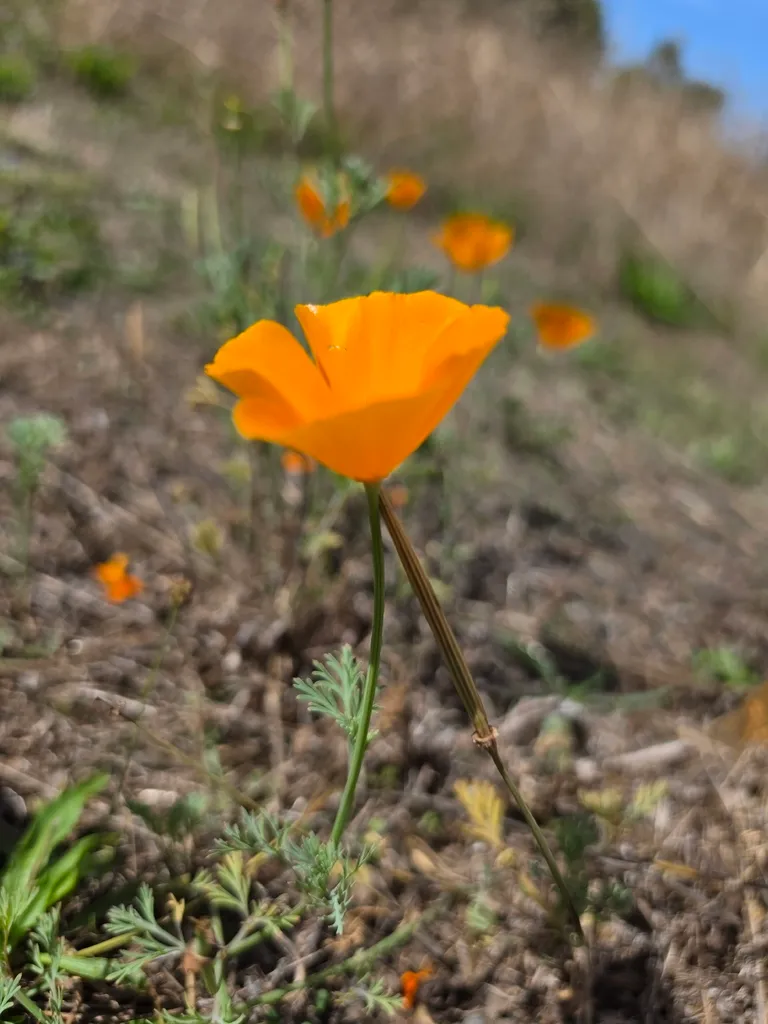
California poppy, known for its vibrant orange blooms, benefits most from pruning in early to late spring. Focus on removing spent flowers to encourage prolonged blooming and prevent self-seeding. Cut back any leggy or overgrown stems to maintain shape and vigor. Pruning helps improve air circulation, reducing the risk of disease. Regular deadheading enhances aesthetic appeal and promotes healthier growth, ensuring a robust and floriferous display throughout the season.
Learn more →How to Propagate California poppy?

Renowned for its vibrant cup-shaped flowers, california poppy is a resilient perennial best suited for sunny spots with well-draining soil. Propagation is most successful via sowing, where seeds meticulously dispersed on soil surfaces germinate readily without depth burial. For optimal results, sow in clusters to create naturalistic swathes, keeping soil just moist until germination occurs, then gradually reduce water to simulate california poppy's native arid conditions. These self-seeding plants, once established, propagate organically, accentuating gardens with their golden hues.
Learn more →How to Transplant California poppy?
The perfect time to transplant california poppy is during the rejuvenating season of early spring, as it favors their growth. Choose a location with well-draining soil and full sun exposure. If necessary, offer some transplant support to keep these delicate plants secure.
Learn more →How to Plant California poppy?
Indoors-potted: Thriving indoors, california poppy needs a sunny spot to encourage its vibrant blooms. Rotate the pot for even growth. Outdoors-potted: California poppy in outdoor pots may require extra attention to avoid waterlogging due to heavy rains. Outdoors-in the ground: In garden soil, california poppy prefers a less-is-more approach, often thriving on neglect once established.
Learn more →How to Repot California poppy?
Needs excellent drainage in pots.
Learn more →How to Harvest California poppy?

California poppy is not a best choice for cut flower material for that the petals fade off quickly after harvest. You could potentially try to harvest them before their mature flower buds fully bloom.
Learn more →Common Pests & Diseases

Diseases
Generally disease free
Pests
Generally pest-free
Explore the plant health library →Troubleshooting
Leggy Stems, Sparse Flowering, or Root Rot
California poppy (Eschscholzia californica) performs best in well-drained soil with appropriate sunlight and regular deadheading; soggy soil rots roots, while low light or skipped pinching causes leggy growth.
| What you notice | Possible explanation | What to check next |
|---|---|---|
| Stems stretch tall and floppy with sparse blooms | Insufficient direct sunlight, lack of early-season pinching/deadheading, or excess high-nitrogen fertilizer | Assess daily sun hours and check whether spent flowers are left to set seed |
| Lower leaves turn yellow and plant wilts while soil stays wet and heavy | Root or stem rot from overwatering or poor drainage (Generally disease free) | Check soil drainage and ensure containers have open drainage holes |
- Grow in fertile, well-drained soil in full sun, spacing plants for good airflow.
- Water consistently without waterlogging: Moderate regular watering, allowing brief slight drying between soakings.
- Maintain compact flowering growth: Cut back after flowering.
Stop watering waterlogged containers immediately and improve drainage before fungal root or stem rot spreads.
Powdery Mildew, Rust, or Aphids and Slugs
Crowded foliage, dry root stress, or damp stagnant air can trigger mildew or rust on California poppy (Eschscholzia californica), while tender shoots attract pests.
| What you notice | Possible explanation | What to check next |
|---|---|---|
| White powdery coating or rusty/dark spots on leaves in humid or drought-stressed beds | Fungal disease (Generally disease free) | Inspect lower leaves and spent blooms and check plant spacing |
| Distorted shoot tips with aphids, or ragged holes chewed in young leaves | Common pests (Generally pest-free) | Check shoot tips, leaf undersides, and damp ground around the crown |
- Water at the base of the plant early in the day rather than overhead, and divide congested clumps in spring or autumn every 2–3 years.
- Remove diseased leaves and faded flowers promptly, and clear plant debris at season's end.
- Manage aphids with a firm water spray or insecticidal soap per label directions, and protect young shoots from slugs.
Protect frost-tender tubers or half-hardy bedding indoors or under glass before autumn frosts.