



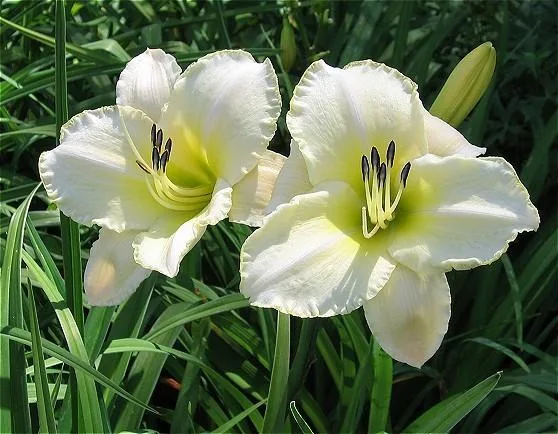
Planting and Growing daylily 'Arctic Snow'

| Care difficulty | 2 / 5 |
|---|---|
| Watering schedule | Regular moderate watering, avoid fully drying root ball out |
| Sunlight requirements | Full sun |
| Ideal temperature | Information to be completed |
| Soil type | Chalk · Clay · Loam · Sand |
| Soil pH | Acid · Alkaline · Neutral |
| Soil moisture | Moist but well drained |
| Fertilizing | Daylily balanced feed every three weeks spring through summer |
| Toxicity | Information to be completed |
How to Water daylily 'Arctic Snow'?
Regular moderate watering, avoid fully drying root ball out
Learn more →What Are the Sunlight Requirements for daylily 'Arctic Snow'?
Full sun
Learn more →What Soil Is Best for daylily 'Arctic Snow'?
- Soil type
- Chalk · Clay · Loam · Sand
- Soil pH
- Acid · Alkaline · Neutral
What Are the Moisture Requirements for daylily 'Arctic Snow'?
Moist but well drained
Learn more →How to Fertilize daylily 'Arctic Snow'?

Daylily balanced feed every three weeks spring through summer
Learn more →How to Prune daylily 'Arctic Snow'?

Tidy plant after flowering
Learn more →How to Propagate daylily 'Arctic Snow'?

Propagate by division in late summer or autumn
Learn more →How to Plant daylily 'Arctic Snow'?
Grow in fertile, moist but well-drained soil, best for flowers in full sun, they are tolerant of light shade. Mulch in late autumn or spring and water freely from spring until buds develop. Dry conditions and excessive shade will reduce flowering. See Hemerocallis cultivation
Learn more →Common Pests & Diseases

Diseases
Usually tough and reliable but may be affected by fungal leaf spot and rust diseases or bacterial leaf and stem rot
Pests
May be damaged by hemerocallis gall midge, earwigs, thrips, slugs and snails
Explore the plant health library →