



Planting and Growing spotted begonia

| Care difficulty | 3 / 5 |
|---|---|
| Watering schedule | Water when top half inch of soil is dry |
| Sunlight requirements | Partial shade |
| Ideal temperature | 15 – 25 °C |
| Soil type | Clay · Loam · Sand |
| Soil pH | Acid · Neutral |
| Soil moisture | Moist but well drained · Well drained |
| Fertilizing | Every 2 weeks during growing season |
| Toxicity | Ornamental bulbs - not to be eaten. Wear gloves and other protective equipment when handling |
How to Water spotted begonia?
Polka dot begonia is a tropical plant that thrives in humid environments and requires a balanced water supply. Its preference for humidity is reflected in its watering schedule, which necessitates watering every week. Being an evergreen plant, polka dot begonia maintains its lushness throughout the year, making it an excellent indoor companion that brings a touch of the tropics to any room.
Learn more →What Are the Sunlight Requirements for spotted begonia?
Polka dot begonia thrives under partial sun conditions, with bright, indirect light being pivotal for its growth and health. While polka dot begonia tolerates full shade, its vibrant foliage and distinctive spots may fade and its flowering potential could be compromised. Fluorescent lighting or a position near a window without direct sunlight suits polka dot begonia well when grown indoors. Excessive direct light may lead to leaf scorch, whereas too little light can result in leggy growth. Its leaves are known to adapt by altering their orientation to make the most of available light, ensuring robust vitality.
Learn more →What Is the Ideal Temperature Range for spotted begonia?

Polka dot begonia exhibits moderate resilience to temperature variations but is sensitive to extremes. It can tolerate cold down to 5℃ (41℉) and withstand heat up to 43℃ (109℉). This tolerance affects care requirements significantly; during cold spells, ensure polka dot begonia is protected from frost, and in extreme heat, provide shading and adequate hydration. Symptoms of distress under cold conditions include leaf drop and darkened edges, while overheating may cause wilting and scorched leaves. To counter overcooling, move polka dot begonia to a warmer spot and consider using a plant cover. For overheating, relocate to a cooler area and increase watering frequency.
Learn more →What Soil Is Best for spotted begonia?
Polka dot begonia grows well in a well-drained mixture of sandy soil, clay and loam, with a suitable pH range of 5.5-6.2. However, polka dot begonia will grow better in soilless environments than in conventional soil. Planters can buy ready-made soilless culture media, or mix 2/3 peat moss or peat with 1/3 other soilless culture media such as vermiculite, bark and perlite to provide a slightly acidic and well-drained media for the plant.
- Soil type
- Clay · Loam · Sand
- Soil pH
- Acid · Neutral
What Are the Moisture Requirements for spotted begonia?
Moist but well drained · Well drained
Learn more →How to Fertilize spotted begonia?

To foster vigorous growth and vivid foliage in polka dot begonia, use high nitrogen fertilizers every two weeks during active growth in spring and summer. Decrease the frequency to once a month in fall and cease during winter dormancy. Dilute to half the recommended strength to avoid root burn. Optimal fertilization ensures a robust and attractive polka dot begonia, with enhanced resilience. Employ care in application, avoiding leaves, and ensure soil is moist beforehand. Suitable for all gardening levels, these steps will maximize polka dot begonia's health and aesthetics.
Learn more →How to Prune spotted begonia?

Polka dot begonia is renowned for its striking, spotted leaves and ornamental appeal. Optimal pruning occurs in early to late spring to encourage new growth. Trim leggy stems to maintain a bushy shape and remove any damaged or dead foliage. Pruning polka dot begonia not only enhances its aesthetic appeal but also promotes healthier, more vigorous growth. Be mindful to use clean, sharp scissors to prevent infection and sanitize tools between cuts.
Learn more →How to Propagate spotted begonia?

The polka dot begonia, characterized by its striking foliage with unique silver polka dots, is effectively propagated through stem cuttings. For a successful propagation, choose a healthy stem with a few leaves and ensure the cut is made just below a node. Utilize a rooting hormone to enhance root development before placing the stem in well-draining soil or water. Provide indirect light and maintain consistent moisture to foster growth. Patience is key as roots may take several weeks to establish. Once rooted, transplant gently into a pot to continue nurturing.
Learn more →How to Transplant spotted begonia?
In the pleasant warmth of late spring to early summer, polka dot begonia appreciates transplanting. Ideal conditions include a semi-shaded location with well-draining soil. When transplanting, gently loosen root balls for a flourishing start. Happy growing!
Learn more →How to Care for spotted begonia in Winter?

Polka dot begonia hails from the warm, humid tropics, offering a striking display of resilience to colder periods through its dormancy. Naturally, polka dot begonia slows growth during cooler months, conserving energy. Gardeners need to mimic this survival tactic by reducing watering, maintaining moderate indoor temperature, and ensuring a comparably humid environment. Ample indirect light remains crucial. With these conditions, polka dot begonia will revive beautifully in spring.
Learn more →How to Plant spotted begonia?
Indoors-potted: For a thriving polka dot begonia, ensure it's placed where it can bask in ample ambient light, enhancing its unique dotted foliage and robust growth. Outdoors-potted: If you're keeping polka dot begonia outside, shelter it from harsh elements; its delicate leaves favor the warmth of dappled shade over direct exposure. Outdoors-in the ground: Polka dot begonia isn't typically an outdoor-ground plant due to sensitivity to cold; if attempted, choose a protected spot that mimics its native humid environment.
Learn more →How to Repot spotted begonia?
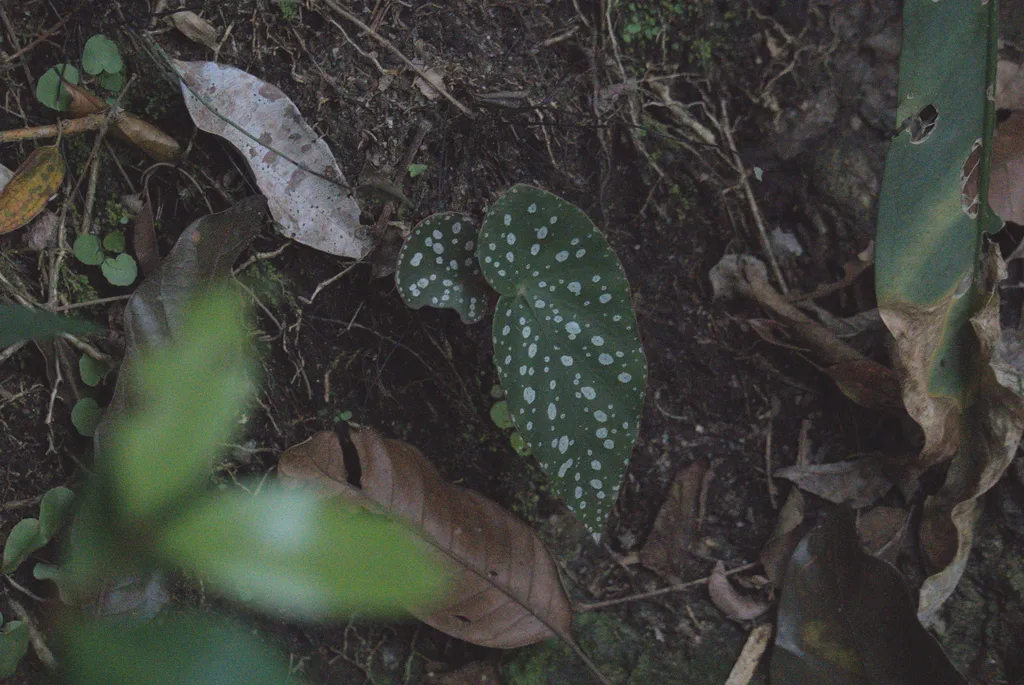
The spotted wonders, polka dot begonia, with their signature silver dots and red undersides, thrive best when repotted every 2-3 years to accommodate their modest bushy growth. Spring ushers in the perfect season for this task, giving the plant ample time to establish before winter. Choose a container slightly larger than its current pot to prevent overwatering issues. Afterward, maintain high humidity and steady temperatures to ensure a seamless transition and continued splendor.
Learn more →How to Harvest spotted begonia?

Polka dot begonia doesn't have long straight stems, so it is not usually used as cut flowers. According to personal preference, the top flowers can be collected for flower specimen pressing or other purposes. They can be collected at will as long as it is growing season, but don't take away too many stems and leaves.
Learn more →Common Pests & Diseases

Diseases
May be susceptible to grey moulds, powdery mildews, stem rot and rhizome rot
Pests
May be susceptible to caterpillars, mealy bugs, mites, glasshouse thrips, vine weevil and aphids
Explore the plant health library →Troubleshooting
Crispy Brown Leaf Edges and Leaf Drop
Begonia maculata (polka dot begonia) is a cane-stemmed tropical begonia that develops crispy leaf margins or drops leaves when indoor air is too dry, soil swings between extremes, or water sits on the leaves.
| What you notice | Possible explanation | What to check next |
|---|---|---|
| Leaf tips and margins turn brown and dry while potting mix stays moderately moist | Low indoor humidity or dry drafts from heating/AC vents | Check ambient humidity and move the pot away from air vents or radiators. |
| Leaves develop water-soaked brown blotches or white powdery patches | Botrytis blight or powdery mildew encouraged by wet foliage and poor airflow | Stop misting the leaves, remove affected foliage, and improve air circulation. |
| Lower leaves yellow and drop while the potting mix stays soggy | Overwatering or poorly draining potting mix | Empty standing water and allow the top inch of mix to dry before watering. |
- Water at the soil line when the top 1 inch of potting mix feels dry, keeping foliage dry and emptying saucer water promptly.
- Raise ambient humidity with a humidifier or pebble tray rather than spraying water directly onto the spotted leaves.
- Grow in a well-aerated, peat- or coir-based potting mix amended with perlite in a container with open drainage holes.
- Provide good air movement and warm indoor temperatures between 18°C and 25°C (65°F to 77°F).
Begonia maculata contains calcium oxalate crystals (especially concentrated in underground parts) and is toxic to cats and dogs if ingested.
Leggy Canes and Fading Silver Polka Dots
Cane begonias naturally grow upright and benefit from bright indirect light and spring pinching to stay full and well-spotted.
| What you notice | Possible explanation | What to check next |
|---|---|---|
| Canes stretch tall with wide spacing between leaves and muted silver spots | Insufficient light | Move the plant closer to a window with bright, indirect light. |
| Bleached or scorched tan patches appear on sun-facing leaves | Direct midday sun exposure | Filter harsh sunlight with a sheer curtain. |
- Place in bright, indirect light (such as near an east- or west-facing window) out of intense afternoon sun.
- Pinch or prune leggy canes back above a node in spring to encourage branching, and root the cut stem pieces in water or moist potting mix.
- Stake tall canes loosely if needed to prevent heavy stems from bending or snapping.
Feed lightly every 2 to 4 weeks during spring and summer with a diluted balanced liquid fertilizer, and pause feeding in winter.
The Toxicity of spotted begonia
Ornamental bulbs - not to be eaten. Wear gloves and other protective equipment when handling