



Planting and Growing sword fern

| Care difficulty | 3 / 5 |
|---|---|
| Watering schedule | Keep soil consistently moist |
| Sunlight requirements | Partial shade |
| Ideal temperature | 18 – 27 °C |
| Soil type | Loam · Sand |
| Soil pH | Acid · Neutral |
| Soil moisture | Moist but well drained |
| Fertilizing | Monthly |
| Toxicity | Information to be completed |
How to Water sword fern?
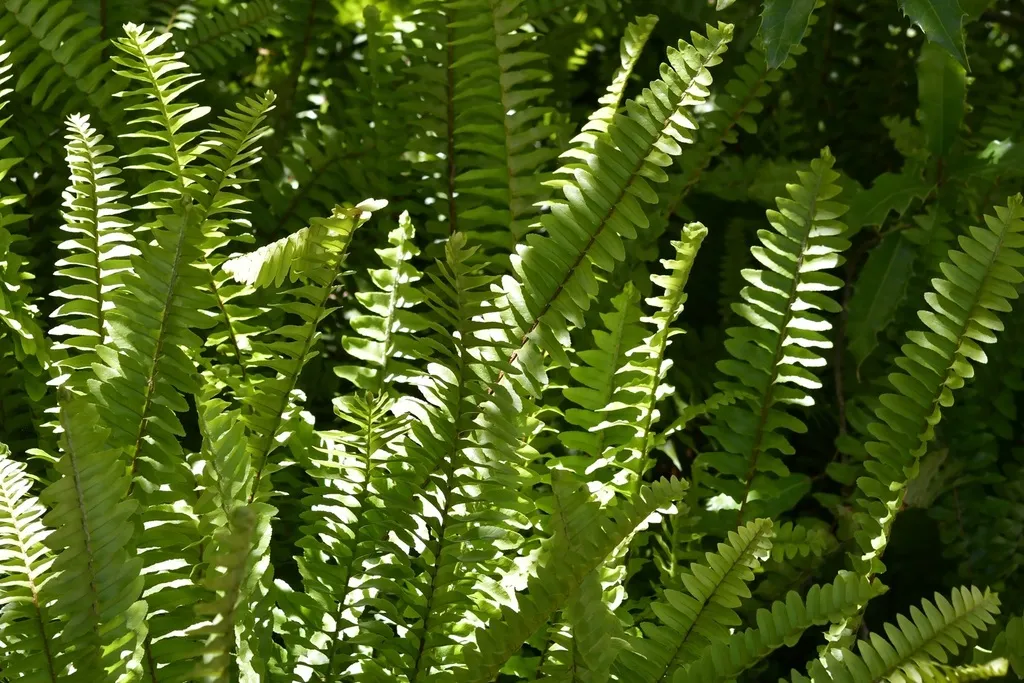
Originating from humid environments, boston fern thrives with consistent moisture and high humidity, mirroring its tropical rainforest origins. This species exhibits a preference for evenly moist soil, avoiding both waterlogged conditions and dry spells. Regular watering is essential, aligning with a schedule of twice a week to maintain optimal hydration. As an indoor plant often favored for its lush foliage, boston fern benefits significantly from misting to replicate the damp climate it naturally prefers, ensuring that its fronds remain vibrant and healthy.
Learn more →What Are the Sunlight Requirements for sword fern?
Boston fern flourishes in partial sun conditions, where indirect, filtered light promotes lush growth and vibrant frond health. While capable of tolerating full sun and full shade, such extremes may lead to leaf scorch or paleness, respectively, indicating stress. Adaptive traits like frond posture adjustments help boston fern manage light intake. Ideally, boston fern should be placed outdoors in locations offering dappled sunlight, whereas, for indoor environments, a spot near a window with sheer curtains would be suitable, avoiding direct afternoon sun.
Learn more →What Is the Ideal Temperature Range for sword fern?

Boston fern exhibits a reasonable temperature tolerance, enduring cold down to 0℃ (32℉) and heat up to 43℃ (109℉). However, boston fern is sensitive to extreme temperature fluctuations. Prolonged exposure to cold can cause fronds to wilt and turn brown, while excessive heat may result in leaf scorch and drying. To care for boston fern, it is essential to provide protective measures such as insulation during cold snaps and adequate humidity during heatwaves. Relocating the plant to a more stable environment during adverse conditions can prevent damage. Recognizing early symptoms of stress allows for quick intervention and helps maintain the plant’s health.
Learn more →What Soil Is Best for sword fern?
Boston fern requires a rich organic mixture soil that is well aerated and drained. This plant requires a lot of moisture, but is poorly tolerant to stand in water. You should make sure that the drainage is adequate as soggy soil might cause root rots to your boston fern. Soil should be slightly acidic (pH 5.0-5.5), medium rich with nutrients and rich in humus. A loamy mix of normal potting soil, compost and one third of turf should do the trick.
- Soil type
- Loam · Sand
- Soil pH
- Acid · Neutral
What Are the Moisture Requirements for sword fern?
Moist but well drained
Learn more →How to Fertilize sword fern?

Fertilize boston fern with high nitrogen fertilizer biweekly during growing seasons, spring through early autumn. Dilute to half the recommended strength to promote lush frond growth and maintain health. Reduce frequency to monthly in winter or adjust based on growth rate. Avoid over-fertilization to prevent root burn. Use liquid or granular types, ensuring even distribution and thorough soil integration. Monitor boston fern's response and adjust feeding as necessary.
Learn more →How to Prune sword fern?

Boston fern is known for its lush, arching fronds. Prune in early spring by removing dead, damaged, or yellowing fronds to encourage new growth. Trim back overgrown fronds to maintain the plant's shape and size. Use sterilized scissors or shears for clean cuts. Pruning helps improve airflow and reduces pest issues. Focus on maintaining an attractive, balanced appearance while promoting overall plant health. Refer to trusted horticultural guides for best practices.
Learn more →How to Propagate sword fern?

Boston fern, known for its lush, arching green fronds, thrives indoors with minimal care. Propagation is effectively achieved through division, which should be carried out with sterilized tools to prevent infection. Gardeners should gently separate the roots, ensuring each division has multiple fronds and a substantial root system. After separating, plant these divisions in a well-draining soil mix and maintain consistent moisture without waterlogging to encourage growth.
Learn more →How to Transplant sword fern?
The ideal season for transplanting boston fern is mid-spring to late spring, or mid-fall to late fall, as these seasons offer optimal growth conditions. Ensure a shady location with well-draining soil for best results. Gently tease out congested roots before transplanting if necessary, for a thriving boston fern.
Learn more →How to Care for sword fern in Winter?

Native to sub-tropical climates, boston fern survives winter by going semi-dormant, conserving resources for spring's regrowth. However, in an indoor setting, these ferns favor stable temperate conditions, typically between 16-21°C. When boston fern faces winter, consider misting daily, keeping soil moisturized, yet well-drained, and avoiding drafty areas and temperature shifts. Boston fern's beauty thrives with just a little extra winter care.
Learn more →How to Plant sword fern?
Indoors-potted: Ensure your boston fern has enough space to display its lush fronds indoors; frequent rotation encourages balanced growth. Outdoors-potted: While potted outside, the boston fern benefits from sheltering positions to protect its delicate foliage from harsh elements. Outdoors-in the ground: Boston fern thrives in outdoor soil with adequate drainage, as standing water can lead to root issues.
Learn more →How to Repot sword fern?
Repot your boston fern when it outgrows its container, typically every 2-3 years. Best done in spring to align with growth spurts, choose a pot that's slightly larger to accommodate the bushy, erect fronds. Post-repotting, use well-draining soil and maintain consistent moisture without waterlogging. Keep boston fern in indirect light and ensure high humidity for swift recovery and lush growth.
Learn more →How to Harvest sword fern?

Information to be completed
Learn more →Common Pests & Diseases

Diseases
Generally disease free but may be subject to rot if fronds become too wet
Pests
Can suffer from scale insects
Explore the plant health library →Troubleshooting
Browning Fronds and Dropping Leaflets
Nephrolepis exaltata (Boston fern) is a humidity-loving fern whose delicate pinnae dry out and shed indoors when ambient humidity drops or the potting mix dries completely.
| What you notice | Possible explanation | What to check next |
|---|---|---|
| Lower and inner fronds turn yellow-brown and shed dry leaflets indoors during heating or air-conditioning seasons | Low indoor humidity, dry drafts, or insufficient light reaching the dense center | Check proximity to heating/AC vents and whether the pot sits in a dim corner. |
| Fronds turn crispy brown while the potting mix feels dry and lightweight | Underwatering / root ball dried out | Feel the potting mix; if dry, soak thoroughly and drain excess water. |
| Center fronds turn dark brown or mushy while the potting mix stays waterlogged | Overwatering or crown/root rot from soggy soil | Empty standing water and check pot drainage. |
- Keep the peat- or humus-rich potting mix consistently lightly moist (never bone-dry and never standing in water) using lukewarm water.
- Raise indoor humidity with a humidifier, pebble tray, or grouping plants, and keep away from heating vents, radiators, and cold drafts.
- Place in bright, indirect light (such as near an east- or north-facing window) so light reaches the crown and inner fronds.
- Trim off completely browned fronds cleanly near the base with sharp scissors to improve airflow.
Boston ferns naturally shed older inner fronds as new fiddleheads unfurl, especially when moving from a humid greenhouse to a drier home.
Pale, Bleached Fronds or Scale Insects
Washed-out frond color and sticky bumps on stems reflect light mismatches or common indoor fern pests.
| What you notice | Possible explanation | What to check next |
|---|---|---|
| Fronds turn pale yellow-green or develop dry bleached patches near a sunny window | Direct sun exposure | Move the plant out of direct afternoon sun into bright, filtered light. |
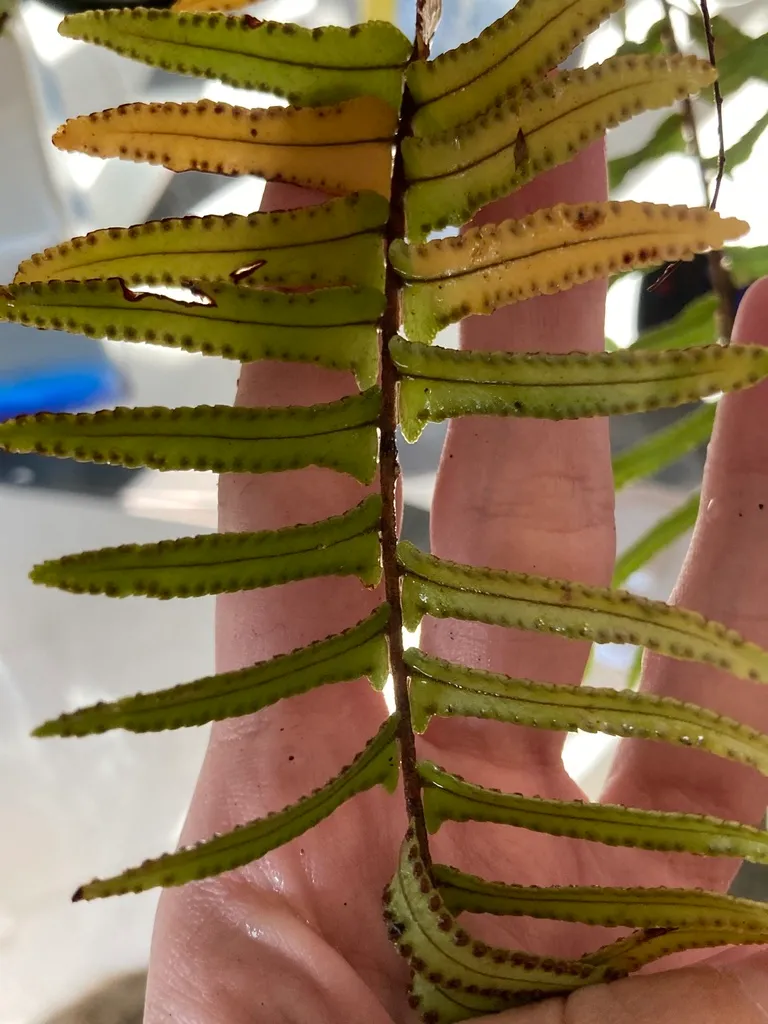
| Small brown oval bumps line the frond midribs with sticky residue underneath | Scale insects | Inspect frond stems and undersides closely before pruning heavily infested fronds or treating carefully. |
- Provide bright, filtered light without harsh direct sun.
- Feed lightly during spring and summer with a balanced liquid fertilizer diluted to quarter or half strength, and avoid fertilizing in winter.
- If scale insects appear, isolate the plant and prune heavily infested fronds rather than using harsh solvents that can burn delicate fern foliage.
Nephrolepis exaltata is listed as non-toxic to cats and dogs by the ASPCA.
The Toxicity of sword fern
Information to be completed