



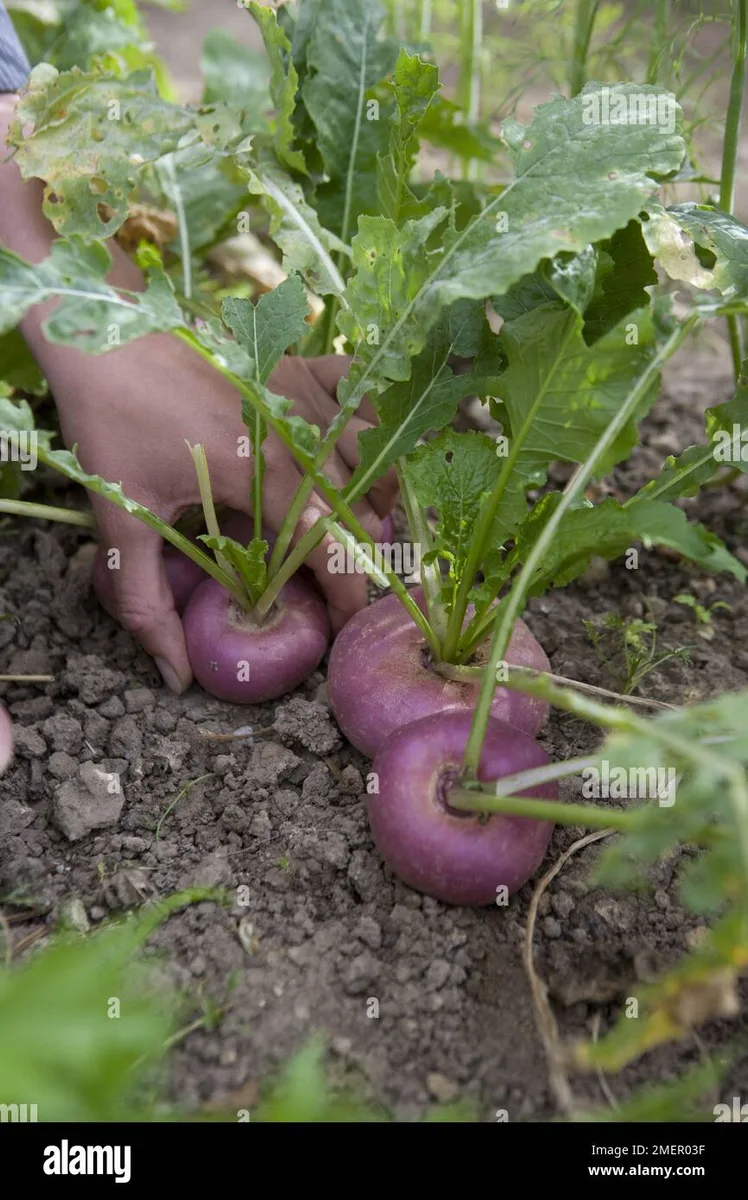
Planting and Growing turnip 'Atlantic'

| Care difficulty | 2 / 5 |
|---|---|
| Watering schedule | Regular watering to keep soil damp, avoid saturated mud ground |
| Sunlight requirements | Full sun |
| Ideal temperature | Information to be completed |
| Soil type | Clay · Loam · Chalk · Sand |
| Soil pH | Neutral · Alkaline |
| Soil moisture | Well drained |
| Fertilizing | High nitrogen vegetable feed every two weeks active growth |
| Toxicity | Information to be completed |
How to Water turnip 'Atlantic'?
Regular watering to keep soil damp, avoid saturated mud ground
Learn more →What Are the Sunlight Requirements for turnip 'Atlantic'?
Full sun
Learn more →What Soil Is Best for turnip 'Atlantic'?
- Soil type
- Clay · Loam · Chalk · Sand
- Soil pH
- Neutral · Alkaline
What Are the Moisture Requirements for turnip 'Atlantic'?
Well drained
Learn more →How to Fertilize turnip 'Atlantic'?

High nitrogen vegetable feed every two weeks active growth
Learn more →How to Prune turnip 'Atlantic'?

No pruning required
Learn more →How to Propagate turnip 'Atlantic'?

Propagate by seed. See sowing vegetable seeds
Learn more →How to Plant turnip 'Atlantic'?
Grow in fertile, moist but well drained soil, in full sun. Sow early under cloches in February or start in modules indoors and transplant out in Spring, early Summer. See Vegetable CultivationSow seed outdoors in deep, fertile but firm, soil that isn't too acidic. If space is limited, start the seeds in modules or seedtrays and plant outside when big enough to handle easily (about 5 or 6 leaves). Watering through the summer months is very important. For more advice see vegetable cultivation
Learn more →Common Pests & Diseases

Diseases
May be susceptible to club root, powdery mildew, black rot, grey mould, leaf spot
Pests
May be susceptible to flea beetle which can prevent seedlings from thriving and attacked by caterpillars when eggs laid by butterflies, hatch and feed. It is very popular food for pigeons which only netting can prevent. It is also eaten by snails, although once plants are established, this damage isn't usually severe. The cabbage root fly can cause failure to thrive and a heavy infestation of mealy cabbage aphid can spoil the harvest
Explore the plant health library →