



Planting and Growing bamboo palm

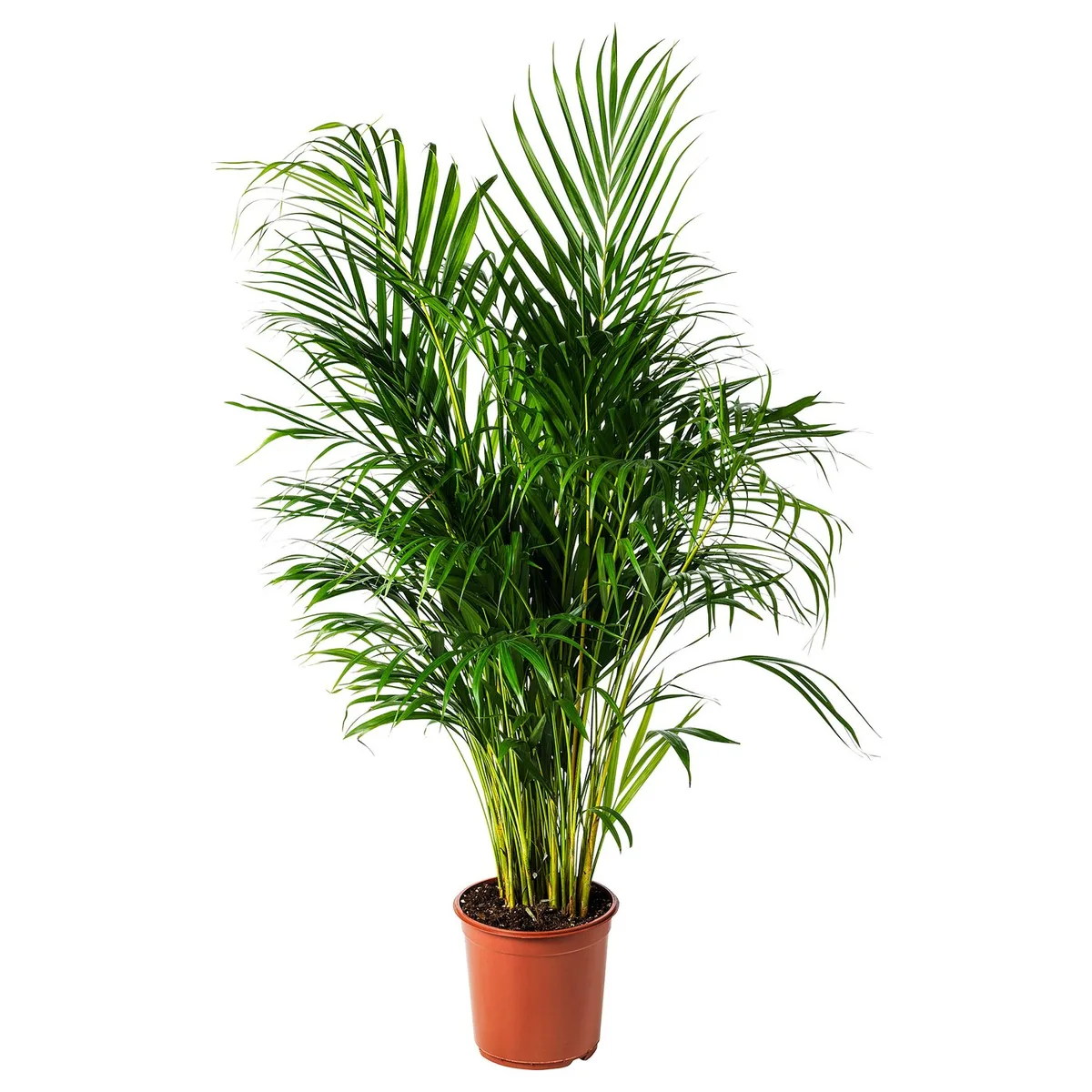
| Care difficulty | 3 / 5 |
|---|---|
| Watering schedule | Moderate regular watering, allowing brief slight drying between soakings |
| Sunlight requirements | Partial shade |
| Ideal temperature | 18 – 27 °C |
| Soil type | Loam |
| Soil pH | Acid · Neutral |
| Soil moisture | Well drained |
| Fertilizing | Balanced perennial feed every four weeks from spring through summer |
| Toxicity | Information to be completed |
How to Water bamboo palm?
Originating from the moist environments of Madagascar, yellow butterfly palm thrives in conditions that mimic its native tropical rainforest habitat, favoring consistent humidity. It exhibits a moderate drought tolerance but prefers a steady moisture balance without being waterlogged. Watering should be adjusted to once every 1-2 weeks, depending on environmental factors such as temperature and indoor air dryness. Typically grown indoors due to its decorative appeal, yellow butterfly palm benefits significantly from misting during the growing season to maintain the higher humidity levels it naturally desires.
Learn more →What Are the Sunlight Requirements for bamboo palm?
Yellow butterfly palm thrives in partial sun environments, where it receives filtered daylight for several hours daily. This gentle illumination promotes robust growth and vibrant green foliage. Although resilient, yellow butterfly palm can adapt to both full sun and full shade; however, these extremes may induce stress. In full sun, yellow butterfly palm may experience leaf scorch, while in deep shade, growth could slow, and the fronds may lose their luster. For outdoor planting, a spot under the dappled light of taller trees is ideal. When considering indoor cultivation, yellow butterfly palm performs well in bright, indirect light typical of an east or west-facing window.
Learn more →What Is the Ideal Temperature Range for bamboo palm?

Yellow butterfly palm shows remarkable adaptability, withstanding temperatures from 5℃ (41℉) up to 45℃ (113℉). While it is resilient to heat extremes, it is sensitive to cold temperatures near its lower limit. During cold snaps, foliage may turn brown, indicating stress. Conversely, excessive heat can lead to leaf burn or wilt. To care for yellow butterfly palm, provide frost protection during cold weather and ensure adequate hydration and shade during intense heat. By attending to these factors, yellow butterfly palm can thrive in various climates, though extreme conditions require extra attention to maintain its health and appearance.
Learn more →What Soil Is Best for bamboo palm?
Yellow butterfly palm thrives in well-draining soil. For a suitable mix, combine equal parts potting mix, coarse sand, and peat or coconut coir to improve aeration and prevent water-logging. While specific pH isn't critical for yellow butterfly palm, ensuring proper drainage is paramount. Place a layer of gravel at the pot's bottom to bolster drainage. Incorporate time-release fertilizer during potting for sustained nutrition. If peat is unavailable, use more coir or add perlite as an alternative.
- Soil type
- Loam
- Soil pH
- Acid · Neutral
What Are the Moisture Requirements for bamboo palm?
Well drained
Learn more →How to Fertilize bamboo palm?

For yellow butterfly palm, a balanced slow-release fertilizer is ideal, applied quarterly for consistent nutrient delivery; this supports robust growth and vibrant fronds. During active growth in spring and summer, a high-nitrogen fertilizer enhances foliage production. Use sparingly; excessive feeding may harm roots. Seasonal variations necessitate reduced winter fertilization when growth slows. Gradual application ensures safe assimilation of nutrients. Safety tip: water yellow butterfly palm before fertilizing to prevent root burn.
Learn more →How to Prune bamboo palm?

Yellow butterfly palm, widely recognized for its lush, feathery fronds, benefits from early spring pruning. Remove dead or yellowing fronds and any that are crowded or crossing to improve airflow and aesthetics. Cut close to the stem without damaging the trunk. Regular pruning promotes healthy growth and prevents pest infestation. Reputable horticultural guides confirm that this approach encourages vigor and maintains its attractive appearance.
Learn more →How to Propagate bamboo palm?

The ideal propagation time for yellow butterfly palm is during Spring through sowing. It has a moderate propagation difficulty, with successful signs including new shoots and healthy root development. Ensure well-draining soil and provide adequate warmth and humidity for best results.
Learn more →How to Transplant bamboo palm?
For a thriving yellow butterfly palm, transplant during the golden window of late summer to mid-fall. This allows the plant to establish itself before winter arrives. Choose a sunny spot with well-draining soil, and don't forget to generously water the yellow butterfly palm after transplanting to facilitate root growth.
Learn more →How to Care for bamboo palm in Winter?

Yellow butterfly palm hails from the balmy Madagascar, adept at enduring cyclonic winter rainstorms, rather than frosty weather! This monocot's winter survival is all about temperature regulation, preferring warm indoor climates. For its winter care, gardeners must avoid temperatures below 10°C, ensuring indirect sunlight and mild, consistent watering. Remember, yellow butterfly palm abhors cold drafts and direct heat exposure!
Learn more →How to Plant bamboo palm?
Indoors-potted: Keep yellow butterfly palm in a spot where it can stretch its fronds without crowding - this palm loves to fan out. Outdoors-potted: Yellow butterfly palm thrives outdoors with room for its roots; be mindful of pot size to prevent toppling. Outdoors-in the ground: Plant yellow butterfly palm in an area free from frost; it favors a warm, sheltered spot to prosper.
Learn more →How to Repot bamboo palm?
For 'yellow butterfly palm,' a bushy, moderate-growing palm, repot every 1-2 years to support its dense canopy of arching fronds. Spring repotting aligns with its growth spurt; use a container 2-3 inches larger in diameter for sufficient root expansion. Post-repotting, ensure evenly moist soil and partial shade to help 'yellow butterfly palm' acclimatize smoothly. Friendly tip: Don't compact the soil too firmly after repotting to allow roots to breathe.
Learn more →Common Pests & Diseases

Diseases
Generally disease free
Pests
Can get glasshouse red spider mite, thrips, mealybugs and scale insects
Explore the plant health library →Troubleshooting
Brown Frond Tips or Yellowing Fronds
bamboo palm (Dypsis lutescens) develops brown tips or yellowing fronds from dry indoor air, soluble salt accumulation, overwatering, or micronutrient deficiencies.
| What you notice | Possible explanation | What to check next |
|---|---|---|
| Frond leaflet tips turn dry and brown while the rest of the frond stays green | Low indoor humidity, underwatering, or soluble salt/fluoride buildup from tap water | Check soil moisture and evaluate air dryness near vents |
| Lower oldest fronds turn uniformly yellow-brown while the central spear or crown remains firm | Natural senescence of oldest fronds as new fronds emerge | Confirm that the newest central frond spear is healthy and green |
| Multiple fronds yellow or collapse while soil stays wet | Root rot from waterlogged soil | Inspect pot drainage and root health |
- Use a well-draining loam-based compost amended with grit or perlite in a container with clear drainage holes.
- Water thoroughly when the top inch of mix feels dry and empty drainage saucers promptly.
- Place in bright, filtered light and avoid cold drafts below 10–13°C (50–55°F).
- Trim dead brown fronds cleanly at the base only after they have fully yellowed, leaving green fronds intact to nourish the plant.
Do not strip off half-green fronds aggressively, as palms rely on older fronds to recycle scarce nutrients.
Spider Mites, Scale Insects, or Sooty Mold
Indoor palms are susceptible to spider mites in dry air and scale insects along frond midribs.
| What you notice | Possible explanation | What to check next |
|---|---|---|
| Fine webbing and pale speckled stippling on frond undersides | Spider mites thriving in warm, dry indoor air | Inspect frond undersides and wipe with a damp white cloth |
| White or brown crusty scale bumps clustered on leaflet undersides or stems, sometimes with black sooty mold | Scale insects or mealybugs | Examine leaflet midribs and stem bases closely |
- Isolate infested plants immediately from other indoor foliage.
- Wipe fronds gently with a damp cloth and dab scale or mealybugs with rubbing alcohol on a cotton swab.
- Apply insecticidal soap or horticultural oil per product label directions, ensuring thorough coverage of frond undersides.
Discard heavily scale-infested fronds if cleaning cannot clear dense encrustations.