



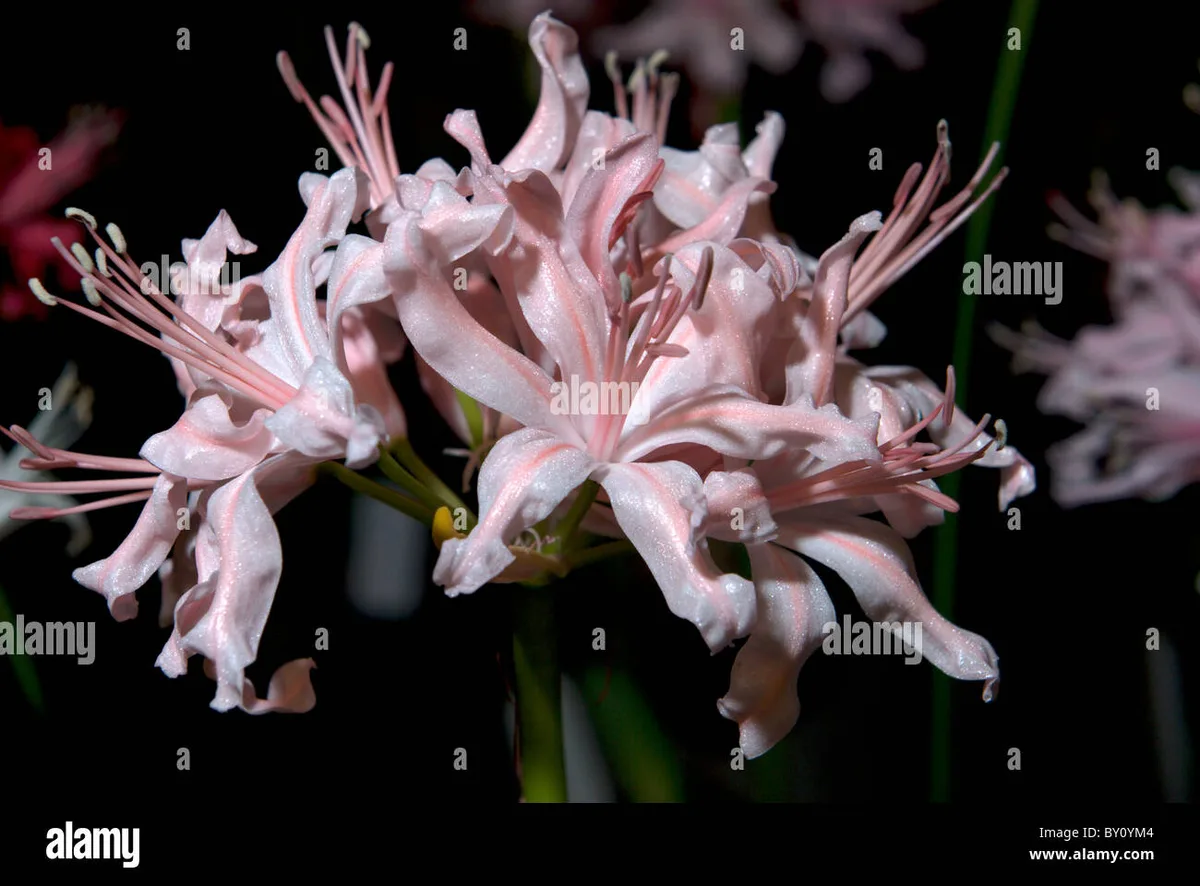
Planting and Growing nerine 'Exbury White'

| Care difficulty | 3 / 5 |
|---|---|
| Watering schedule | Regular watering spring growth, reduce irrigation autumn leaf dieback |
| Sunlight requirements | Full sun |
| Ideal temperature | Information to be completed |
| Soil type | Chalk · Loam · Sand |
| Soil pH | Acid · Alkaline · Neutral |
| Soil moisture | Moist but well drained · Well drained |
| Fertilizing | Weak bulb liquid feed applied once before spring leaf emergence phase |
| Toxicity | Ornamental bulbs - not to be eaten. Wear gloves and other protective equipment when handling |
How to Water nerine 'Exbury White'?
Regular watering spring growth, reduce irrigation autumn leaf dieback
Learn more →What Are the Sunlight Requirements for nerine 'Exbury White'?
Full sun
Learn more →What Soil Is Best for nerine 'Exbury White'?
- Soil type
- Chalk · Loam · Sand
- Soil pH
- Acid · Alkaline · Neutral
What Are the Moisture Requirements for nerine 'Exbury White'?
Moist but well drained · Well drained
Learn more →How to Fertilize nerine 'Exbury White'?

Weak bulb liquid feed applied once before spring leaf emergence phase
Learn more →How to Prune nerine 'Exbury White'?

No pruning required
Learn more →How to Propagate nerine 'Exbury White'?

Propagate by division after flowering
Learn more →How to Plant nerine 'Exbury White'?
Grow under glass planting bulbs in autumn or spring with the tips above the surface of a loam-based compost. In frost-free areas, plant outdoors in early spring in a moderately fertile, well drained soil. See Nerine cultivation for further information
Learn more →Common Pests & Diseases

Diseases
Generally disease-free
Pests
May be susceptible to slugs
Explore the plant health library →The Toxicity of nerine 'Exbury White'
Ornamental bulbs - not to be eaten. Wear gloves and other protective equipment when handling