



Planting and Growing Ceanothus griseus var. horizontalis 'Diamond Heights'

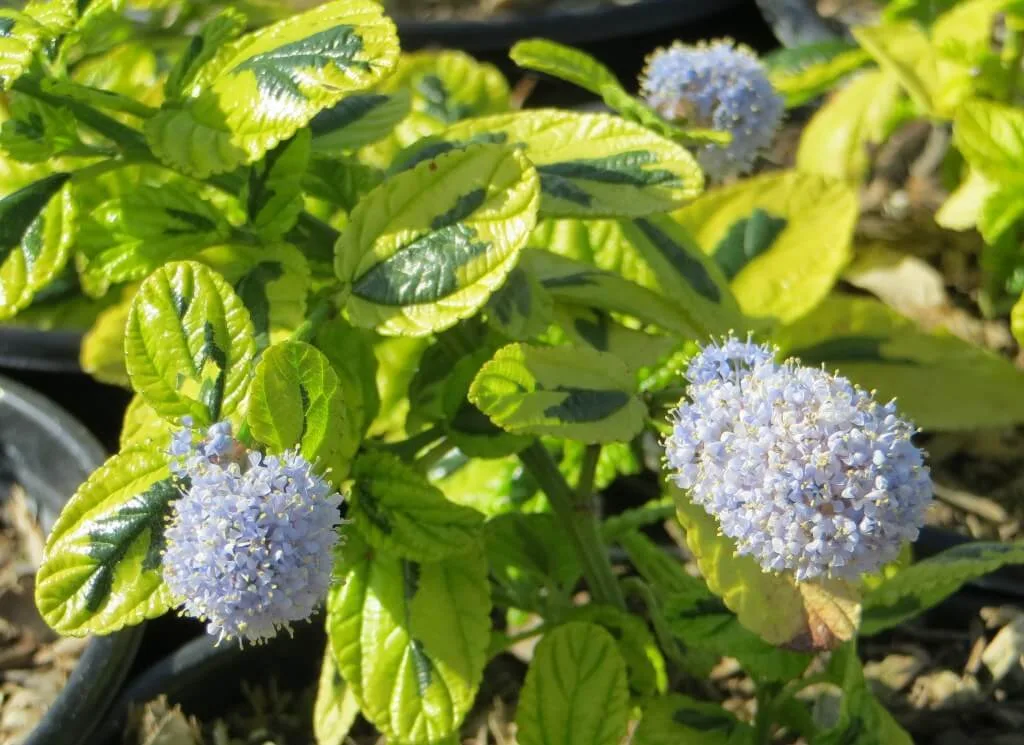
| Care difficulty | 3 / 5 |
|---|---|
| Watering schedule | Water deeply and sparingly, allow partial soil dryness between watering |
| Sunlight requirements | Full sun |
| Ideal temperature | Information to be completed |
| Soil type | Loam · Sand |
| Soil pH | Acid · Alkaline · Neutral |
| Soil moisture | Well drained |
| Fertilizing | Low-nitrogen diluted shrub fertilizer once monthly in warm summer |
| Toxicity | Information to be completed |
How to Water Ceanothus griseus var. horizontalis 'Diamond Heights'?
Water deeply and sparingly, allow partial soil dryness between watering
Learn more →What Are the Sunlight Requirements for Ceanothus griseus var. horizontalis 'Diamond Heights'?
Full sun
Learn more →What Soil Is Best for Ceanothus griseus var. horizontalis 'Diamond Heights'?
- Soil type
- Loam · Sand
- Soil pH
- Acid · Alkaline · Neutral
What Are the Moisture Requirements for Ceanothus griseus var. horizontalis 'Diamond Heights'?
Well drained
Learn more →How to Fertilize Ceanothus griseus var. horizontalis 'Diamond Heights'?

Low-nitrogen diluted shrub fertilizer once monthly in warm summer
Learn more →How to Prune Ceanothus griseus var. horizontalis 'Diamond Heights'?

For free-standing plants: Usually little pruning is needed. Lightly shape if necessary, removing dead, damaged or diseased shoots. Prune after flowering. For wall-trained specimens: On established wall-trained shrubs, shorten sideshoots to two to four buds from the framework; remove shoots growing towards the wall. Prune annually after flowering on last-year growth, or in late winter or early spring on current-year growth.
Learn more →How to Propagate Ceanothus griseus var. horizontalis 'Diamond Heights'?

Propagate by semi-hardwood cuttings
Learn more →How to Plant Ceanothus griseus var. horizontalis 'Diamond Heights'?
Grow in fertile, well-drained soil in full sun with shelter from strong, cold winds. Lime tolerant but may become chlorotic on shallow chalk soils. See ceanothus cultivation
Learn more →Common Pests & Diseases

Diseases
May be susceptible to honey fungus
Pests
May be susceptible to scale insects
Explore the plant health library →