



Planting and Growing Japanese laurel

| Care difficulty | 2 / 5 |
|---|---|
| Watering schedule | Moderate regular watering, avoid prolonged drought and stagnant waterlogging |
| Sunlight requirements | Full shade · Full sun · Partial shade |
| Ideal temperature | 15 – 25 °C |
| Soil type | Chalk · Clay · Loam · Sand |
| Soil pH | Acid · Alkaline · Neutral |
| Soil moisture | Moist but well drained · Well drained |
| Fertilizing | Balanced perennial feed every four weeks spring through summer growth |
| Toxicity | Fruit is ornamental - not to be eaten. Wear gloves and other protective equipment when handling |
How to Water Japanese laurel?
Originating from the moist understorey of East Asian forests, japanese laurel thrives in consistently humid conditions and exhibits a notable tolerance for drought. This species maintains its water balance best when watered once every 1-2 weeks, ensuring soil moisture without over-saturation. Ideally suited to shaded outdoor environments or as an ornamental indoor plant, japanese laurel flourishes when its roots are kept moderately damp, reflecting its natural affinity for a stable water supply. As an evergreen plant, japanese laurel's ability to retain foliage year-round makes it particularly adept at managing water efficiently during varying seasonal demands.
Learn more →What Are the Sunlight Requirements for Japanese laurel?
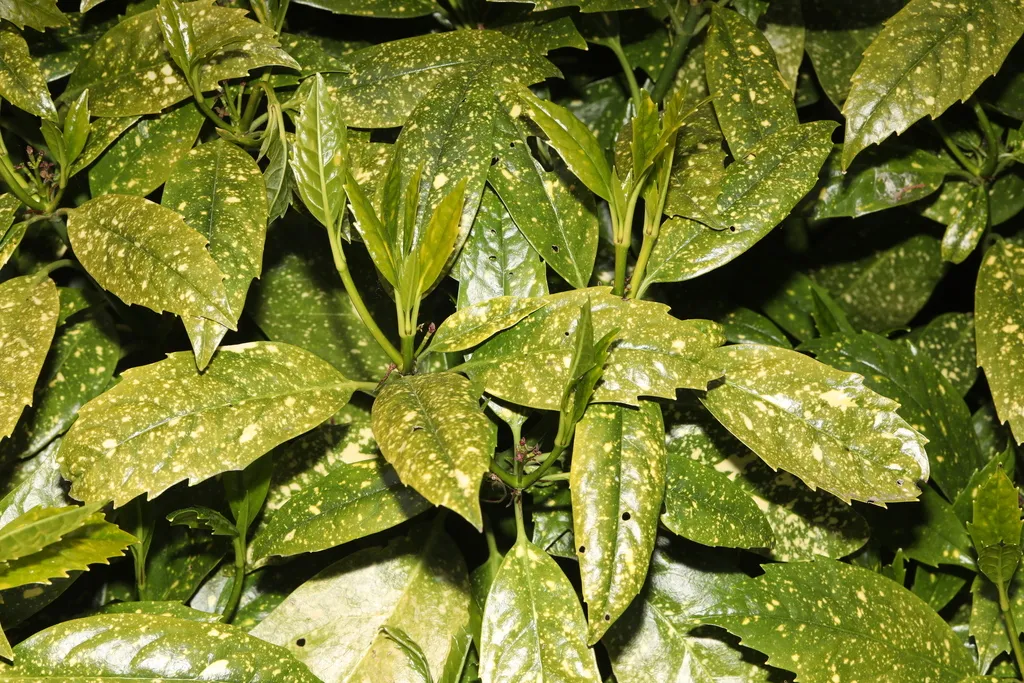
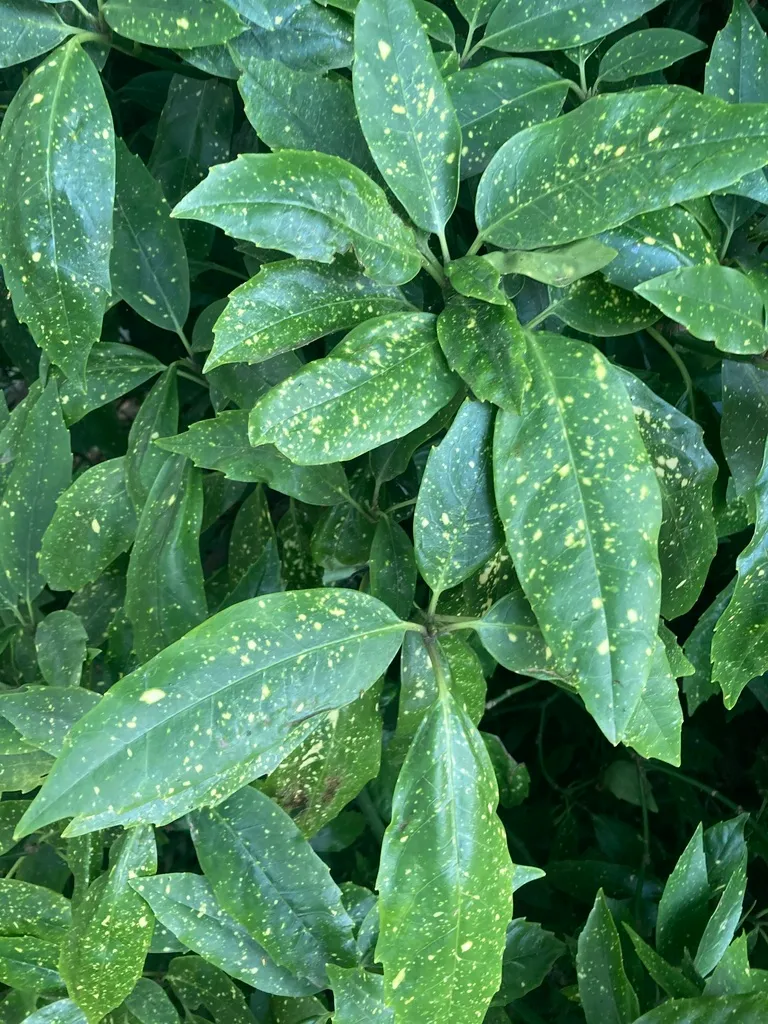
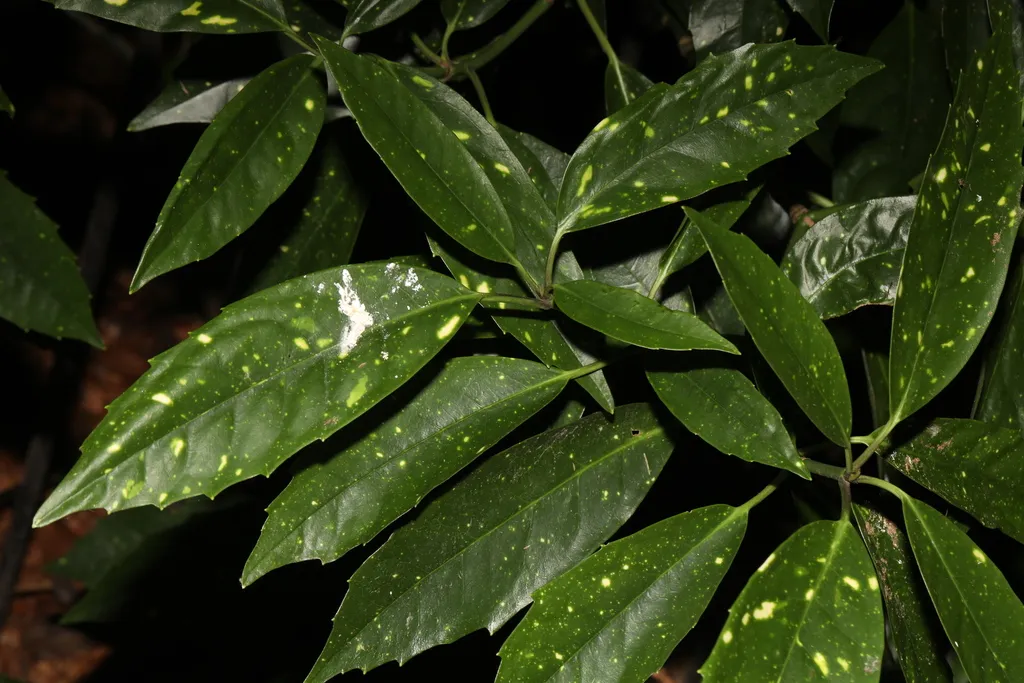
Japanese laurel thrives in full shade where the intensity of light is diffused, although it can also endure partial sun environments. Optimal growth is achieved with long durations of low, indirect light, minimizing direct sunlight exposure. While japanese laurel has versatility in light tolerance, excessive brightness can lead to leaf scorch, and too little light may reduce the foliage's vibrant colors. Adaptively, japanese laurel's leaves can become more variegated in response to increased light. When planted outdoors, japanese laurel should be positioned under the canopy of larger trees or on the north side of buildings. The right balance of light ensures japanese laurel's robust health and aesthetic appeal.
Learn more →What Is the Ideal Temperature Range for Japanese laurel?

Japanese laurel demonstrates considerable resilience to temperature variations, tolerating cold down to -5℃ (23℉) and heat up to 43℃ (109℉). These ranges indicate japanese laurel's adaptability to both cooler and warmer environments. During extreme cold, protective measures like mulching or covering may be necessary to prevent damage. In excessive heat, ensuring adequate watering and providing shade can prevent leaf scorching. Symptoms of cold stress include wilting or blackened leaves, while excessive heat may cause leaf burn or wilting. Counteract overcooling by covering or moving indoor, and combat overheating with shade and hydration adjustments.
Learn more →What Soil Is Best for Japanese laurel?
- Soil type
- Chalk · Clay · Loam · Sand
- Soil pH
- Acid · Alkaline · Neutral
What Are the Moisture Requirements for Japanese laurel?
Moist but well drained · Well drained
Learn more →How to Fertilize Japanese laurel?

For optimal growth, japanese laurel benefits from a balanced nutrition fertilizer in spring and summer, transitioning to a high nitrogen blend in fall. Application should be moderate, every 4-6 weeks, following package instructions for quantities. Fertilizing encourages vibrant foliage and strengthens roots. Seasonal adjustments aid japanese laurel's natural growth cycle. Over-fertilization can damage japanese laurel, so gradual, consistent feeding is paramount. Tip: Dilute fertilizer to half-strength to prevent root burn.
Learn more →How to Prune Japanese laurel?

Japanese laurel is an evergreen shrub known for its striking, glossy leaves and red berries. Prune in early to late winter to maintain shape and remove dead or damaged branches. Use sharp, clean tools and make cuts at a 45-degree angle just above a node. Avoid heavy pruning as japanese laurel has a slow growth rate. Light trimming encourages fuller growth and better air circulation, reducing disease risk.
Learn more →How to Propagate Japanese laurel?

Japanese laurel's propagation primarily occurs through cuttings during the warmer months of spring and summer. This process is moderately easy, with successful propagation indicated by new leaf growth. Ensure a humid environment for optimal results.
Learn more →How to Transplant Japanese laurel?
For japanese laurel, the perfect time to transplant is the awakening months of early spring, when new roots can establish quickly. Choose a partially shaded location where it will thrive. Remember to maintain moisture during the initial phase for optimal growth!
Learn more →How to Care for Japanese laurel in Winter?

Japanese laurel hails from humid climates in Japan, flourishing in temperatures between 7°C to 15°C. Its robust, evergreen foliage, naturally resistant to frost and low-light, empowers it to thrive during winters. Care during the cold season should highlight the need for continuous moisture, a sheltered location to protect from harsh conditions, and periodic cleanup of damaged leaves to keep japanese laurel warm, hydrated, and radiant throughout the frostbitten months.
Learn more →How to Plant Japanese laurel?
Indoors-potted: In the cozy corner of your home, japanese laurel thrives with minimal fuss, creating a lush green accent. Beware of overcrowding—this shrub enjoys space to showcase its foliage. Outdoors-potted: Japanese laurel in pots outdoor require attention to drainage; their roots dislike being waterlogged, which is vital for their year-round leafy display. Outdoors-in the ground: When planted in the garden soil, ensure japanese laurel isn't in a flood-prone spot. Its preference for stable moisture levels helps maintain its vibrant leaves.
Learn more →How to Repot Japanese laurel?
For japanese laurel, a bushy, shade-loving evergreen, repot every 2-3 years to encourage vigor. Spring is ideal, allowing the plant to acclimate during the growth season. Choose a slightly larger container with good drainage to accommodate its root system. Post-repot, ensure consistent moisture and avoid direct sunlight to reduce stress and promote recovery. This tailored care fosters a lustrous, healthy japanese laurel.
Learn more →Common Pests & Diseases

Diseases
May be susceptible to honey fungus
Pests
Generally pest-free
Explore the plant health library →Troubleshooting
Blackened Leaves or Root Rot in Wet Soil
Japanese laurel (Aucuba japonica) responds strongly to site drainage, light intensity, and soil conditions; evaluate cultural factors before assuming a single pathogen.
| What you notice | Possible explanation | What to check next |
|---|---|---|
| Large black blotches appear on leaves facing hot afternoon sun | Direct hot sun scorching shade-adapted foliage | Check afternoon sun exposure and inspect root drainage |
| Entire branch or plant wilts and turns dull brown with dark decayed roots | Root rot from poorly drained, waterlogged soil | Check site or container drainage and inspect root firmness |
- Ensure planting sites or containers have sharp drainage; amend heavy clay with organic matter or use raised beds.
- Site Aucuba japonica in partial to full shade shielded from hot midday and afternoon sun, in well-drained soil.
- Water deeply at the base during dry spells rather than wetting foliage overhead.
- Prune out dead, diseased, or crossing shoots with sterilized secateurs.
Note that Aucuba japonica is dioecious: female cultivars require a nearby male pollinator to set ornamental red autumn berries.
Sap-Sucking Pests or Foliar Mildew
Outdoor and conservatory shrubs and climbers are prone to sap-sucking insects, especially in warm sheltered spots or under glass.
| What you notice | Possible explanation | What to check next |
|---|---|---|
| Fine webbing, pale stippled leaves, or whiteflies in warm sheltered sites | Spider mites, scale insects, or whiteflies | Inspect leaf undersides and stems closely |
| Distorted new shoot tips with sticky honeydew | Aphids or scale insects feeding on tender growth | Examine growing tips and woody stems closely |
- Rinse leaf undersides with a firm stream of water outdoors or wipe indoor/conservatory foliage with a damp cloth.
- Thin overcrowded interior growth where appropriate to improve airflow and light penetration.
- Apply insecticidal soap or horticultural oil strictly according to product label instructions if infestations persist, avoiding application during hot midday sun.
Do not spray broad-spectrum insecticides onto open blooms when bees and pollinators are foraging.
The Toxicity of Japanese laurel
Fruit is ornamental - not to be eaten. Wear gloves and other protective equipment when handling