



Planting and Growing daphne 'Cheriton'

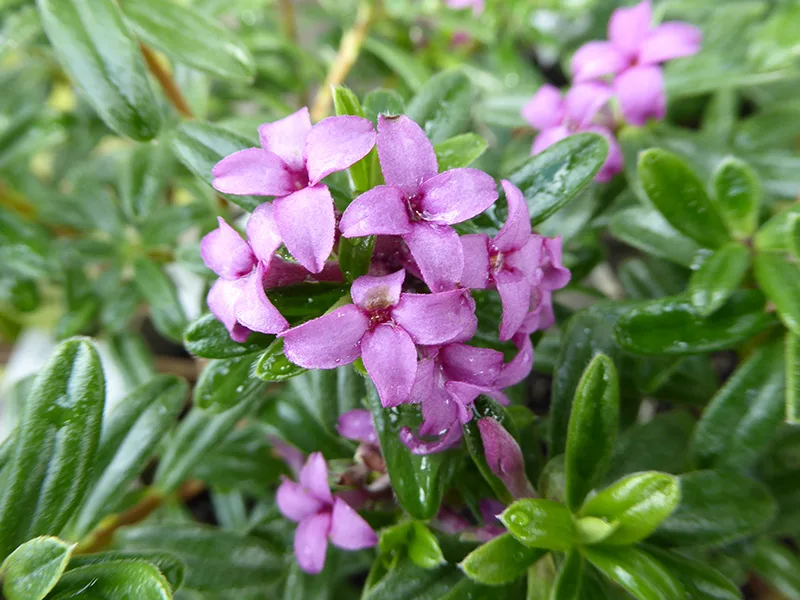
| Care difficulty | 3 / 5 |
|---|---|
| Watering schedule | Moderate regular watering, allowing brief slight drying between soakings |
| Sunlight requirements | Full sun · Partial shade |
| Ideal temperature | Information to be completed |
| Soil type | Chalk · Loam · Sand |
| Soil pH | Neutral |
| Soil moisture | Well drained |
| Fertilizing | Balanced perennial feed every four weeks from spring through summer |
| Toxicity | TOXIC if eaten, skin irritant. Wear gloves and other protective equipment when handling] |
How to Water daphne 'Cheriton'?
Moderate regular watering, allowing brief slight drying between soakings
Learn more →What Are the Sunlight Requirements for daphne 'Cheriton'?
Full sun · Partial shade
Learn more →What Soil Is Best for daphne 'Cheriton'?
- Soil type
- Chalk · Loam · Sand
- Soil pH
- Neutral
What Are the Moisture Requirements for daphne 'Cheriton'?
Well drained
Learn more →How to Fertilize daphne 'Cheriton'?

Balanced perennial feed every four weeks from spring through summer
Learn more →How to Prune daphne 'Cheriton'?

Keep pruning to a minimum: remove dead, damaged or unwanted growth; if shaping is needed, trim lightly after flowering.
Learn more →How to Propagate daphne 'Cheriton'?

Take nodal stem-tip greenwood and semi-ripe cuttings just as the base begins to firm up. Hormone rooting compound, a free-draining compost and bottom heat of 15°C will improve rooting. Layering of shoots take a year to become well rooted. May also be propagated by grafting
Learn more →How to Plant daphne 'Cheriton'?
Grow in well-drained, but not dry soil, in sun. Raised beds and troughs are ideal. Hardy in all but the coldest locations. Further daphne cultivation advice
Learn more →Common Pests & Diseases

Diseases
May be susceptible to honey fungus (rarely), phytophthora root rot, fungal leaf spot and virus diseases
Pests
May be susceptible to aphids
Explore the plant health library →The Toxicity of daphne 'Cheriton'
TOXIC if eaten, skin irritant. Wear gloves and other protective equipment when handling]