



Planting and Growing Jaboticaba

| Care difficulty | 3 / 5 |
|---|---|
| Watering schedule | Keep evenly moist but well drained; water deeply when the surface begins to dry |
| Sunlight requirements | Full sun · Partial shade |
| Ideal temperature | 20 – 30 °C |
| Soil type | Loam · Sand · Clay |
| Soil pH | Acid · Neutral |
| Soil moisture | Moist but well drained |
| Fertilizing | Apply a light balanced or fruit-tree feed every 4-6 weeks during active growth |
| Toxicity | Non-toxic to people; the ripe fruit is edible, although pets should not be allowed to consume large quantities of fruit or seeds. |
How to Water Jaboticaba?
Originating from the humid environments of Brazil, jaboticaba tree has adapted to thrive with moderate moisture levels. It exhibits a preference for consistent humidity and can endure brief periods of dryness. Watering practices should mimic its natural rhythm, which translates to watering once every 1-2 weeks. As an evergreen plant commonly grown outdoors, jaboticaba tree benefits from a thorough soaking that allows water to reach deep roots, promoting resilience during drier seasons.
Learn more →What Are the Sunlight Requirements for Jaboticaba?
Jaboticaba tree flourishes in full sunlight, which is fundamental for its growth and fruit production. Optimal light conditions involve direct exposure to the sun's rays for the majority of the day. Jaboticaba tree demonstrates resilience to light intensity variations, but insufficient light may cause stunted growth and hinder fruiting. While capable of some adaptation, the plant generally exhibits no major color changes or leaf adjustments in response to light exposure. Ideally planted outdoors, jaboticaba tree should occupy a position where direct sunlight is ample to ensure its vigorous health and robust yield.
Learn more →What Is the Ideal Temperature Range for Jaboticaba?

Jaboticaba tree is reasonably resilient but has specific temperature tolerances. It can withstand cold down to 5℃ (41℉) and heat up to 43℃ (109℉). These tolerances necessitate protective measures during extreme weather, such as frost covers in winter or shading in summer. Symptoms of cold stress include leaf drop and dieback, while heat stress may cause wilting and scorching. To counteract overcooling, use insulating materials; for overheating, ensure adequate hydration and shade. Suitable for climates without extreme temperature variations, jaboticaba tree needs vigilant care to thrive in less ideal conditions.
Learn more →What Soil Is Best for Jaboticaba?
Jaboticaba tree thrives in well-draining soil to avoid water-logging. Prepare a mix using equal parts garden soil, compost, and coarse sand or perlite. If these components are unavailable, consider a cactus or succulent soil mix. Ensure good drainage by placing gravel or stones at the bottom of the pot. Enhance growth with a balanced fertilizer applied every two months during the growing season. Regularly check soil moisture to prevent overwatering.
- Soil type
- Loam · Sand · Clay
- Soil pH
- Acid · Neutral
What Are the Moisture Requirements for Jaboticaba?
Moist but well drained
Learn more →How to Fertilize Jaboticaba?

For jaboticaba tree, fertilize with high phosphorus fertilizers to bolster flowering and fruiting, shifting to balanced nutrition formulas to support overall growth. Fertilize every 2-3 months, using the quantity recommended on the product label. The fertilization regime should be lighter in winter and increased during the growing season. Never over-fertilize, as it may damage the roots. Use a slow-release approach to ensure nutrients are available over time without risk of burn. Monitor jaboticaba tree regularly for any signs of nutrient deficiency or excess, adjusting the schedule accordingly. This targeted care promotes jaboticaba tree's health, yielding luscious fruit and vibrant foliage.
Learn more →How to Prune Jaboticaba?

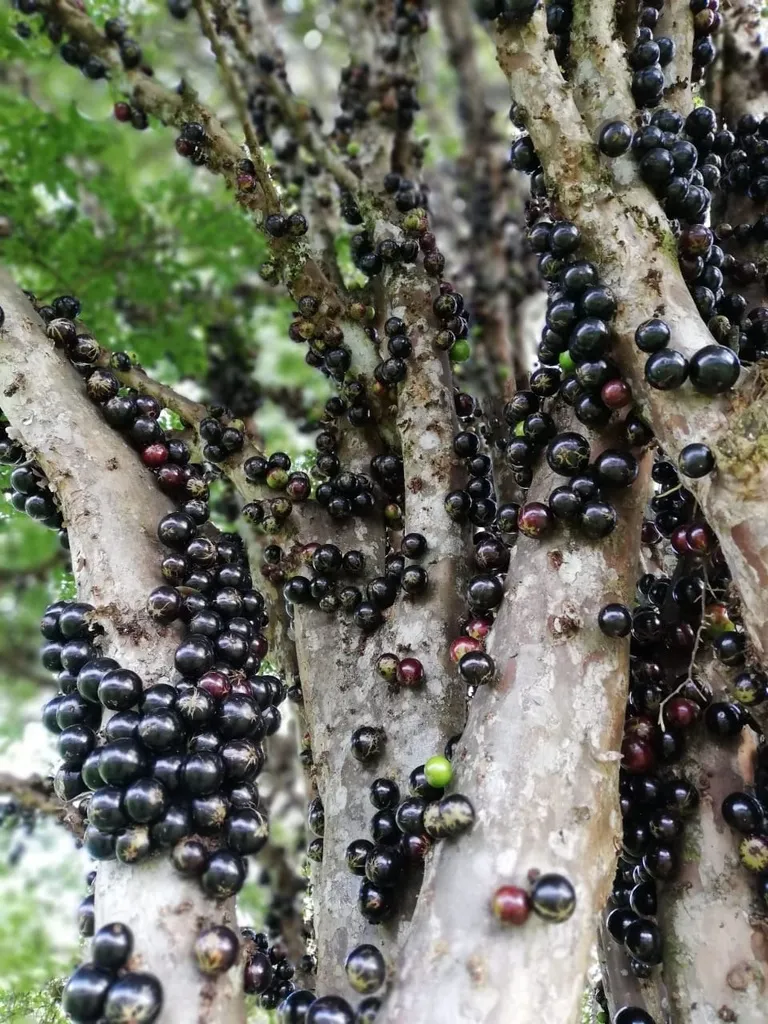
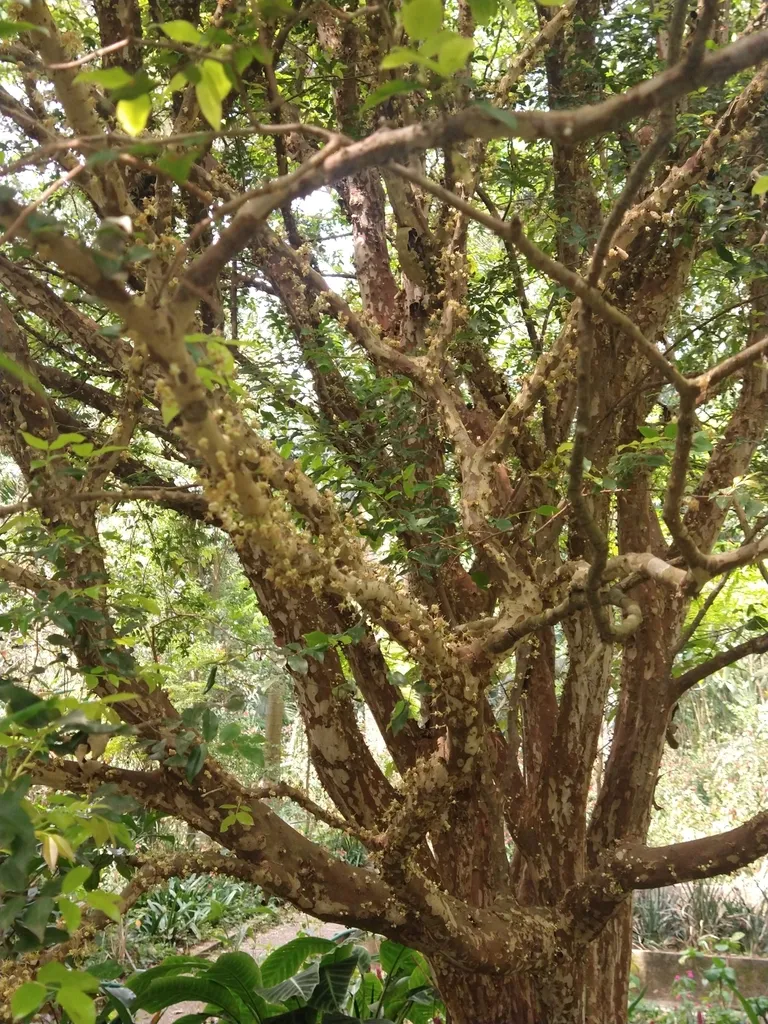
Jaboticaba tree is known for its unique, grape-like fruits that grow directly on its trunk and branches. Optimal pruning should occur from early to later spring, coinciding with the plant's active growth phase. Key techniques include removing dead or diseased wood, thinning the canopy to enhance air circulation, and controlling size and shape. Regular pruning improves fruit production and overall vigor. Always use clean, sharp tools to prevent disease transmission and ensure clean cuts.
Learn more →How to Propagate Jaboticaba?

Jaboticaba tree, a tropical fruit-bearing tree known for its unique growth of flowers and fruits directly on the trunk, is propagated primarily through grafting. This approach joins a scion of jaboticaba tree to the rootstock of a closely related species, promoting more uniform fruit production and faster maturation. For successful grafting, ensure compatible plant material is selected and grafts are made with clean, precise cuts to facilitate optimal healing and growth.
Learn more →How to Transplant Jaboticaba?
Transplant jaboticaba tree in the warmth of late spring to mid-summer, ensuring a gentle start in temperate weather. Choose a well-drained, sunny spot. Handle with care to protect the delicate root system during this optimal growth phase.
Learn more →How to Care for Jaboticaba in Winter?

Jaboticaba tree originates from the tropical climate of Brazil where winters are mild. It thrives in zones 10b-11 and shows some frost resistance, with young plants being more susceptible. During winter, gardeners should ensure jaboticaba tree is well-watered, but not waterlogged. Relocate potted plants indoors if possible or protect with a frost cloth. Check regularly for pests or disease signs as winter stress can make jaboticaba tree more vulnerable.
Learn more →How to Plant Jaboticaba?
Indoors-potted: Ensure jaboticaba tree has a sturdy support indoors; its vigorous growth can make it top-heavy as it matures. Outdoors-potted: Jaboticaba tree's container life requires diligent watering to mimic its natural tropical environment, avoiding dryness. Outdoors-in the ground: Plant jaboticaba tree in a sheltered spot outside to protect its delicate flowers and developing fruit from harsh elements.
Learn more →How to Repot Jaboticaba?
Repot jaboticaba tree every 2-3 years to accommodate its steady growth. Best repotted in spring, this slow-growing tree thrives with extra space. Choose a large, sturdy container to support its robust structure. After repotting, keep soil consistently moist and place jaboticaba tree in partial sunlight for optimal recovery. Regular pruning post-repot will maintain its shape and encourage fruit production.
Learn more →How to Harvest Jaboticaba?

Information to be completed
Learn more →Common Pests & Diseases

Diseases
Generally robust in suitable conditions, but root rot may occur in waterlogged soil and leaf spots or anthracnose can develop where foliage remains persistently wet with poor air circulation.
Pests
Watch for scale insects, mealybugs, aphids and fruit flies, particularly on stressed plants or in protected cultivation.
Explore the plant health library →The Toxicity of Jaboticaba
Non-toxic to people; the ripe fruit is edible, although pets should not be allowed to consume large quantities of fruit or seeds.