



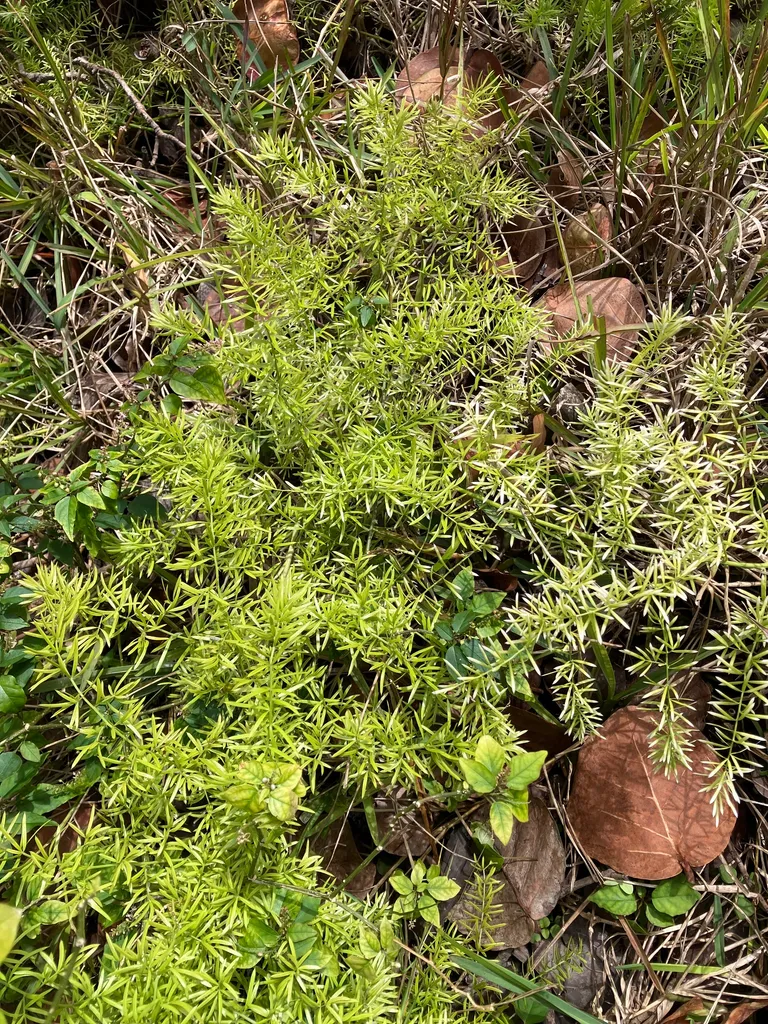
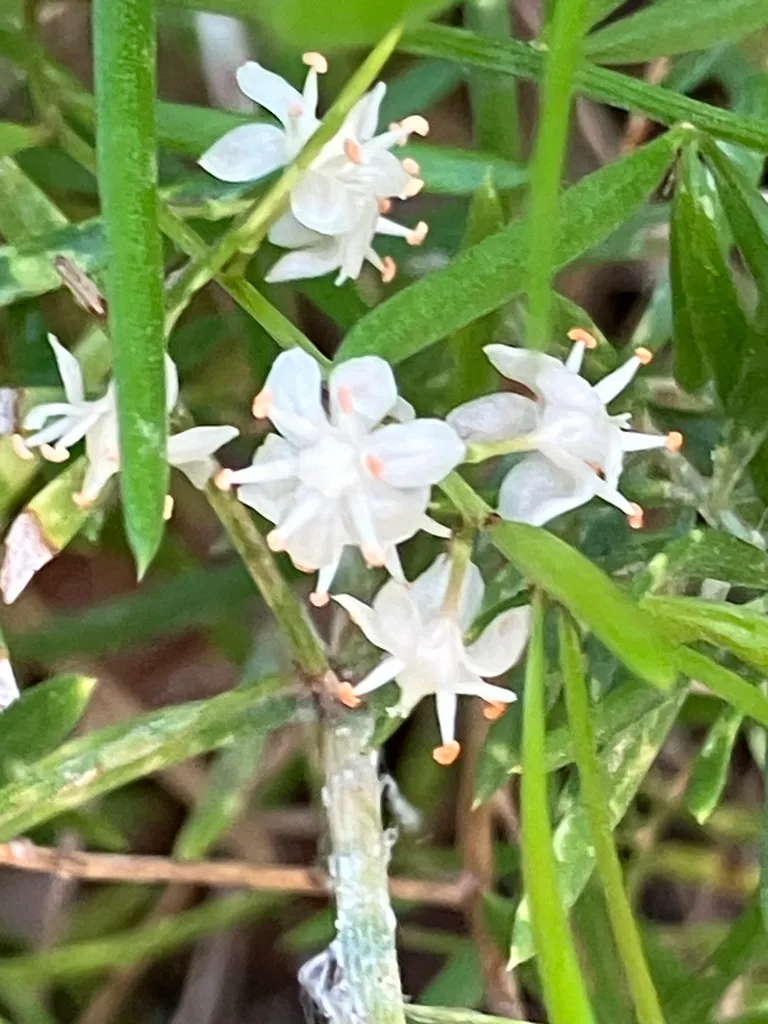
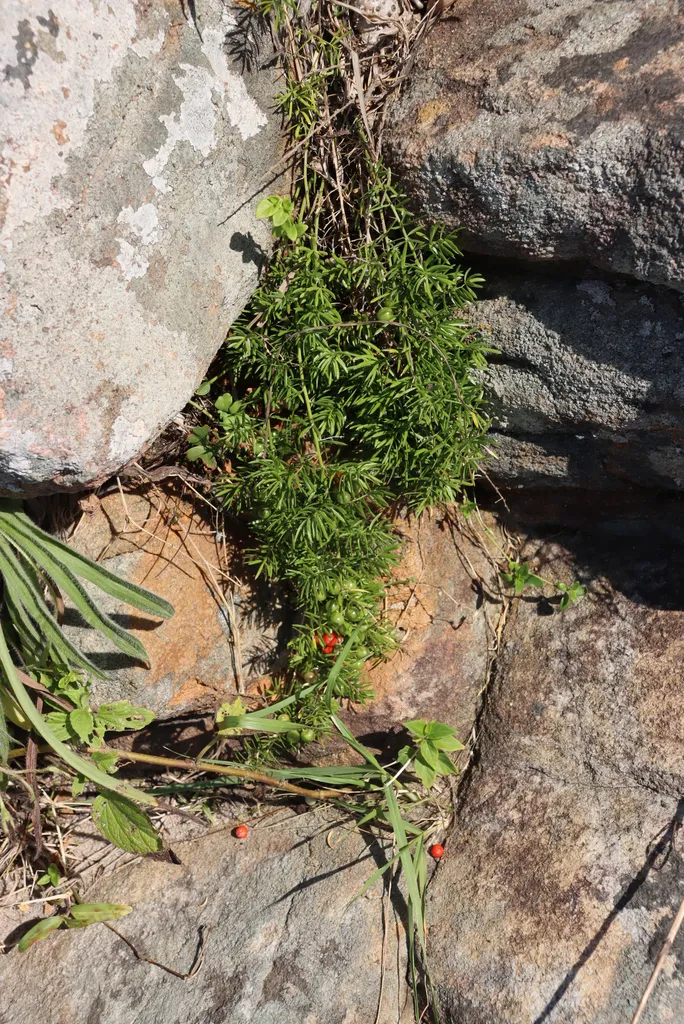
Planting and Growing emerald fern

| Care difficulty | 2 / 5 |
|---|---|
| Watering schedule | Moderate regular watering, allowing brief slight drying between soakings |
| Sunlight requirements | Partial shade |
| Ideal temperature | 15 – 25 °C |
| Soil type | Chalk · Clay · Loam · Sand |
| Soil pH | Acid · Alkaline · Neutral |
| Soil moisture | Moist but well drained |
| Fertilizing | Balanced perennial feed every four weeks from spring through summer |
| Toxicity | Skin allergen, fruits are harmful if eaten. Wear gloves and other protective equipment when handling] |
How to Water emerald fern?
Thriving in its native habitat's humidity, foxtail fern exhibits a preference for consistent moisture without being waterlogged. This species is moderately drought-tolerant, yet flourishes when maintained with watering every week. Its resilience is complemented by a need for well-draining soil to prevent root rot. Typically grown as an ornamental indoor plant, foxtail fern benefits from higher humidity levels which can be enhanced by regular misting or placing the pot on a pebble tray, ensuring it mirrors the moist conditions it naturally enjoys.
Learn more →What Are the Sunlight Requirements for emerald fern?
Foxtail fern thrives best in conditions of partial sun, where it receives ample light without being exposed to the harsh midday sun. Foxtail fern tolerates a range from full sun to full shade, though its growth rate and foliage lushness may vary. In full sun, the leaves may exhibit a paler green, indicating a stress response, while full shade can lead to leggier stems and fewer leaves. Foxtail fern adapts by adjusting leaf orientation to optimize light absorption. Outdoors, it should be planted in a spot that enjoys filtered light, such as beneath a canopy of larger plants, rather than in deep shadow or unfiltered direct sunlight.
Learn more →What Is the Ideal Temperature Range for emerald fern?

Foxtail fern displays significant resilience to temperature variations, tolerating cold down to 0°C (32°F) and heat up to 43°C (109°F). This adaptability makes foxtail fern suitable for diverse environments. However, below 0°C, it may exhibit frost damage, wilting, or browning leaves. Conversely, above 43°C, signs of heat stress might include leaf scorching and dehydration. For optimal care, shield foxtail fern from frost with insulating materials and ensure adequate hydration and shade during extreme heat. Understanding its temperature tolerance aids in maintaining its health and aesthetic appeal in various climates.
Learn more →What Soil Is Best for emerald fern?
- Soil type
- Chalk · Clay · Loam · Sand
- Soil pH
- Acid · Alkaline · Neutral
What Are the Moisture Requirements for emerald fern?
Moist but well drained
Learn more →How to Fertilize emerald fern?

For optimal care, fertilize foxtail fern using high nitrogen formulations during the growing season (spring-early fall) at a diluted half-strength every 2-4 weeks, facilitating vigorous growth and lush foliage. Cease fertilization in winter to allow foxtail fern to rest. Apply smaller quantities than indicated for garden plants to prevent root burn—less is often more. Use well-balanced, slow-release pellets yearly for sustained nutrition. Regular feeding supports health and resilience, preventing disease. Always water foxtail fern before fertilizing to safeguard roots.
Learn more →How to Prune emerald fern?

Foxtail fern, noted for its feathery, plume-like foliage, benefits from annual pruning in early spring. Remove any yellowing or dead fronds to encourage new growth and maintain a tidy appearance. Prune overly long stems to enhance the plant's overall shape. Regular trimming helps improve air circulation and reduce the risk of pests and diseases. Always use sharp, disinfected tools to minimize plant stress and prevent infections.
Learn more →How to Propagate emerald fern?

The ideal propagation method for foxtail fern is utilizing tubers, commonly done in spring. This species poses moderate propagation difficulty. Look for new shoots as signs of successful propagation. Ensure proper planting depth for tubers.
Learn more →How to Transplant emerald fern?
The optimal time to transplant foxtail fern is during late spring through early summer, as warmer temperatures encourage new growth. Ensure foxtail fern is placed in a well-draining location with bright, filtered light. If needed, provide extra care during the initial weeks post-transplant to promote a strong root establishment.
Learn more →How to Care for emerald fern in Winter?

Foxtail fern hails from the warm and frost-free climates of South Africa, deftly handling winter by entering dormancy. Its native adaptation is less effective in cooler regions, where gardeners should consider indoor wintering to avoid harsh frosts. Consistent watering and adequate indirect light prevents it from drying out, helping it to thrive post-winter. Detailed winter care enhances foxtail fern's resilience, revealing its vibrant, hearty fronds at the advent of spring.
Learn more →How to Plant emerald fern?
Indoors-potted: Inside, foxtail fern thrives with good air circulation to keep its needle-like leaves healthy and vibrant. Outdoors-potted: Foxtail fern's adaptability makes it ideal for outdoor pots; ensure drainage is effective to prevent root rot. Outdoors-in the ground: When planted in soil, foxtail fern favors a sheltered spot that mimics its native, understory habitat.
Learn more →How to Repot emerald fern?
Repot foxtail fern every 2-3 years in the spring to accommodate its growth. Opt for a larger pot that allows foxtail fern's tuberous roots to spread, as it can reach 2-3 feet in width and height. Post-repotting, place foxtail fern in bright, indirect light and maintain consistent moisture without waterlogging, ensuring robust recovery and luscious, arching foliage.
Learn more →How to Harvest emerald fern?

Information to be completed
Learn more →Common Pests & Diseases

Diseases
Generally disease-free
Pests
May be susceptible to asparagus beetle, slugs and snails
Explore the plant health library →Troubleshooting
Wilting or few blooms
Sunlight, soil moisture and seasonal flowering stage all matter.
| What you notice | Possible explanation | What to check next |
|---|---|---|
| Healthy foliage but few buds | Light, season or flowering maturity may limit buds | Check species-specific sun exposure and whether it is in its flowering season. |
| Drooping with moist soil | Poor root aeration, heat stress or root damage | Check drainage and inspect stems/leaves for spots or pests. |
- Match sun exposure to the named plant; shield newly moved plants from abrupt intense light.
- Water the root zone when needed and remove spent flowers where appropriate.
Escalate spreading wilt with wet soil or expanding lesions; do not infer a pathogen from one symptom.
Leaf damage and seasonal change
Distinguish seasonal leaf fall or weather damage from progressive pest injury.
| What you notice | Possible explanation | What to check next |
|---|---|---|
| Holes, stippling or patches after storms | Insects, hail or weather stress may overlap. | Inspect both leaf surfaces, nearby plants and recent weather. |
- Remove only severely damaged fallen debris and avoid prophylactic spraying.
- Check new growth and protect establishment conditions.
Extensive unexplained dieback warrants local diagnostic support.
The Toxicity of emerald fern
Skin allergen, fruits are harmful if eaten. Wear gloves and other protective equipment when handling]