



Planting and Growing Epimedium × youngianum 'Tamabotan'

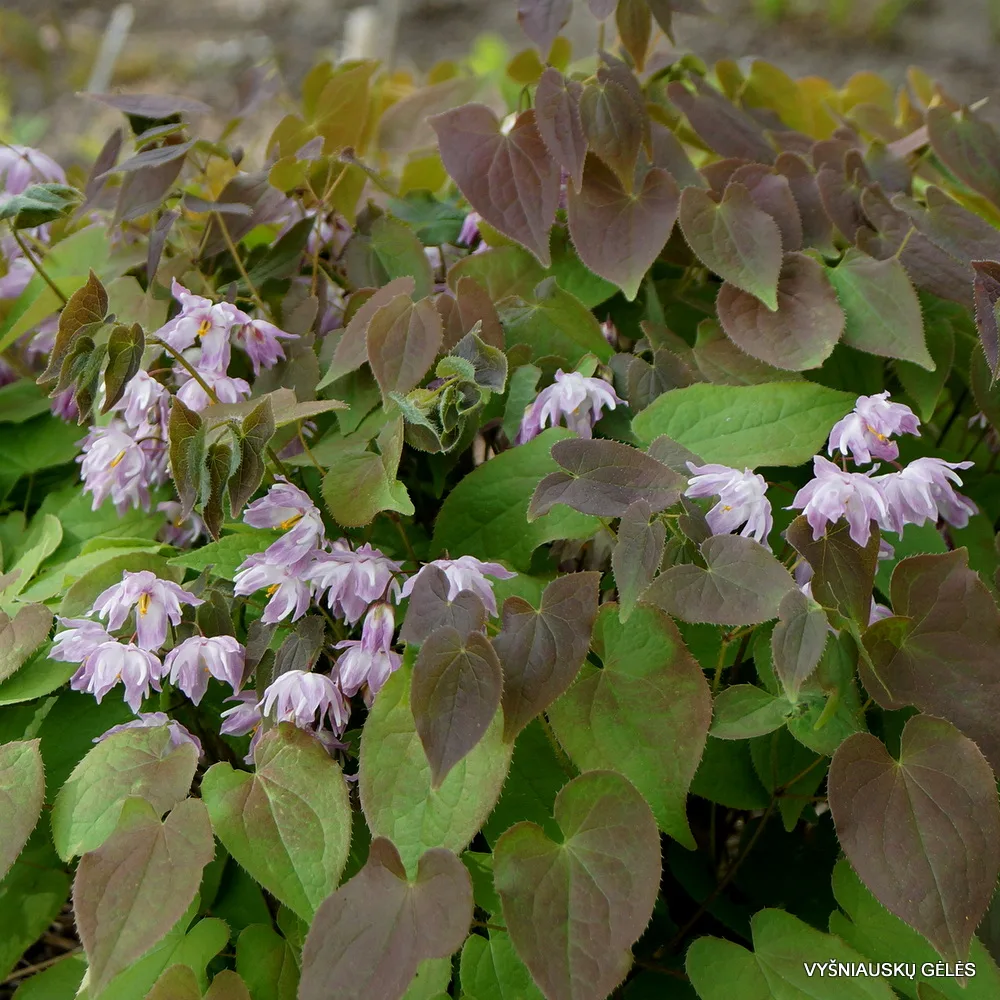
| Care difficulty | 2 / 5 |
|---|---|
| Watering schedule | Moderate regular watering, avoid prolonged drought and stagnant waterlogging |
| Sunlight requirements | Partial shade |
| Ideal temperature | Information to be completed |
| Soil type | Chalk · Clay · Loam |
| Soil pH | Acid · Alkaline · Neutral |
| Soil moisture | Moist but well drained |
| Fertilizing | Balanced perennial feed every four weeks spring through summer growth |
| Toxicity | Information to be completed |
How to Water Epimedium × youngianum 'Tamabotan'?
Moderate regular watering, avoid prolonged drought and stagnant waterlogging
Learn more →What Are the Sunlight Requirements for Epimedium × youngianum 'Tamabotan'?
Partial shade
Learn more →What Soil Is Best for Epimedium × youngianum 'Tamabotan'?
- Soil type
- Chalk · Clay · Loam
- Soil pH
- Acid · Alkaline · Neutral
What Are the Moisture Requirements for Epimedium × youngianum 'Tamabotan'?
Moist but well drained
Learn more →How to Fertilize Epimedium × youngianum 'Tamabotan'?

Balanced perennial feed every four weeks spring through summer growth
Learn more →How to Prune Epimedium × youngianum 'Tamabotan'?

No pruning required
Learn more →How to Propagate Epimedium × youngianum 'Tamabotan'?

Propagate by division in autumn or after flowering; or by root cuttings of rhizomes, kept under glass in winter, and planted out after all danger of frost has passed
Learn more →How to Plant Epimedium × youngianum 'Tamabotan'?
Grow in fertile, humus-rich, moist but well-drained soil in partial shade, with shelter from cold, drying winds. Where frosts are prolonged or severe, spread an organic mulch such as leaf mould or composted bark to protect plants over winter
Learn more →Common Pests & Diseases

Diseases
May be susceptible to virus diseases
Pests
May be susceptible to vine weevil
Explore the plant health library →