



Planting and Growing peace lily


| Care difficulty | 2 / 5 |
|---|---|
| Watering schedule | Water when top inch of soil is dry; leaves may droop slightly as signal |
| Sunlight requirements | Partial shade |
| Ideal temperature | 18 – 27 °C |
| Soil type | Chalk · Loam · Sand |
| Soil pH | Acid · Alkaline · Neutral |
| Soil moisture | Moist but well drained |
| Fertilizing | Monthly during growing season |
| Toxicity | Harmful if eaten. Wear gloves and other protective equipment when handling |
How to Water peace lily?
Thriving in the understory of tropical rainforests, peace lily has adapted to environments with high humidity and consistent moisture. It possesses a moderate drought tolerance but flourishes when the soil remains lightly moist without becoming waterlogged. For optimal health, peace lily prefers watering every week. As an evergreen plant commonly grown indoors, peace lily benefits from higher humidity levels which can be maintained by regular misting or placing it on a pebble tray, ensuring its glossy leaves remain vibrant throughout the year.
Learn more →What Are the Sunlight Requirements for peace lily?
Peace lily thrives in conditions with low to medium light intensity, preferring full shade to flourish optimally. Its tolerance extends to partial sun exposure; however, extended periods in strong light may impede growth, impact leaf coloration, and reduce flowering potential. Adaptive traits include the adjustment of its leaves to optimize light absorption. For indoor cultivation, peace lily suits spots with filtered light away from direct sunbeams, such as near north-facing windows. Outdoors, peace lily should be planted in shaded areas where sunlight is soft or dappled. Proper light management is crucial for maintaining peace lily's vigorous growth and lush appearance.
Learn more →What Is the Ideal Temperature Range for peace lily?

Peace lily demonstrates notable temperature tolerance, enduring from 5℃ (41℉) to 45℃ (113℉). It exhibits sensitivity to extreme cold, displaying wilted or yellow leaves, and may suffer from leaf scorching in excessive heat. Protective measures during extremes, such as insulating during cold snaps or providing shade in intense heat, are essential. This tolerance range suggests peace lily is versatile for various environments, although careful monitoring is necessary. Countermeasures for cold stress include relocating indoors or using frost covers, while overheating stress can be managed through increased humidity and frequent watering.
Learn more →What Soil Is Best for peace lily?
Peace lily thrives in well-draining soil that retains some moisture. A suitable soil mix combines two parts peat or coco peat with one part perlite or sand to promote aeration and prevent water-logging. For areas where peat is not available, an equal mix of loam and perlite or vermiculite can be used. Incorporate slow-release fertilizer before planting and replenish annually to sustain growth.
- Soil type
- Chalk · Loam · Sand
- Soil pH
- Acid · Alkaline · Neutral
What Are the Moisture Requirements for peace lily?
Moist but well drained
Learn more →How to Fertilize peace lily?

Fertilizing peace lily is key for its lush foliage and striking blooms. Employ high-phosphorus fertilizers to boost flowering, every 6-8 weeks during growing seasons. Use half the recommended strength to prevent root burn. Skip winter fertilization as peace lily enters dormancy. In spring, gradually resume to encourage robust growth. Measure accurately to maintain peace lily's health. Over-fertilization can lead to nutrient buildup, hindering peace lily's vitality. Adequate fertilization promises vivid leaves and an impressive display of white flowers, embodying peace lily's splendor.
Learn more →How to Prune peace lily?

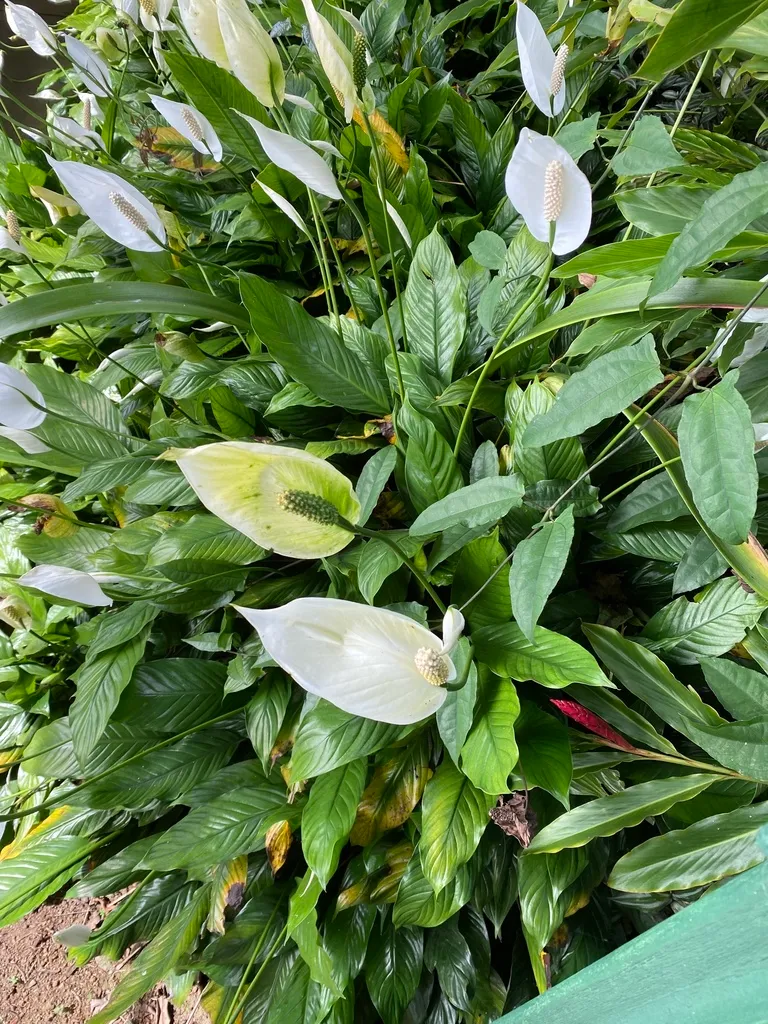
Peace lily features lush green leaves and elegant white blooms. Pruning peace lily involves removing yellow, brown, or dead leaves at the base using clean, sharp scissors. Deadheading spent flowers promotes new blooms. Optimal pruning time is early spring to late winter, aligning with peace lily's growth cycle. Pruning improves air circulation, encourages healthy growth, and enhances aesthetic appeal. Regular trims keep peace lily vibrant and prevent potential diseases.
Learn more →How to Propagate peace lily?

A popular indoor plant with glossy green leaves and elegant white blooms, peace lily thrives in warm, humid conditions and is propagated primarily through division and cuttings. For successful propagation, divide the root ball during repotting or use stem cuttings with at least one leaf and root them in water or moist soil. Ensuring high humidity and indirect sunlight promotes a healthy root system for new plants. Care should be taken to avoid damaging the parent plant's roots and to maintain a clean cut on the stem to prevent disease.
Learn more →How to Transplant peace lily?
Peace lily flourishes best when transplanted during mid-spring to late spring, or mid-fall to late fall, ensuring optimal root growth. Choose a well-lit, humid location for successful transplantation. Gently loosen the root ball, if needed, for optimal results!
Learn more →How to Care for peace lily in Winter?

Peace lily is native to tropical rainforests, thriving in warm, humid climates without intense seasonal change. Winter temperate regions pose a challenge as it's unacquainted with frost and severe temperatures. To assure robust winter care, gardeners must emulate its tropical roots by ensuring adequate indoor warmth, humidity, and protection from drafts. Careful watering and light adjustments should be in place to prevent dormancy due to lower light levels.
Learn more →How to Plant peace lily?
Indoors-potted: Ensure your peace lily isn't too cozy with radiators; proximity to heat sources can dry it out. Outdoors-potted: Outdoor peace lily may struggle with direct sun. Choose a shaded patio or balcony for happy growth. Outdoors-in the ground: Peace lily thrives in temperate climates but may falter in extreme cold, preferring sheltered garden spots.
Learn more →How to Repot peace lily?
Repot peace lily annually, ideally in spring to accommodate its growth spurt. This non-climbing, bushy plant thrives in a new pot 1-2 inches larger in diameter to allow root expansion without stress. Post-repot, a well-draining soil mix and indirect light promote recovery. Regular, but not excessive, watering is key as it's sensitive to overwatering. Friendly reminder: Peace lilies denote tranquility through their lush leaves and white blooms.
Learn more →How to Harvest peace lily?

Information to be completed
Learn more →Common Pests & Diseases

Diseases
Generally disease free
Pests
Generally pest-free
Explore the plant health library →The Toxicity of peace lily
Harmful if eaten. Wear gloves and other protective equipment when handling