



Planting and Growing Texas Mountain Laurel

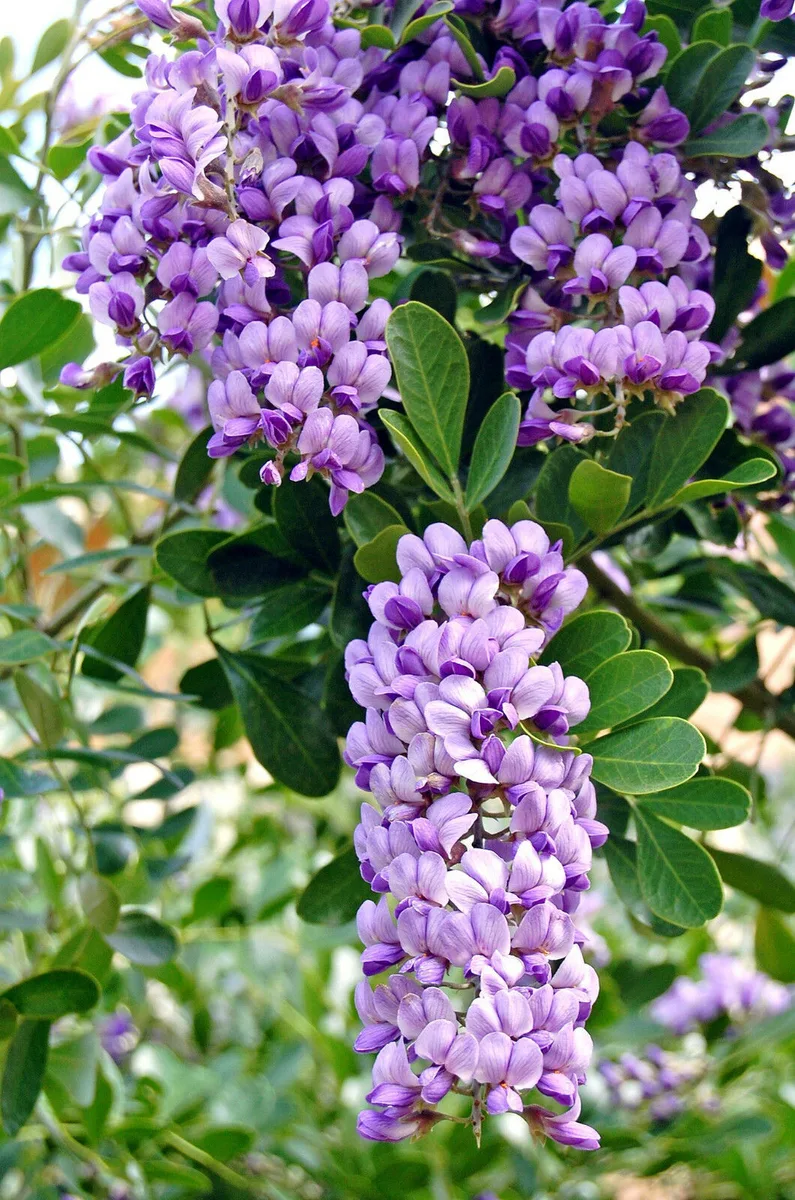
| Care difficulty | 2 / 5 |
|---|---|
| Watering schedule | Water deeply when soil is dry to the touch |
| Sunlight requirements | Full sun |
| Ideal temperature | Information to be completed |
| Soil type | Loam · Sand |
| Soil pH | Neutral · Alkaline |
| Soil moisture | Well-drained |
| Fertilizing | Apply slow-release fertilizer in early spring |
| Toxicity | Toxic if ingested – all parts contain cytisine and are poisonous to humans and pets, especially the seeds. |
How to Water Texas Mountain Laurel?
Water deeply when soil is dry to the touch
Learn more →What Are the Sunlight Requirements for Texas Mountain Laurel?
Full sun
Learn more →What Soil Is Best for Texas Mountain Laurel?
- Soil type
- Loam · Sand
- Soil pH
- Neutral · Alkaline
What Are the Moisture Requirements for Texas Mountain Laurel?
Well-drained
Learn more →How to Fertilize Texas Mountain Laurel?

Apply slow-release fertilizer in early spring
Learn more →How to Prune Texas Mountain Laurel?

Prune after flowering to remove dead or crossing branches and to shape the plant. Avoid heavy pruning; only light structural trimming is necessary.
Learn more →How to Propagate Texas Mountain Laurel?

Propagate by seed, which requires scarification (nicking or hot water treatment) to break hard seed coat; sow in spring at 18–21°C. Semi-ripe cuttings can be taken in summer with bottom heat, though rooting may be slow. Layering is also possible.
Learn more →How to Plant Texas Mountain Laurel?
Plant in well-drained, moderately fertile soil in full sun. This species is highly drought-tolerant once established and dislikes waterlogged conditions. Water sparingly during dry periods. Apply a balanced slow-release fertilizer in early spring. In cooler regions, provide a sheltered position or mulch roots in winter to protect from hard frosts. Ideal for low-water gardens or xeriscaping.
Learn more →Common Pests & Diseases

Diseases
Generally disease resistant, but can develop leaf spots or root rot in poorly drained soils. Ensure good drainage to prevent fungal issues.
Pests
Occasionally attacked by aphids, mealybugs, or scale insects. Monitor and treat with insecticidal soap if infestations occur.
Explore the plant health library →The Toxicity of Texas Mountain Laurel
Toxic if ingested – all parts contain cytisine and are poisonous to humans and pets, especially the seeds.