



Planting and Growing Camphor tree

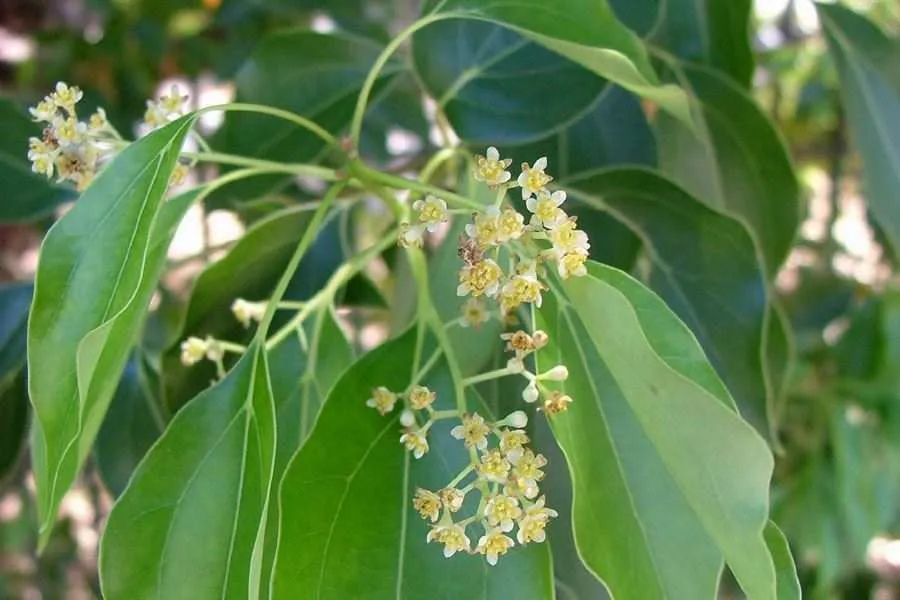
| Care difficulty | 2 / 5 |
|---|---|
| Watering schedule | Keep soil moist when young; established trees are moderately drought tolerant. |
| Sunlight requirements | Full sun · Partial shade |
| Ideal temperature | Information to be completed |
| Soil type | Loam · Sand · Clay · Chalk |
| Soil pH | Acid · Neutral |
| Soil moisture | Moist but well drained |
| Fertilizing | Apply balanced fertilizer in early spring and mid-summer. |
| Toxicity | Non-toxic to humans and pets in normal garden use, though ingestion of large quantities of leaves may cause mild stomach upset due to camphor content. |
How to Water Camphor tree?
Keep soil moist when young; established trees are moderately drought tolerant.
Learn more →What Are the Sunlight Requirements for Camphor tree?
Full sun · Partial shade
Learn more →What Soil Is Best for Camphor tree?
- Soil type
- Loam · Sand · Clay · Chalk
- Soil pH
- Acid · Neutral
What Are the Moisture Requirements for Camphor tree?
Moist but well drained
Learn more →How to Fertilize Camphor tree?

Apply balanced fertilizer in early spring and mid-summer.
Learn more →How to Prune Camphor tree?

Prune in late winter to early spring to shape and remove dead or crossing branches. Heavy pruning can be tolerated if needed.
Learn more →How to Propagate Camphor tree?

Sow seeds in autumn after cleaning, or take semi-hardwood cuttings in summer with bottom heat. Seeds germinate slowly; cuttings should be taken from healthy shoots and kept humid.
Learn more →How to Plant Camphor tree?
Grow in full sun or partial shade in moist but well-drained soil. Tolerates a wide range of soil types including clay and chalk, but prefers slightly acid to neutral pH. Water young trees regularly; established trees have some drought tolerance. Apply a balanced fertilizer in early spring and again in midsummer. In cold regions, protect from severe frost or grow in a container that can be overwintered indoors.
Learn more →Common Pests & Diseases

Diseases
Susceptible to root rot in poorly drained soils and leaf spot diseases. Good air circulation and proper drainage help prevent issues.
Pests
May be affected by scale insects, aphids, and spider mites, especially in dry conditions.
Explore the plant health library →The Toxicity of Camphor tree
Non-toxic to humans and pets in normal garden use, though ingestion of large quantities of leaves may cause mild stomach upset due to camphor content.