



Planting and Growing Tuberose

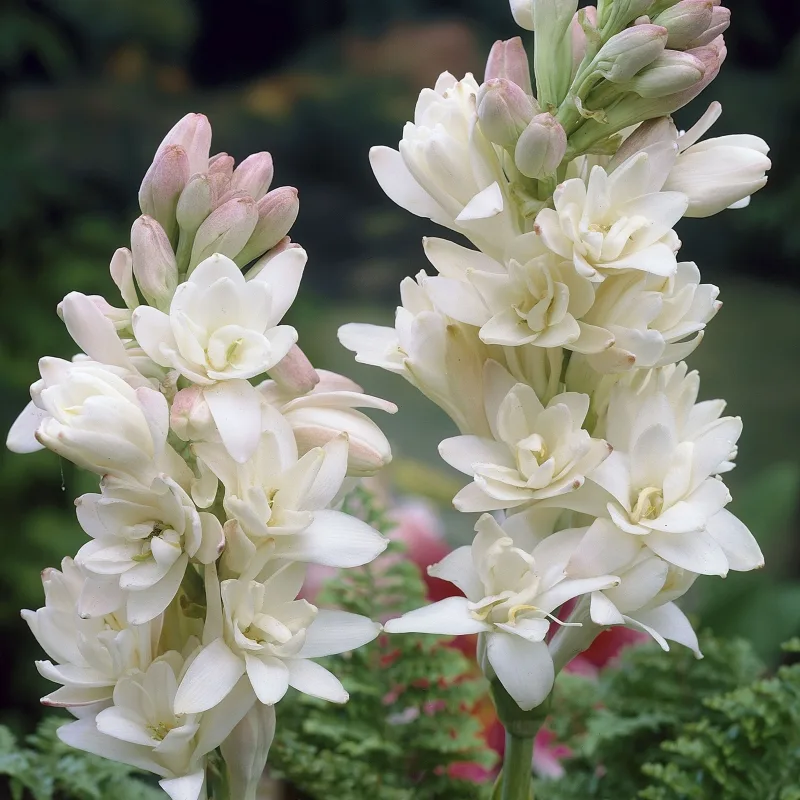
| Care difficulty | 3 / 5 |
|---|---|
| Watering schedule | Keep soil evenly moist during growth, allow to dry slightly between waterings after flowering. |
| Sunlight requirements | Full sun |
| Ideal temperature | 15 – 25 °C |
| Soil type | Loam · Sand |
| Soil pH | Neutral |
| Soil moisture | Moist but well drained |
| Fertilizing | Every 2-3 weeks during the growing season until flowering. |
| Toxicity | Non-toxic to humans and pets, though ingestion may cause mild digestive upset. |
How to Water Tuberose?
Keep soil evenly moist during growth, allow to dry slightly between waterings after flowering.
Learn more →What Are the Sunlight Requirements for Tuberose?
Full sun
Learn more →What Is the Ideal Temperature Range for Tuberose?

15 – 25 °C
Learn more →What Soil Is Best for Tuberose?
- Soil type
- Loam · Sand
- Soil pH
- Neutral
What Are the Moisture Requirements for Tuberose?
Moist but well drained
Learn more →How to Fertilize Tuberose?

Every 2-3 weeks during the growing season until flowering.
Learn more →How to Prune Tuberose?

Remove spent flower spikes after blooming to prevent seed formation. Allow foliage to die back naturally before lifting tubers.
Learn more →How to Propagate Tuberose?

Divide offsets from the mother tuber in early spring before planting. Alternatively, separate small bulblets that form around the parent bulb and pot them up individually. Seeds are rarely used as they take longer to flower.
Learn more →How to Plant Tuberose?
Plant tubers in spring after frost risk has passed, in a warm, sheltered site with full sun. They prefer fertile, loamy or sandy soil that is moist but well-drained. Water regularly during the growing season, but reduce watering after flowering as foliage dies back. In colder regions (below H3), lift and store the tubers dry over winter at 10-15°C. Apply a balanced liquid fertiliser every two to three weeks until flowering.
Learn more →Common Pests & Diseases

Diseases
Tuberose can be susceptible to fungal leaf spots (e.g., Botrytis) in humid conditions. Good air circulation and well-drained soil help prevent issues.
Pests
Aphids, spider mites, and thrips may occasionally attack, especially under glass. Regular inspection and prompt control are recommended.
Explore the plant health library →The Toxicity of Tuberose
Non-toxic to humans and pets, though ingestion may cause mild digestive upset.