



Planting and Growing Alocasia 'Regal Shield'

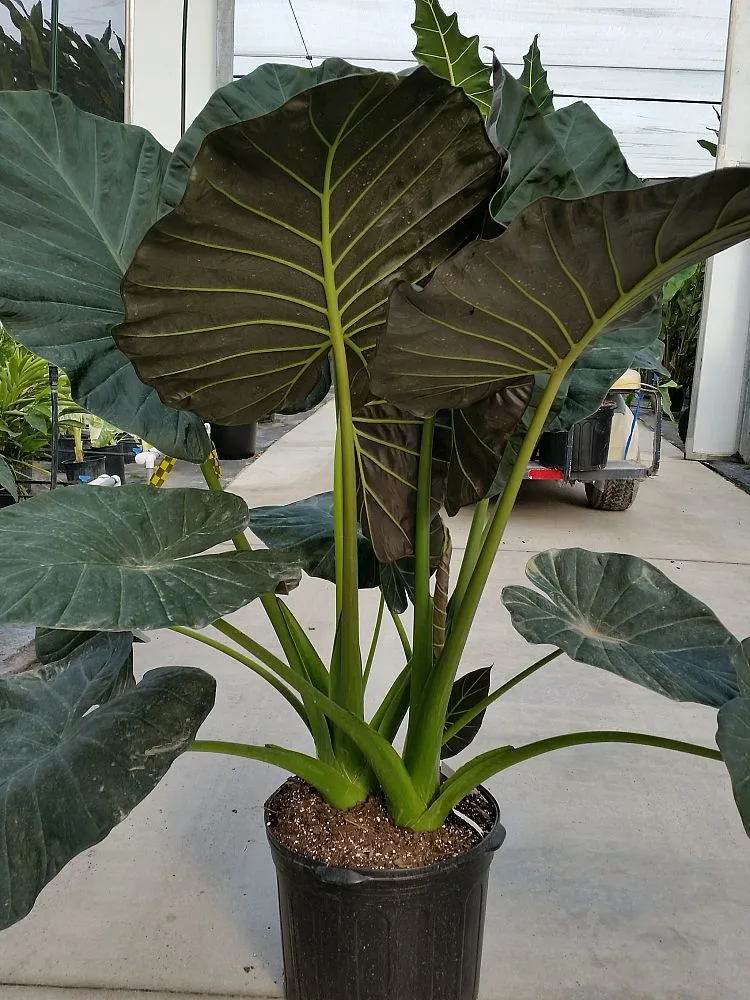
| Care difficulty | 3 / 5 |
|---|---|
| Watering schedule | Keep soil consistently moist but allow the top layer to dry slightly between waterings. Avoid waterlogging. |
| Sunlight requirements | Bright indirect light |
| Ideal temperature | 20 – 30 °C |
| Soil type | Loam · Peat |
| Soil pH | Acid · Neutral |
| Soil moisture | Moist but well drained |
| Fertilizing | Every 2 weeks during the growing season (spring to early autumn) with a balanced liquid fertilizer. |
| Toxicity | Toxic if ingested; contains calcium oxalate crystals which can cause irritation and swelling in the mouth and throat. Keep away from pets and children. |
How to Water Alocasia 'Regal Shield'?
Originating from tropical environments, elephant Ear 'Regal Shields' thrives in conditions that mimic the high humidity and moist soil of its native habitat. This species exhibits a preference for consistent moisture without being waterlogged, indicating a balance in its watering needs. To maintain this equilibrium, elephant Ear 'Regal Shields' benefits from watering every week. As an evergreen plant often cultivated indoors due to its striking foliage, elephant Ear 'Regal Shields' requires careful attention to indoor humidity levels to ensure it remains hydrated and healthy.
Learn more →What Are the Sunlight Requirements for Alocasia 'Regal Shield'?
Elephant Ear 'Regal Shields' can grow in filtered sunlight to shady conditions. Direct sunlight can burn leaves badly. On the other hand, if it is placed in an area with insufficient light for a long time, its stem will become slender and the leaves soft. It is best to plant elephant Ear 'Regal Shields' in partial shade.
Learn more →What Is the Ideal Temperature Range for Alocasia 'Regal Shield'?

Elephant Ear 'Regal Shields' demonstrates moderate resilience to temperature variations but has specific thresholds. It can tolerate cold down to approximately 5℃ (41℉) and heat up to about 41℃ (106℉). If exposed to temperatures outside these ranges, elephant Ear 'Regal Shields' may show signs such as wilting, yellowing leaves, or slowed growth. Care involves shielding from frost and intense heat, possibly requiring placement in a more controlled indoor environment or shade during extreme conditions. In cold climates, consider using frost cloths or bringing the plant indoors. Ensure adequate ventilation and humidity in hot weather to prevent overheating.
Learn more →What Soil Is Best for Alocasia 'Regal Shield'?
Elephant Ear 'Regal Shields' thrive with well-draining, aerated soil to prevent water-logging. A suitable soil mix can be made with equal parts of potting mix, perlite, and peat to enhance drainage and aeration. If peat is unavailable, use coconut coir as an alternative. For boosting growth, incorporate a slow-release fertilizer at the beginning of the growing season, ensuring proper nourishment over time. Maintain soil moisture without overwatering to support the health of elephant Ear 'Regal Shields'.
- Soil type
- Loam · Peat
- Soil pH
- Acid · Neutral
What Are the Moisture Requirements for Alocasia 'Regal Shield'?
Moist but well drained
Learn more →How to Fertilize Alocasia 'Regal Shield'?

For elephant Ear 'Regal Shields', use balanced nutrition fertilizers to support robust growth. Fertilize bimonthly during the growing season, tapering off in the dormant period to prevent overfeeding. Dosage should follow the lower end of the product's recommendation, prioritizing slow-release formulas to avoid root burn. This regimen enhances leaf size and plant vigor. Seasonal adjustments: Increase frequency in spring/summer; reduce in fall/winter. Tip: Water the soil before applying fertilizer to help nutrient absorption and protect roots.
Learn more →How to Prune Alocasia 'Regal Shield'?

Known for its large, striking leaves, elephant Ear 'Regal Shields' thrives with occasional pruning to maintain its shape and health. Pruning is best done in early spring before new growth begins. Remove any dead or yellowing leaves at the base, and trim overly long stems to encourage bushier growth. Regular pruning promotes air circulation and prevents pest infestations, ensuring vibrant foliage. Always use clean, sharp tools to prevent disease.
Learn more →How to Propagate Alocasia 'Regal Shield'?

Elephant Ear 'Regal Shields' can be propagated effectively using the division method. This entails separating the rhizomes, ensuring each division contains at least one growth point for successful regeneration. Careful handling is paramount to avoid damage that could impede root formation. Post-division, the individual sections should be planted in soil conducive to elephant Ear 'Regal Shields''s growth needs, which typically includes high humidity, warmth, and well-draining soil. Adequate watering and monitoring will help to establish the new plants, cementing the division as a practical propagation strategy for elephant Ear 'Regal Shields'.
Learn more →How to Transplant Alocasia 'Regal Shield'?
The prime window for relocating elephant Ear 'Regal Shields' is from the awakening of spring till the cusp of summer, ensuring warm soil and stable growth conditions. Choose a luminous spot with dappled sunlight and ample humidity to mimic their native tropical ambiance.
Learn more →How to Plant Alocasia 'Regal Shield'?
Elephant Ear 'Regal Shields' can be grown from seeds or ramets. Propagating from seed is a very demanding, slow process, so the most common method is ramets. They can be acquired from a healthy mother plant 2-3 years old in the spring. The process starts by delicately removing the plant roots and rhizomes from the ground. When the plant is pulled out from the soil, gently rinse its root system with water using a garden hose. Rinse until the individual ramets become visible; then they can be easily pulled apart from the mother plant. It is important to separate them very carefully with a sharp knife, so the roots suffer as little damage as possible. Plant the separated ramets into individual pots filled with a mixture of a potting mix, a lot of sand, and some perlite. The substrate must drain well. Water the ramets after planting and keep the temperature of the soil between 18 to 25 ℃. After it grows into a new plant, it's better to repot it every year in spring to ensure better growth.
Learn more →Common Pests & Diseases

Diseases
Susceptible to root rot if overwatered or grown in poorly draining soil. May also develop leaf spot diseases in overly humid conditions with poor air circulation.
Pests
Common pests include spider mites, aphids, and mealybugs. Regular inspection and wiping leaves with a damp cloth can help prevent infestations.
Explore the plant health library →Troubleshooting
Yellowing Lower Leaves, Root Rot, or Crispy Brown Edges
Alocasia 'Regal Shield' thrives in warm, humid conditions with evenly moist but airy soil; prolonged soggy compost suffocates roots, while dry indoor air or direct sun crisps leaf margins.
| What you notice | Possible explanation | What to check next |
|---|---|---|
| Multiple lower or inner leaves turn yellow and limp while potting mix remains heavy and wet | Overwatering, dense poorly drained compost, or cold drafts causing root/rhizome rot | Feel two inches into the potting mix, check drainage holes, and verify room temperature stays above 15°C (59°F) |
| Leaf tips or margins turn brown and dry while center leaves stay green, or bleached patches appear on sunny sides | Low indoor air humidity, mineral/salt buildup, or harsh direct sun scorch | Check proximity to heaters/vents and whether midday direct sun hits the foliage |
| A single oldest outer leaf yellows gradually while sturdy new growth unfurls at the center | Normal age-related leaf turnover | Confirm the potting mix drains well and new leaves look healthy |
- Pot in an airy, humus-rich, well-drained mix (amended with bark, perlite, or coarse grit) in a container with open drainage holes.
- Water properly: Keep soil consistently moist but allow the top layer to dry slightly between waterings. Avoid waterlogging., and reduce watering during cooler winter months without letting the root ball desiccate completely.
- Provide bright indirect light out of scorching midday sun, boost ambient humidity with a pebble tray or humidifier, and keep away from cold drafts.
Stop watering and inspect roots if stems or rhizomes turn mushy at the soil line; trim decayed roots and repot into fresh airy mix.
Fine Webbing, Sticky Residue, or Leaf Spots
Warm, dry indoor air favors spider mites, mealybugs, and scale on Alocasia 'Regal Shield', while stagnant wet foliage encourages fungal or bacterial leaf spots.
| What you notice | Possible explanation | What to check next |
|---|---|---|
| Speckled pale stippling with fine webbing under leaves, or white cottony clusters along petioles and veins | Sap-sucking pests (Common pests include spider mites, aphids, and mealybugs. Regular inspection and wiping leaves with a damp cloth can help prevent infestations.) | Inspect leaf undersides, midribs, and petiole sheaths with a magnifier |
| Dark water-soaked or yellow-haloed spots expanding on leaves in cool, stagnant, humid conditions | Suspected leaf spot or fungal blight (Susceptible to root rot if overwatered or grown in poorly draining soil. May also develop leaf spot diseases in overly humid conditions with poor air circulation.) | Check whether water sits on leaves overnight and assess room airflow |
- Isolate affected plants, wipe leaf surfaces and undersides gently with a damp cloth, and apply insecticidal soap or horticultural oil per label directions.
- Remove heavily spotted leaves at the base with sterilized shears, water at the soil surface rather than over the crown, and improve gentle air circulation.
- Keep foliage clean of dust so leaves photosynthesize efficiently.
Avoid spraying foliage in stagnant, cool rooms where leaves cannot dry within a few hours.
The Toxicity of Alocasia 'Regal Shield'
Toxic if ingested; contains calcium oxalate crystals which can cause irritation and swelling in the mouth and throat. Keep away from pets and children.