



Planting and Growing String of Tears

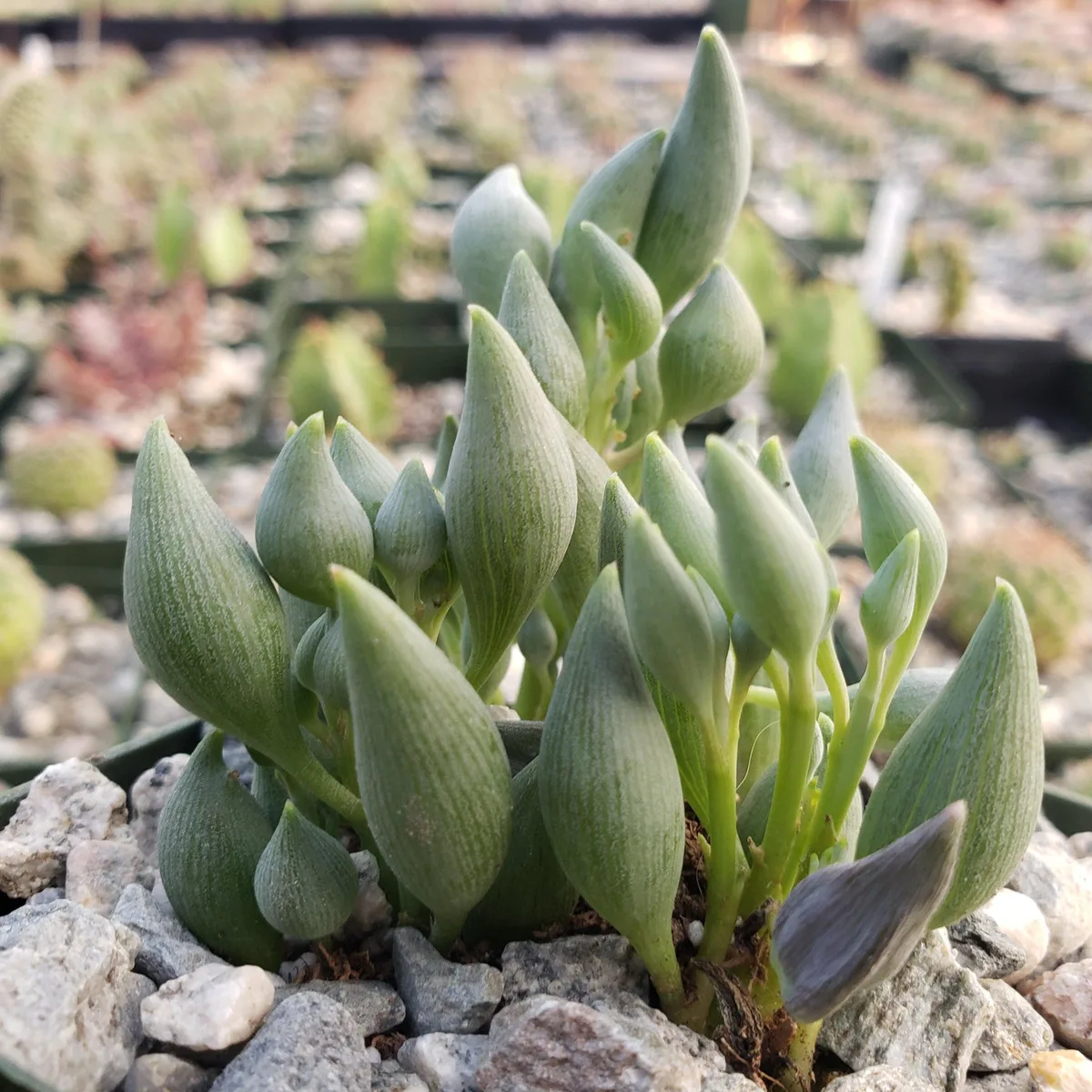
| Care difficulty | 2 / 5 |
|---|---|
| Watering schedule | Water sparingly, allow soil to dry out completely between waterings |
| Sunlight requirements | Bright indirect light |
| Ideal temperature | 15 – 25 °C |
| Soil type | Sand · Loam |
| Soil pH | Neutral |
| Soil moisture | Dry between watering |
| Fertilizing | Monthly during growing season (spring/summer) with diluted succulent fertilizer |
| Toxicity | Toxic to humans and pets if ingested; contains pyrrolizidine alkaloids which can cause liver damage. |
How to Water String of Tears?
String of Tears thrives in environments that mimic its native arid conditions, requiring minimal moisture to sustain its succulent leaves. It is drought-tolerant and prefers infrequent watering, aligning with a schedule of once every three weeks to maintain the right moisture balance. Given its preference for drier climates, string of Tears is typically grown indoors where humidity levels can be more easily controlled. As an adaptive succulent, it's well-suited for container living, which allows for careful management of water intake during its growth cycles.
Learn more →What Are the Sunlight Requirements for String of Tears?
String of Tears thrives in conditions where it can bask in full sun, which facilitates robust growth and enhances its natural resilience. However, string of Tears also exhibits a remarkable tolerance for partial sun, making it versatile for various planting locations. While string of Tears can manage in less intense light, too much deviation from its ideal luminary environment may result in leggy stems or dulled foliage vibrancy. For those cultivated outdoors, string of Tears favours sunny spots that mimic its native arid habitats, whereas when grown indoors, placing string of Tears near a south-facing window optimizes light exposure. Its succulent leaves may exhibit subtle changes when adapting to the available light, serving as a cue for caretakers to adjust positioning if necessary.
Learn more →What Is the Ideal Temperature Range for String of Tears?

String of Tears is moderately resilient to temperature fluctuations, tolerating a range from 0°C (32°F) to 43°C (110°F). This adaptability makes it suitable for diverse environments, though care must be taken during extreme weather. Symptoms of cold stress include leaf discoloration and drooping, while heat stress can cause leaf scorch and wilting. To counteract overcooling, move string of Tears to a warmer location or use insulating covers. For overheating, provide shade and increase humidity. Proper positioning and vigilance are key to maintaining its health in variable climates.
Learn more →What Soil Is Best for String of Tears?
For string of Tears, ensure soil has excellent aeration and drainage. Use a succulent & cactus soil mix, or prepare one with 2 parts potting soil, 1 part perlite, and 1 part coarse sand. Avoid water-logging by placing a layer of small stones at the pot's bottom. You can add slow-release succulent fertilizer every 4-6 weeks during the growing season.
- Soil type
- Sand · Loam
- Soil pH
- Neutral
What Are the Moisture Requirements for String of Tears?
Dry between watering
Learn more →How to Fertilize String of Tears?

For string of Tears, use succulent-specific fertilizer to boost growth and health. Apply a diluted solution - quarter strength of the recommended dose - monthly during spring and summer, when string of Tears actively grows. During fall and winter, cease fertilizing to allow dormancy. Overfertilization can damage string of Tears; moderation is key. Soft water is preferable to avoid salt buildup. Periodically flush soil to remove excess fertilizer. By adhering to these guidelines, string of Tears will thrive.
Learn more →How to Prune String of Tears?

Remove dead or yellowing leaves to maintain appearance. Trim leggy stems in early spring to encourage bushier growth.
Learn more →How to Propagate String of Tears?

String of Tears propagates easily through herbaceous cuttings in the Spring and Summer seasons. This method requires taking a cutting from a healthy plant, removing the lower leaves, and allowing the wound to heal before planting in well-draining soil. Successful propagation can be identified by new growth and rooted stems. Watering sparingly and providing bright indirect light can increase chances of success.
Learn more →How to Transplant String of Tears?
The ideal season to transplant string of Tears is from early spring to mid-spring, or early winter to late winter, as these conditions promote healthy root development. Choose a well-drained location with partial sun, and gently loosen the root ball if needed. Happy transplanting!
Learn more →How to Plant String of Tears?
Grow in bright, indirect light; direct afternoon sun may scorch the leaves. Use a very well-draining cactus or succulent potting mix. Water thoroughly only when the soil has completely dried out, and reduce watering to a minimum in winter when growth slows. Feed monthly with a balanced liquid fertilizer diluted to half strength during the spring and summer growing season. Protect from temperatures below 5°C (41°F) and avoid overwatering to prevent root rot.
Learn more →How to Repot String of Tears?
String of Tears, a delicate trailing succulent, requires repotting biennially to maintain root health. Best repotted in spring to sync with growth spurts, a slightly larger, well-draining container is ideal to encourage expansion. Post-repotting, ensure a sunny spot and minimal watering until new growth indicates recovery. Careful handling of its fragile tears during this process is crucial for thriving plants.
Learn more →Common Pests & Diseases

Diseases
Prone to root rot and stem rot if overwatered or kept in poorly draining soil. Ensure good air circulation to prevent fungal issues.
Pests
May attract mealybugs, aphids, and spider mites, especially when stressed or in dry indoor air. Check undersides of leaves regularly.
Explore the plant health library →The Toxicity of String of Tears
Toxic to humans and pets if ingested; contains pyrrolizidine alkaloids which can cause liver damage.