



Planting and Growing Russian comfrey 'Moorland Heather'

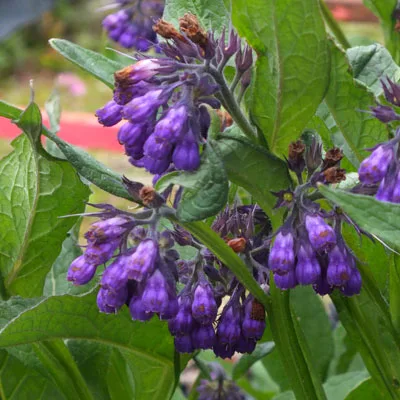
| Care difficulty | 2 / 5 |
|---|---|
| Watering schedule | Moderate regular watering, avoid prolonged drought and stagnant waterlogging |
| Sunlight requirements | Full shade · Partial shade |
| Ideal temperature | Information to be completed |
| Soil type | Loam · Clay · Chalk |
| Soil pH | Neutral · Acid · Alkaline |
| Soil moisture | Moist but well drained |
| Fertilizing | Balanced perennial feed every four weeks spring through summer growth |
| Toxicity | Harmful if eaten repeatedly. Wear gloves and other protective equipment when handling |
How to Water Russian comfrey 'Moorland Heather'?
Moderate regular watering, avoid prolonged drought and stagnant waterlogging
Learn more →What Are the Sunlight Requirements for Russian comfrey 'Moorland Heather'?
Full shade · Partial shade
Learn more →What Soil Is Best for Russian comfrey 'Moorland Heather'?
- Soil type
- Loam · Clay · Chalk
- Soil pH
- Neutral · Acid · Alkaline
What Are the Moisture Requirements for Russian comfrey 'Moorland Heather'?
Moist but well drained
Learn more →How to Fertilize Russian comfrey 'Moorland Heather'?

Balanced perennial feed every four weeks spring through summer growth
Learn more →How to Prune Russian comfrey 'Moorland Heather'?

Cut down faded flowers in late summer to produce another flush of flower
Learn more →How to Propagate Russian comfrey 'Moorland Heather'?

Propagate by division in spring. Take root cuttings in early winter
Learn more →How to Plant Russian comfrey 'Moorland Heather'?
Grow in moderately fertile, moist soil in sun or partial shade. Be aware the plant growth can be vigorous once established and has the potential to become a nuisance, so will require appropriate management
Learn more →Common Pests & Diseases

Diseases
Generally disease-free
Pests
Generally pest-free
Explore the plant health library →The Toxicity of Russian comfrey 'Moorland Heather'
Harmful if eaten repeatedly. Wear gloves and other protective equipment when handling