



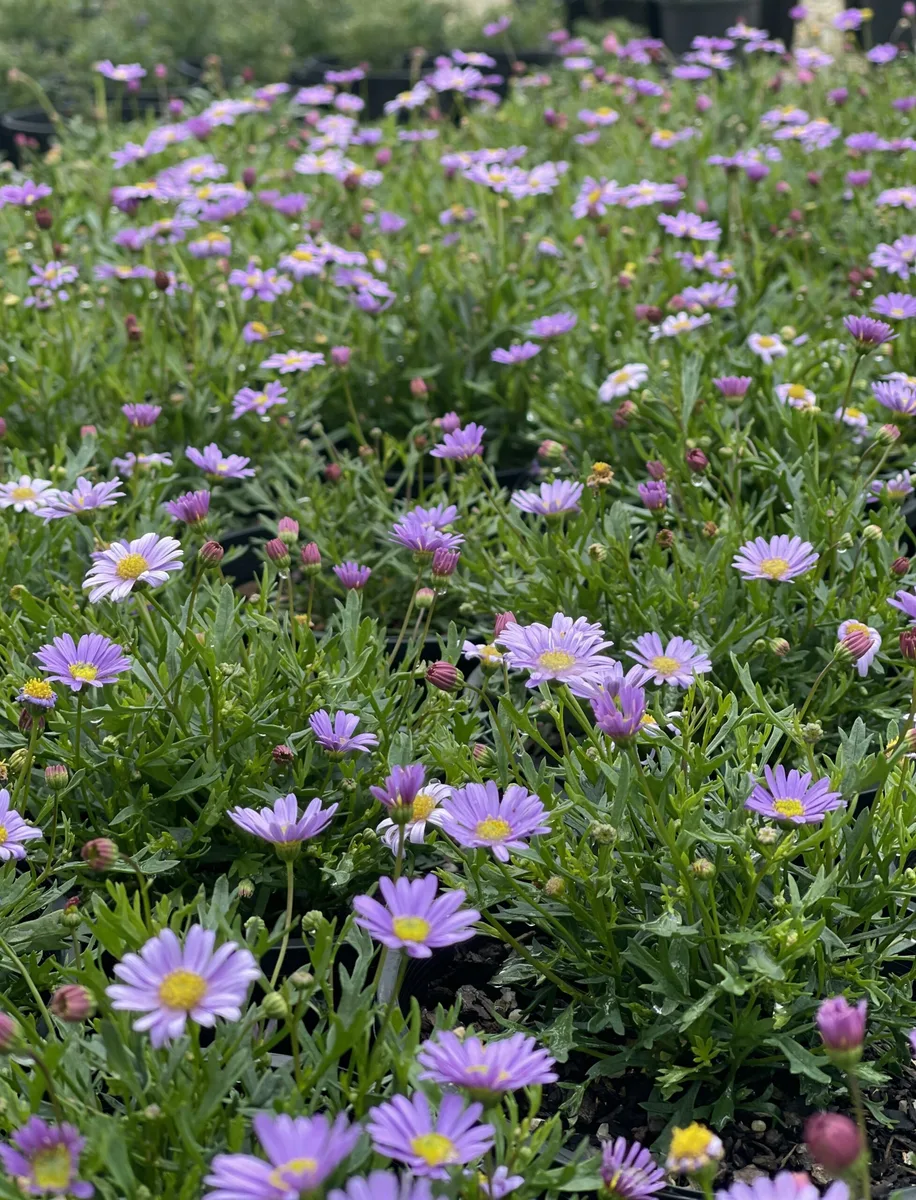
Planting and Growing Brachyscome 'Mini Mauve Delight'

| Care difficulty | 2 / 5 |
|---|---|
| Watering schedule | Moderate regular watering, allowing brief slight drying between soakings |
| Sunlight requirements | Full sun |
| Ideal temperature | Information to be completed |
| Soil type | Chalk · Clay · Loam · Sand |
| Soil pH | Acid · Alkaline · Neutral |
| Soil moisture | Moist but well drained · Well drained |
| Fertilizing | Balanced perennial feed every four weeks from spring through summer |
| Toxicity | Information to be completed |
How to Water Brachyscome 'Mini Mauve Delight'?
Moderate regular watering, allowing brief slight drying between soakings
Learn more →What Are the Sunlight Requirements for Brachyscome 'Mini Mauve Delight'?
Full sun
Learn more →What Soil Is Best for Brachyscome 'Mini Mauve Delight'?
- Soil type
- Chalk · Clay · Loam · Sand
- Soil pH
- Acid · Alkaline · Neutral
What Are the Moisture Requirements for Brachyscome 'Mini Mauve Delight'?
Moist but well drained · Well drained
Learn more →How to Fertilize Brachyscome 'Mini Mauve Delight'?

Balanced perennial feed every four weeks from spring through summer
Learn more →How to Prune Brachyscome 'Mini Mauve Delight'?

Pinch out growing tips regularly when young for a well-balanced and well-branched plant. Trim off the spent flowers after the first early summer flush, to encourage repeat flowering. Careful and regular dead-heading can prolong the flowering display well into autumn.
Learn more →How to Propagate Brachyscome 'Mini Mauve Delight'?

Propagate by softwood cuttings
Learn more →How to Plant Brachyscome 'Mini Mauve Delight'?
Grow on in warm frost free conditions. Acclimatise plants before planting outside in early summer. Pinch out growing points while the plants are small to encourage branching and more stems. Regular pinching will create a well balanced compact plant that is perfect for container cultivation. Will grow in any well drained soil in sun.
Learn more →Common Pests & Diseases

Diseases
Generally disease-free
Pests
Generally pest-free
Explore the plant health library →