



Planting and Growing Clematis Rosebud ('Robud')

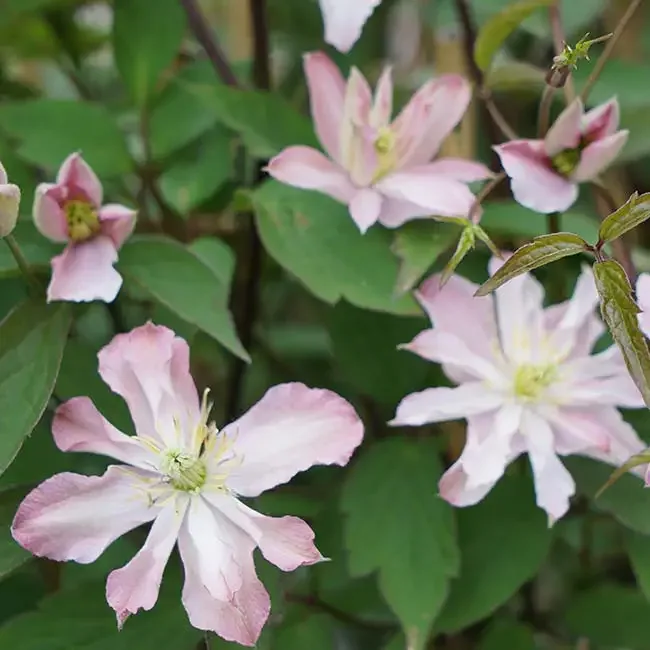
| Care difficulty | 2 / 5 |
|---|---|
| Watering schedule | Moist cool root zone, keep upper crown of plant dry at all times |
| Sunlight requirements | Full sun · Partial shade |
| Ideal temperature | Information to be completed |
| Soil type | Chalk · Clay · Loam · Sand |
| Soil pH | Acid · Alkaline · Neutral |
| Soil moisture | Moist but well drained |
| Fertilizing | Diluted clematis feed every three weeks spring and summer time |
| Toxicity | Skin irritant. Wear gloves and other protective equipment when handling |
How to Water Clematis Rosebud ('Robud')?
Moist cool root zone, keep upper crown of plant dry at all times
Learn more →What Are the Sunlight Requirements for Clematis Rosebud ('Robud')?
Full sun · Partial shade
Learn more →What Is the Ideal Temperature Range for Clematis Rosebud ('Robud')?

Information to be completed
Learn more →What Soil Is Best for Clematis Rosebud ('Robud')?
- Soil type
- Chalk · Clay · Loam · Sand
- Soil pH
- Acid · Alkaline · Neutral
What Are the Moisture Requirements for Clematis Rosebud ('Robud')?
Moist but well drained
Learn more →How to Fertilize Clematis Rosebud ('Robud')?

Diluted clematis feed every three weeks spring and summer time
Learn more →How to Prune Clematis Rosebud ('Robud')?

Minimal pruning required; tidy after flowering to remove dead or damaged stems and shorten others if necessary. See clematis pruning: group one
Learn more →How to Propagate Clematis Rosebud ('Robud')?

Propagate from cuttings (climbers)
Learn more →How to Transplant Clematis Rosebud ('Robud')?
Information to be completed
Learn more →How to Care for Clematis Rosebud ('Robud') in Winter?

Information to be completed
Learn more →How to Plant Clematis Rosebud ('Robud')?
Plant with the top of the root ball about 8cm below the soil surface, in a moisture-retentive, well-drained soil. Position in sun or part shade, with the roots and base of the plant kept cool and shaded by other plants or a layer of pebbles at the base. See clematis cultivation for more advice
Learn more →How to Repot Clematis Rosebud ('Robud')?
Information to be completed
Learn more →How to Harvest Clematis Rosebud ('Robud')?

Information to be completed
Learn more →Common Pests & Diseases

Diseases
May be susceptible to honey fungus (rarely), clematis wilt and clematis slime flux
Pests
May be susceptible to aphids. Cutworms and voles may cut young stems
Explore the plant health library →The Toxicity of Clematis Rosebud ('Robud')
Skin irritant. Wear gloves and other protective equipment when handling