



Planting and Growing Mahonia bodinieri

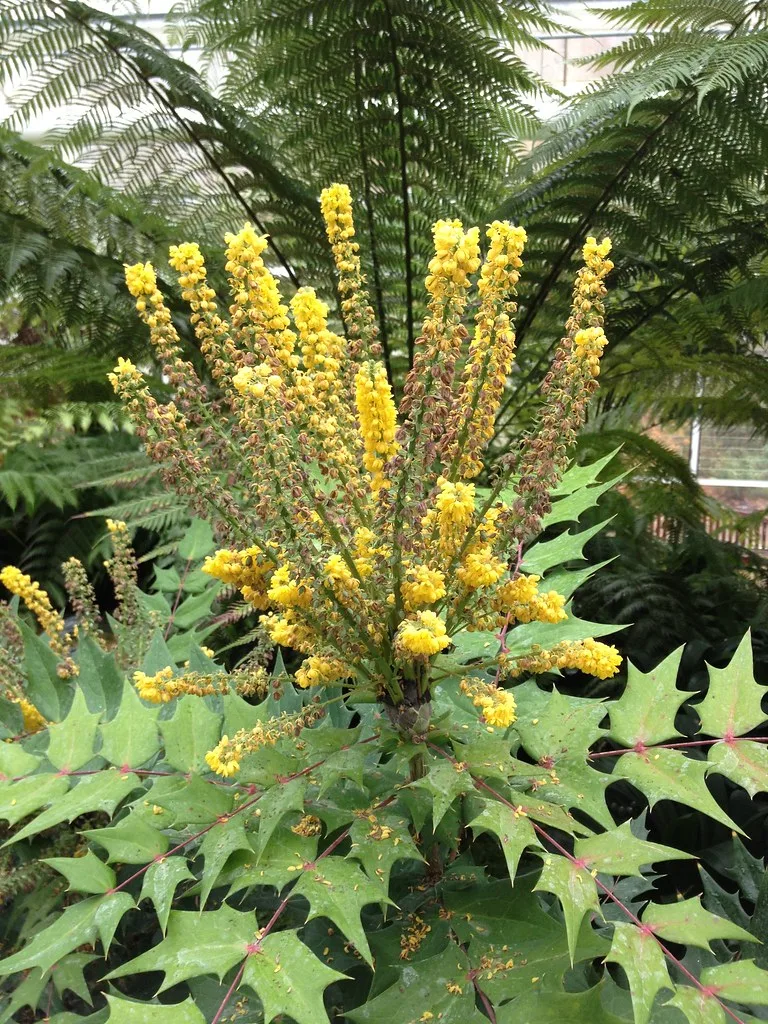
| Care difficulty | 2 / 5 |
|---|---|
| Watering schedule | Moderate regular watering, allowing brief slight drying between soakings |
| Sunlight requirements | Full shade · Partial shade |
| Ideal temperature | Information to be completed |
| Soil type | Chalk · Clay · Loam · Sand |
| Soil pH | Acid · Alkaline · Neutral |
| Soil moisture | Moist but well drained · Well drained |
| Fertilizing | Balanced perennial feed every four weeks from spring through summer |
| Toxicity | Berries are ornamental, not to be eaten. Wear gloves and other protective equipment when handling] |
How to Water Mahonia bodinieri?
Moderate regular watering, allowing brief slight drying between soakings
Learn more →What Are the Sunlight Requirements for Mahonia bodinieri?
Full shade · Partial shade
Learn more →What Soil Is Best for Mahonia bodinieri?
- Soil type
- Chalk · Clay · Loam · Sand
- Soil pH
- Acid · Alkaline · Neutral
What Are the Moisture Requirements for Mahonia bodinieri?
Moist but well drained · Well drained
Learn more →How to Fertilize Mahonia bodinieri?

Balanced perennial feed every four weeks from spring through summer
Learn more →How to Prune Mahonia bodinieri?

Usually little pruning is needed. Lightly shape if necessary, removing dead, damaged or diseased shoots. Prune after flowering.
Learn more →How to Propagate Mahonia bodinieri?

Propagate by layering or stem cuttings in June and July.
Learn more →How to Plant Mahonia bodinieri?
Grow in any well-drained or moist but well-drained soil in partial or deeper shade. It will tolerate a sunny position if the soil is not too dry but is very suitable for difficult shady situations. Mahonia don’t respond well to nitrogen rich fertilisers but do appreciate an annual mulch with well-rotted manure or garden compost in September which will help keep weeds down and keep the ground a little warmer in winter. Water in very dry periods – water well if needed but not often.
Learn more →Common Pests & Diseases

Diseases
May be susceptible to rust diseases and Powdery mildews, especially in dry weather.
Pests
Generally pest-free
Explore the plant health library →The Toxicity of Mahonia bodinieri
Berries are ornamental, not to be eaten. Wear gloves and other protective equipment when handling]