



Planting and Growing large-flowered petrocosmea

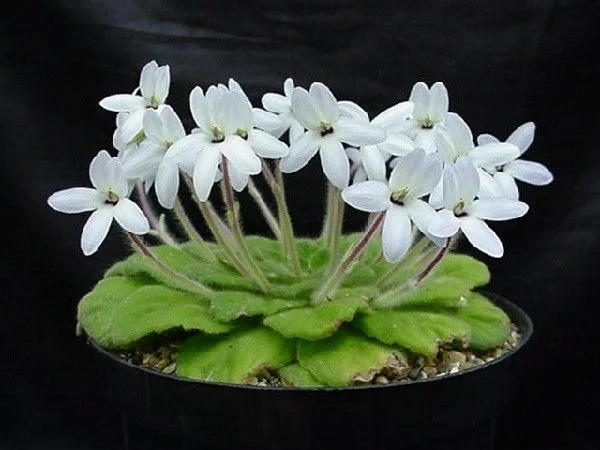
| Care difficulty | 4 / 5 |
|---|---|
| Watering schedule | Moderate regular watering, allowing brief slight drying between soakings |
| Sunlight requirements | Partial shade |
| Ideal temperature | Information to be completed |
| Soil type | Chalk · Loam · Sand |
| Soil pH | Alkaline · Neutral |
| Soil moisture | Well drained |
| Fertilizing | Balanced perennial feed every four weeks from spring through summer |
| Toxicity | Information to be completed |
How to Water large-flowered petrocosmea?
Moderate regular watering, allowing brief slight drying between soakings
Learn more →What Are the Sunlight Requirements for large-flowered petrocosmea?
Partial shade
Learn more →What Soil Is Best for large-flowered petrocosmea?
- Soil type
- Chalk · Loam · Sand
- Soil pH
- Alkaline · Neutral
What Are the Moisture Requirements for large-flowered petrocosmea?
Well drained
Learn more →How to Fertilize large-flowered petrocosmea?

Balanced perennial feed every four weeks from spring through summer
Learn more →How to Prune large-flowered petrocosmea?

No pruning required
Learn more →How to Propagate large-flowered petrocosmea?

Propagate by seed sown as soon as it is ripe, or by leaf cuttings in summer and autumn
Learn more →How to Plant large-flowered petrocosmea?
Grow in a cold greenhouse or alpine house, in indirect light, in a shallow pot of very well-drained loam-based compost such as John Innes No. 2 with added grit and leafmould; water moderately while growing, and sparingly in winter, and always keep water off the leaves; in frost-free climates, grow in shade in vertical crevices in walls or rock gardens so that rain will drain away
Learn more →Common Pests & Diseases

Diseases
May be susceptible to mildew and by crown, leaf, stem and root rots
Pests
May be susceptible to slugs, snails, aphids, glasshouse whitefly, mealybugs, scale insects and tarsonemid mites
Explore the plant health library →