



Planting and Growing barrenwort 'William Stearn'

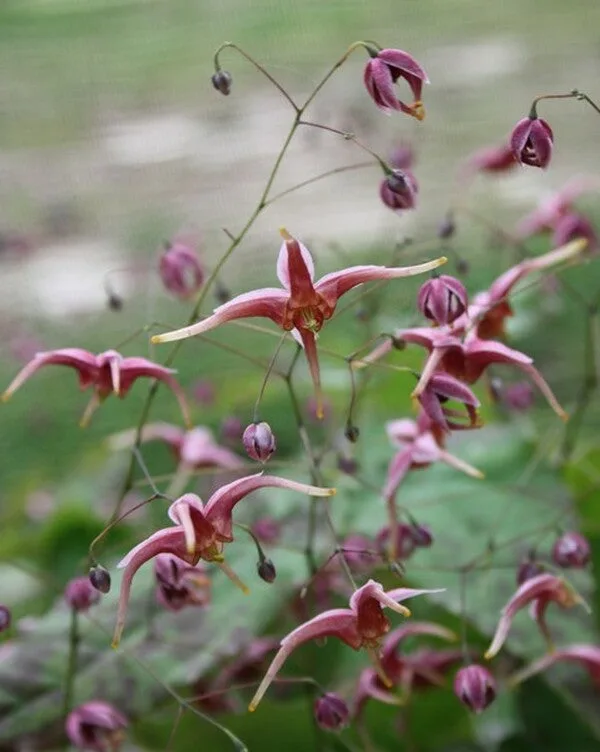
| Care difficulty | 2 / 5 |
|---|---|
| Watering schedule | Keep rich woodland soil evenly moist, never baking dry in summer |
| Sunlight requirements | Partial shade |
| Ideal temperature | Information to be completed |
| Soil type | Chalk · Clay · Loam · Sand |
| Soil pH | Acid · Alkaline · Neutral |
| Soil moisture | Moist but well drained |
| Fertilizing | Light balanced feed monthly during spring and early summer growth |
| Toxicity | Information to be completed |
How to Water barrenwort 'William Stearn'?
Keep rich woodland soil evenly moist, never baking dry in summer
Learn more →What Are the Sunlight Requirements for barrenwort 'William Stearn'?
Partial shade
Learn more →What Is the Ideal Temperature Range for barrenwort 'William Stearn'?

Information to be completed
Learn more →What Soil Is Best for barrenwort 'William Stearn'?
- Soil type
- Chalk · Clay · Loam · Sand
- Soil pH
- Acid · Alkaline · Neutral
What Are the Moisture Requirements for barrenwort 'William Stearn'?
Moist but well drained
Learn more →How to Fertilize barrenwort 'William Stearn'?

Light balanced feed monthly during spring and early summer growth
Learn more →How to Prune barrenwort 'William Stearn'?

No pruning required, but cutting back in late winter or early spring, before flower spikes form, will improve appearance
Learn more →How to Propagate barrenwort 'William Stearn'?

Propagate by division in autumn or after flowering; or by root cuttings of rhizomes, kept under glass in winter, and planted out after all danger of frost has passed
Learn more →How to Transplant barrenwort 'William Stearn'?
Information to be completed
Learn more →How to Care for barrenwort 'William Stearn' in Winter?

Information to be completed
Learn more →How to Plant barrenwort 'William Stearn'?
Grow in fertile, humus-rich, moist but well-drained soil in partial shade, with shelter from cold, drying winds; where frosts are prolonged or severe, spread an organic mulch such as leaf mould or composted bark to protect plants over winter
Learn more →How to Repot barrenwort 'William Stearn'?
Information to be completed
Learn more →How to Harvest barrenwort 'William Stearn'?

Information to be completed
Learn more →Common Pests & Diseases

Diseases
May be susceptible to mosaic virus diseases and fungal leaf spots
Pests
May be susceptible to vine weevil
Explore the plant health library →The Toxicity of barrenwort 'William Stearn'
Information to be completed