



Planting and Growing mandevilla [Sundaville Cream Pink]

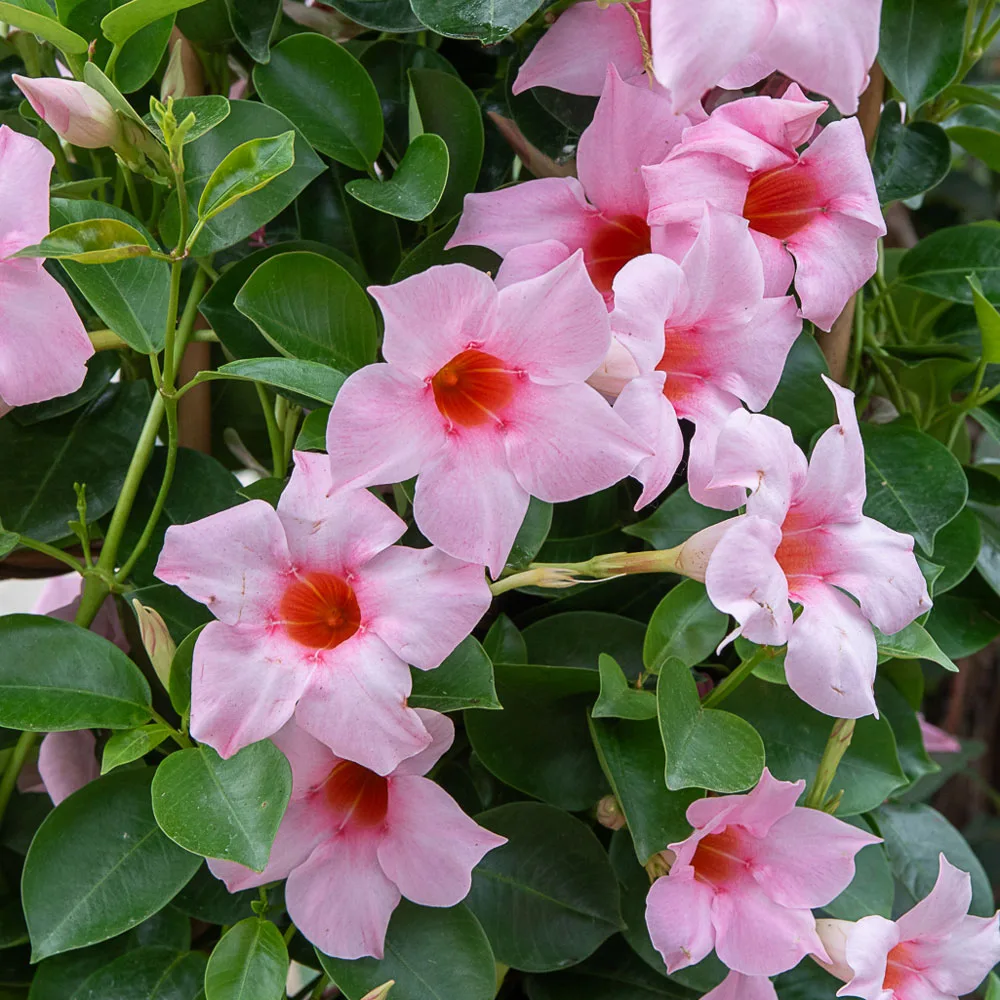
| Care difficulty | 3 / 5 |
|---|---|
| Watering schedule | Moderate regular watering, avoid prolonged drought or waterlogging |
| Sunlight requirements | Full sun |
| Ideal temperature | Information to be completed |
| Soil type | Loam |
| Soil pH | Acid · Alkaline · Neutral |
| Soil moisture | Moist but well drained |
| Fertilizing | Balanced feed in spring and light repeat in growth season |
| Toxicity | May cause mild stomach upset if eaten, sap may cause skin irritation. Wear gloves and other protective equipment when handling] |
How to Water mandevilla [Sundaville Cream Pink]?
Moderate regular watering, avoid prolonged drought or waterlogging
Learn more →What Are the Sunlight Requirements for mandevilla [Sundaville Cream Pink]?
Full sun
Learn more →What Soil Is Best for mandevilla [Sundaville Cream Pink]?
- Soil type
- Loam
- Soil pH
- Acid · Alkaline · Neutral
What Are the Moisture Requirements for mandevilla [Sundaville Cream Pink]?
Moist but well drained
Learn more →How to Fertilize mandevilla [Sundaville Cream Pink]?

Balanced feed in spring and light repeat in growth season
Learn more →How to Prune mandevilla [Sundaville Cream Pink]?

On established plants, shorten sideshoots to three or four buds from the permanent framework; remove crowded or damaged shoots. Prune in late winter or early spring.
Learn more →How to Propagate mandevilla [Sundaville Cream Pink]?

Propagate by seed sown with heat in spring, or root softwood cuttings in late spring or semi-ripe cuttings in summer, with bottom heat
Learn more →How to Plant mandevilla [Sundaville Cream Pink]?
Grow in a temperate or warm greenhouse or conservatory in loam-based compost in full light but with shade from hot sun. Young plants can be grown in pots to stand outside in summer. Usually evergreen, but will drop leaves if too cold in winter
Learn more →Common Pests & Diseases

Diseases
Generally trouble free
Pests
Glasshouse red spider mite, glasshouse whitefly and mealybugs may be troublesome
Explore the plant health library →The Toxicity of mandevilla [Sundaville Cream Pink]
May cause mild stomach upset if eaten, sap may cause skin irritation. Wear gloves and other protective equipment when handling]