



Planting and Growing Lilium 'After Eight'

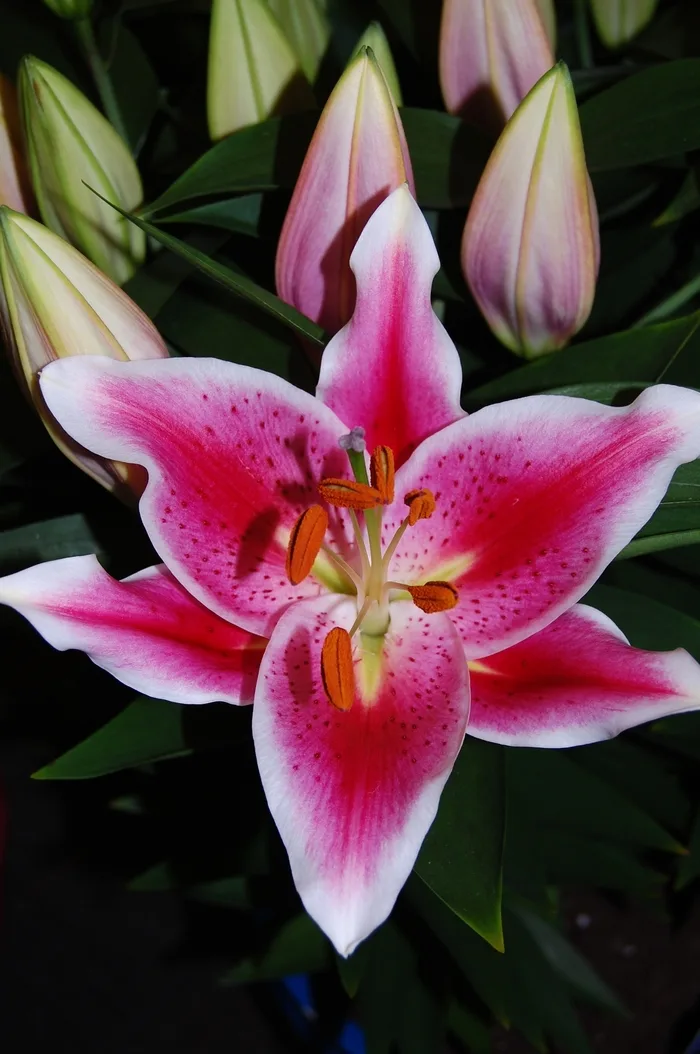
| Care difficulty | 2 / 5 |
|---|---|
| Watering schedule | Keep soil lightly and evenly moist during active stem and bud growth |
| Sunlight requirements | Full sun · Partial shade |
| Ideal temperature | Information to be completed |
| Soil type | Chalk · Loam · Sand |
| Soil pH | Acid · Alkaline · Neutral |
| Soil moisture | Moist but well drained |
| Fertilizing | Lily bulb feed every three weeks during spring and summer growth |
| Toxicity | Ornamental bulbs - not to be eaten. Wear gloves and other protective equipment when handling |
How to Water Lilium 'After Eight'?
Keep soil lightly and evenly moist during active stem and bud growth
Learn more →What Are the Sunlight Requirements for Lilium 'After Eight'?
Full sun · Partial shade
Learn more →What Is the Ideal Temperature Range for Lilium 'After Eight'?

Information to be completed
Learn more →What Soil Is Best for Lilium 'After Eight'?
- Soil type
- Chalk · Loam · Sand
- Soil pH
- Acid · Alkaline · Neutral
What Are the Moisture Requirements for Lilium 'After Eight'?
Moist but well drained
Learn more →How to Fertilize Lilium 'After Eight'?

Lily bulb feed every three weeks during spring and summer growth
Learn more →How to Prune Lilium 'After Eight'?

No pruning required, but deadheading will improve their appearance
Learn more →How to Propagate Lilium 'After Eight'?

Propagate by division: separate offsets after the leaves have died down
Learn more →How to Transplant Lilium 'After Eight'?
Information to be completed
Learn more →How to Care for Lilium 'After Eight' in Winter?

Information to be completed
Learn more →How to Plant Lilium 'After Eight'?
Plant bulbs in the autumn. Grow in well-drained soil enriched with leaf mould or well-rotted organic matter. Ideally, grow in full sun with the base of the plant in shade. Suitable for containers, see growing lilies for more advice
Learn more →How to Repot Lilium 'After Eight'?
Information to be completed
Learn more →How to Harvest Lilium 'After Eight'?

Information to be completed
Learn more →Common Pests & Diseases

Diseases
May be susceptible to lily disease, other fungal diseases, and virus diseases; for more advice, see lily diseases
Pests
May be susceptible to lily beetle, aphids, slugs, thrips, leatherjackets and wireworms, as well as small mammals such as rabbits and voles
Explore the plant health library →The Toxicity of Lilium 'After Eight'
Ornamental bulbs - not to be eaten. Wear gloves and other protective equipment when handling