



Planting and Growing Aspidistra elatior 'Lennon's Song'

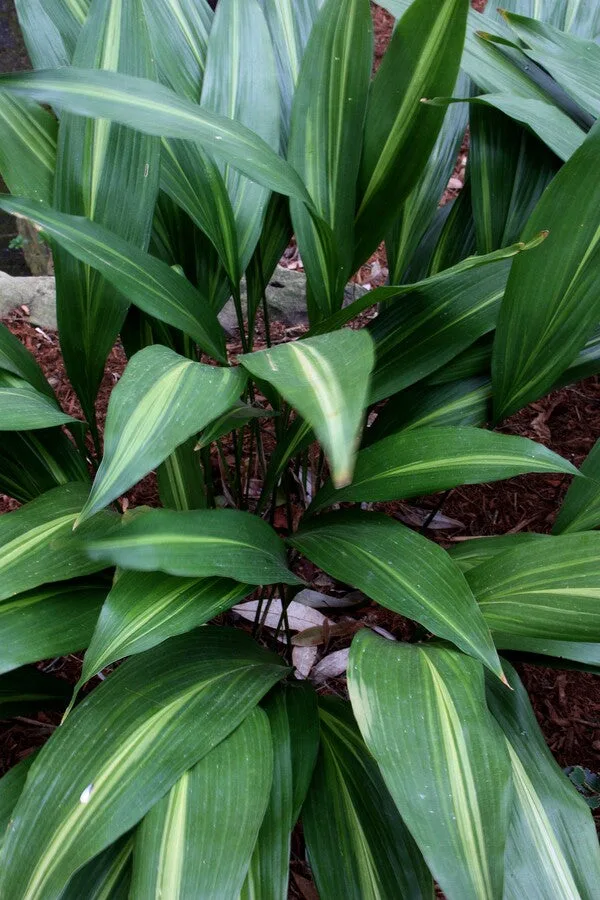
| Care difficulty | 2 / 5 |
|---|---|
| Watering schedule | Let soil dry partially between waterings, reduce in cold winter |
| Sunlight requirements | Full shade · Partial shade |
| Ideal temperature | Information to be completed |
| Soil type | Chalk · Clay · Loam · Sand |
| Soil pH | Acid · Alkaline · Neutral |
| Soil moisture | Moist but well drained · Well drained |
| Fertilizing | Weak general houseplant fertilizer monthly from spring to autumn |
| Toxicity | Information to be completed |
How to Water Aspidistra elatior 'Lennon's Song'?
Let soil dry partially between waterings, reduce in cold winter
Learn more →What Are the Sunlight Requirements for Aspidistra elatior 'Lennon's Song'?
Full shade · Partial shade
Learn more →What Soil Is Best for Aspidistra elatior 'Lennon's Song'?
- Soil type
- Chalk · Clay · Loam · Sand
- Soil pH
- Acid · Alkaline · Neutral
What Are the Moisture Requirements for Aspidistra elatior 'Lennon's Song'?
Moist but well drained · Well drained
Learn more →How to Fertilize Aspidistra elatior 'Lennon's Song'?

Weak general houseplant fertilizer monthly from spring to autumn
Learn more →How to Prune Aspidistra elatior 'Lennon's Song'?

No pruning required
Learn more →How to Propagate Aspidistra elatior 'Lennon's Song'?

Propagate by division
Learn more →How to Plant Aspidistra elatior 'Lennon's Song'?
As a houseplant, grow in large pots of loam-based compost. Although tolerant of deep shade, growth is best in bright, filtered light with a minimum temperature of 7°C. Water moderately in growth and apply a balanced liquid feed 2-3 times during the growing season; variegated cultivars revert to green if overfed. Outdoors grow in moist but well-drained, fertile, sandy loam with added leaf mould, in a sheltered site with full or partial shade. See houseplant cultivation for further information
Learn more →Common Pests & Diseases

Diseases
Generally disease-free
Pests
May be susceptible to mealybugs, glasshouse red spider mite, scale insects and vine weevil larvae
Explore the plant health library →