



Planting and Growing Ceanothus Marie-Rose ('Minmarose')

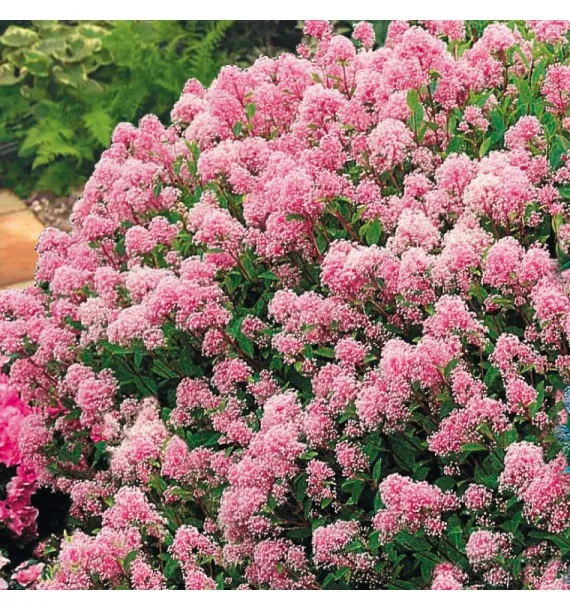
| Care difficulty | 2 / 5 |
|---|---|
| Watering schedule | Moderate regular watering, allowing brief slight drying between soakings |
| Sunlight requirements | Full sun |
| Ideal temperature | Information to be completed |
| Soil type | Loam · Sand |
| Soil pH | Acid · Alkaline · Neutral |
| Soil moisture | Well drained |
| Fertilizing | Balanced perennial feed every four weeks from spring through summer |
| Toxicity | Information to be completed |
How to Water Ceanothus Marie-Rose ('Minmarose')?
Moderate regular watering, allowing brief slight drying between soakings
Learn more →What Are the Sunlight Requirements for Ceanothus Marie-Rose ('Minmarose')?
Full sun
Learn more →What Soil Is Best for Ceanothus Marie-Rose ('Minmarose')?
- Soil type
- Loam · Sand
- Soil pH
- Acid · Alkaline · Neutral
What Are the Moisture Requirements for Ceanothus Marie-Rose ('Minmarose')?
Well drained
Learn more →How to Fertilize Ceanothus Marie-Rose ('Minmarose')?

Balanced perennial feed every four weeks from spring through summer
Learn more →How to Prune Ceanothus Marie-Rose ('Minmarose')?

Shorten last year's flowering stems to one or two buds from the older woody framework. Remove thin, weak and dead shoots. Prune in early spring.
Learn more →How to Propagate Ceanothus Marie-Rose ('Minmarose')?

Propagate by semi-ripe cuttings in summer
Learn more →How to Plant Ceanothus Marie-Rose ('Minmarose')?
Grow in fertile, well-drained soil in full sun with shelter from strong, cold winds. Lime tolerant but may become chlorotic on shallow chalk soils. See ceanothus cultivation
Learn more →Common Pests & Diseases

Diseases
May be susceptible to honey fungus
Pests
May be susceptible to scale insects
Explore the plant health library →