



Planting and Growing Emilia sonchifolia var. javanica 'Irish Poet'

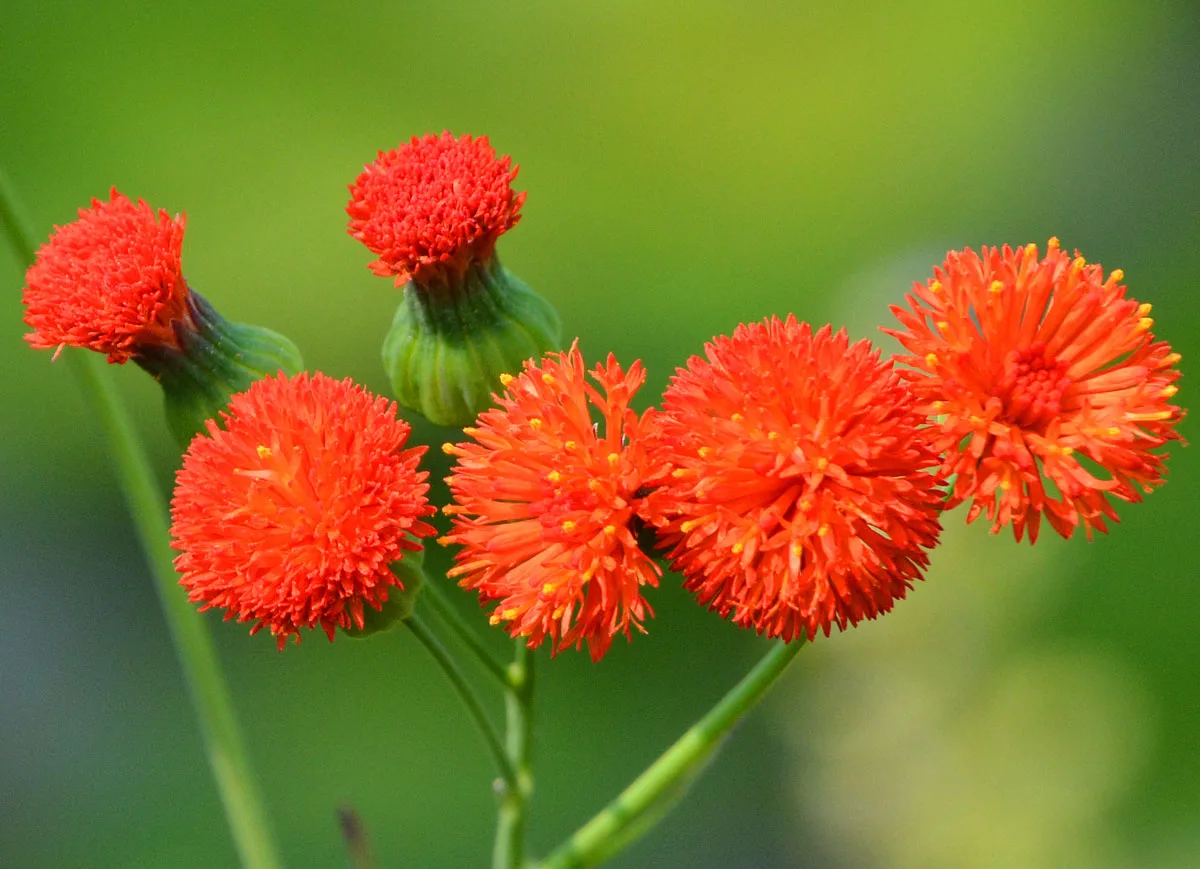
| Care difficulty | 2 / 5 |
|---|---|
| Watering schedule | Water when top substrate dries, drain standing water from containers |
| Sunlight requirements | Full sun |
| Ideal temperature | Information to be completed |
| Soil type | Chalk · Loam · Sand |
| Soil pH | Acid · Alkaline · Neutral |
| Soil moisture | Moist but well drained |
| Fertilizing | Diluted flowering annual feed every three weeks warm growing season |
| Toxicity | Information to be completed |
How to Water Emilia sonchifolia var. javanica 'Irish Poet'?
Water when top substrate dries, drain standing water from containers
Learn more →What Are the Sunlight Requirements for Emilia sonchifolia var. javanica 'Irish Poet'?
Full sun
Learn more →What Soil Is Best for Emilia sonchifolia var. javanica 'Irish Poet'?
- Soil type
- Chalk · Loam · Sand
- Soil pH
- Acid · Alkaline · Neutral
What Are the Moisture Requirements for Emilia sonchifolia var. javanica 'Irish Poet'?
Moist but well drained
Learn more →How to Fertilize Emilia sonchifolia var. javanica 'Irish Poet'?

Diluted flowering annual feed every three weeks warm growing season
Learn more →How to Prune Emilia sonchifolia var. javanica 'Irish Poet'?

Deadhead to prolong flowering
Learn more →How to Propagate Emilia sonchifolia var. javanica 'Irish Poet'?

Sow indoors late winter to early spring or in situ after the risk of frosts has passed
Learn more →How to Plant Emilia sonchifolia var. javanica 'Irish Poet'?
Sow indoors Feb-April in seed compost, keeping the temperature at around 15-20oC (60-68oF). When large enough transplant to further trays or pots of compost. Gradually harden off before planting out to final position in late May spacing 25cm (10in) apart.\r\nOr, sow outdoors April to May in flowering position, thinly, cover with 1.5cm (½in) of fine soil, keep well watered and thin as necessary.\r\nFlowers: July to September. Remove dead heads to prolong flowering.
Learn more →Common Pests & Diseases

Diseases
Generally disease-free
Pests
Generally pest-free
Explore the plant health library →