



Planting and Growing foxtail lily 'White Beauty Favourite'

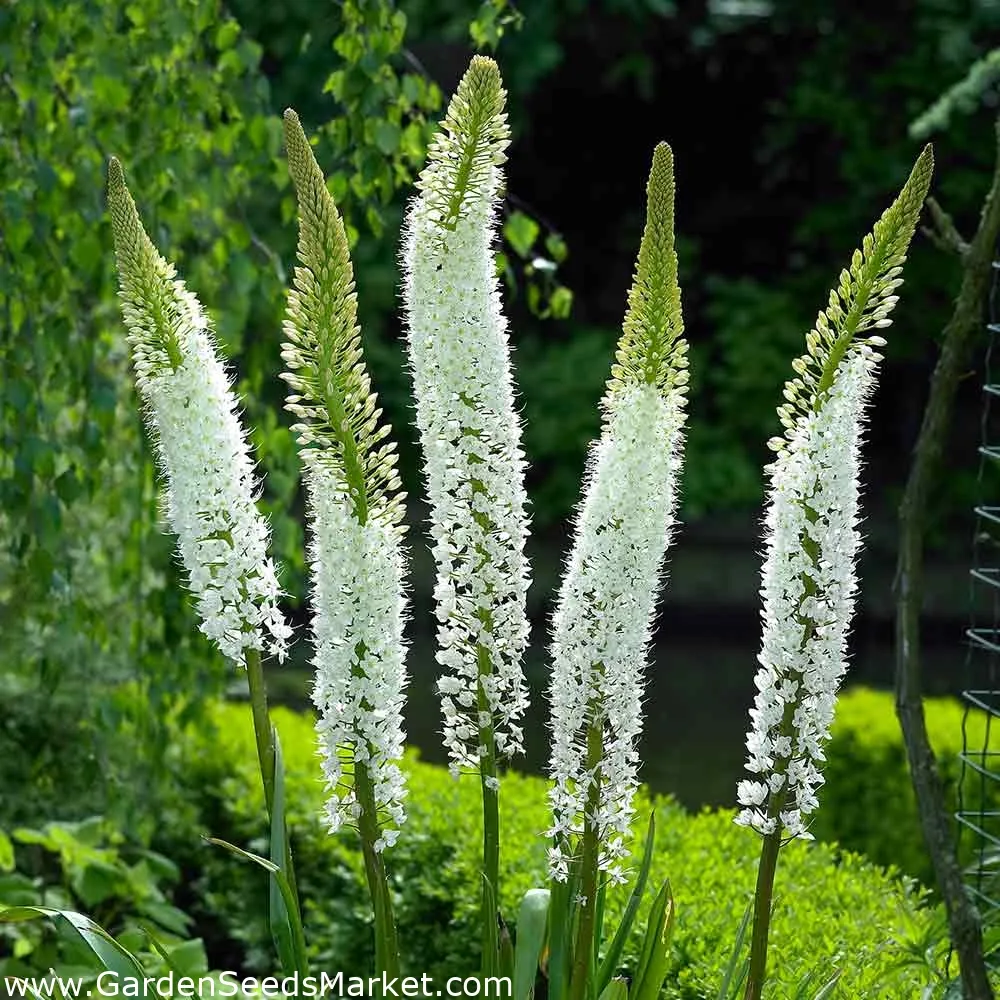
| Care difficulty | 3 / 5 |
|---|---|
| Watering schedule | Moderate regular watering, allowing brief slight drying between soakings |
| Sunlight requirements | Full sun |
| Ideal temperature | Information to be completed |
| Soil type | Chalk · Loam · Sand |
| Soil pH | Acid · Alkaline · Neutral |
| Soil moisture | Well drained |
| Fertilizing | Balanced perennial feed every four weeks from spring through summer |
| Toxicity | Information to be completed |
How to Water foxtail lily 'White Beauty Favourite'?
Moderate regular watering, allowing brief slight drying between soakings
Learn more →What Are the Sunlight Requirements for foxtail lily 'White Beauty Favourite'?
Full sun
Learn more →What Soil Is Best for foxtail lily 'White Beauty Favourite'?
- Soil type
- Chalk · Loam · Sand
- Soil pH
- Acid · Alkaline · Neutral
What Are the Moisture Requirements for foxtail lily 'White Beauty Favourite'?
Well drained
Learn more →How to Fertilize foxtail lily 'White Beauty Favourite'?

Balanced perennial feed every four weeks from spring through summer
Learn more →How to Prune foxtail lily 'White Beauty Favourite'?

Unless seeds are required, spent flower spikes can be cut down at the base
Learn more →How to Propagate foxtail lily 'White Beauty Favourite'?

Propagate by seed, or by division of mature plants, taking care to minimise root disturbance. Plants grown from seed may vary, and may take 3-5 years to flower. As this plant is protected by Plant Breeders' Rights, any propagation should be for personal rather than commercial use
Learn more →How to Plant foxtail lily 'White Beauty Favourite'?
Grow in fertile, free draining soil, in a sunny position with plenty of root space. May need staking in windy sites. Mulch with garden compost in autumn, but avoid covering the crown. Needs winter cold to flower, but protect young spring growth from frost. See eremurus cultivation for more detailed advice
Learn more →Common Pests & Diseases

Diseases
Generally disease-free
Pests
May be susceptible to slugs and snails
Explore the plant health library →