



Planting and Growing lettuce 'Green Lollo Bionda'

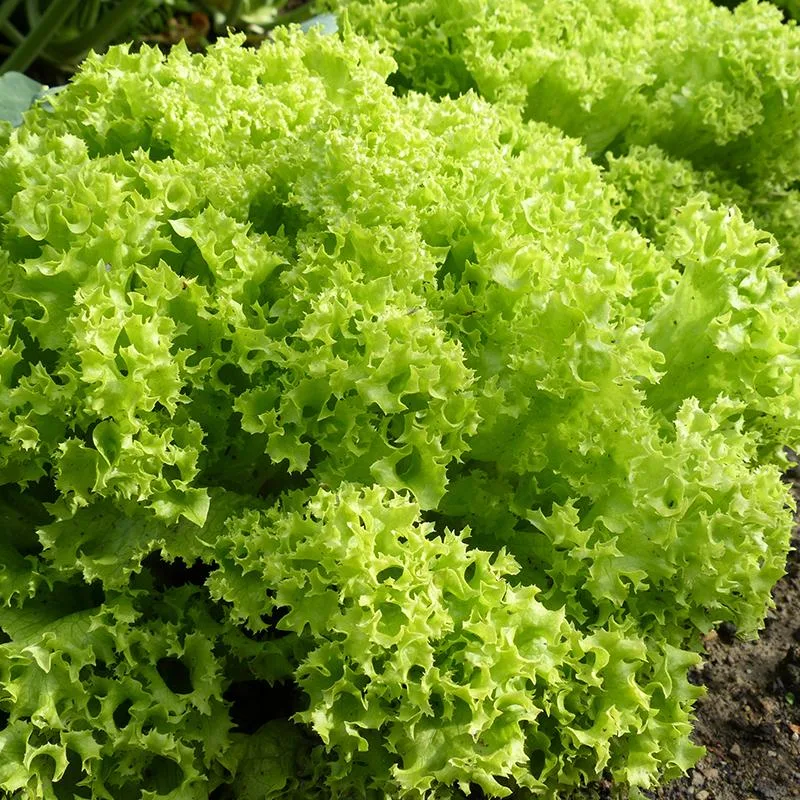
| Care difficulty | 2 / 5 |
|---|---|
| Watering schedule | Frequent light watering to avoid full drying of leafy crop soil |
| Sunlight requirements | Full sun · Partial shade |
| Ideal temperature | Information to be completed |
| Soil type | Chalk · Clay · Loam · Sand |
| Soil pH | Acid · Alkaline · Neutral |
| Soil moisture | Moist but well drained |
| Fertilizing | Balanced leaf vegetable feed biweekly active leaf growth stage |
| Toxicity | Information to be completed |
How to Water lettuce 'Green Lollo Bionda'?
Frequent light watering to avoid full drying of leafy crop soil
Learn more →What Are the Sunlight Requirements for lettuce 'Green Lollo Bionda'?
Full sun · Partial shade
Learn more →What Soil Is Best for lettuce 'Green Lollo Bionda'?
- Soil type
- Chalk · Clay · Loam · Sand
- Soil pH
- Acid · Alkaline · Neutral
What Are the Moisture Requirements for lettuce 'Green Lollo Bionda'?
Moist but well drained
Learn more →How to Fertilize lettuce 'Green Lollo Bionda'?

Balanced leaf vegetable feed biweekly active leaf growth stage
Learn more →How to Prune lettuce 'Green Lollo Bionda'?

No pruning required
Learn more →How to Propagate lettuce 'Green Lollo Bionda'?

Propagate by seed. See sowing vegetable seeds
Learn more →How to Plant lettuce 'Green Lollo Bionda'?
Grow in full sun in moisture-retentive soil. Soil should be reasonably fertile so you can improve soil by adding organic matter, such as well-rotted manure, in the autumn. Lettuces grow best on soil that is close to neutral so if you have very acidic or alkaline soil you may want to consider raised beds, containers or improving the pH of your soil. Water when the soil is dry, ideally early in the morning. Harvest from May until October. See lettuce cultivation for more information.
Learn more →Common Pests & Diseases

Diseases
May be susceptible to grey moulds and lettuce downy mildew. Lettuce mosaic virus can affect overwintering crops.
Pests
May be susceptible to birds, slugs, snails and lettuce root aphid.
Explore the plant health library →