



Planting and Growing Helleborus × hybridus 'Double Ellen Red'

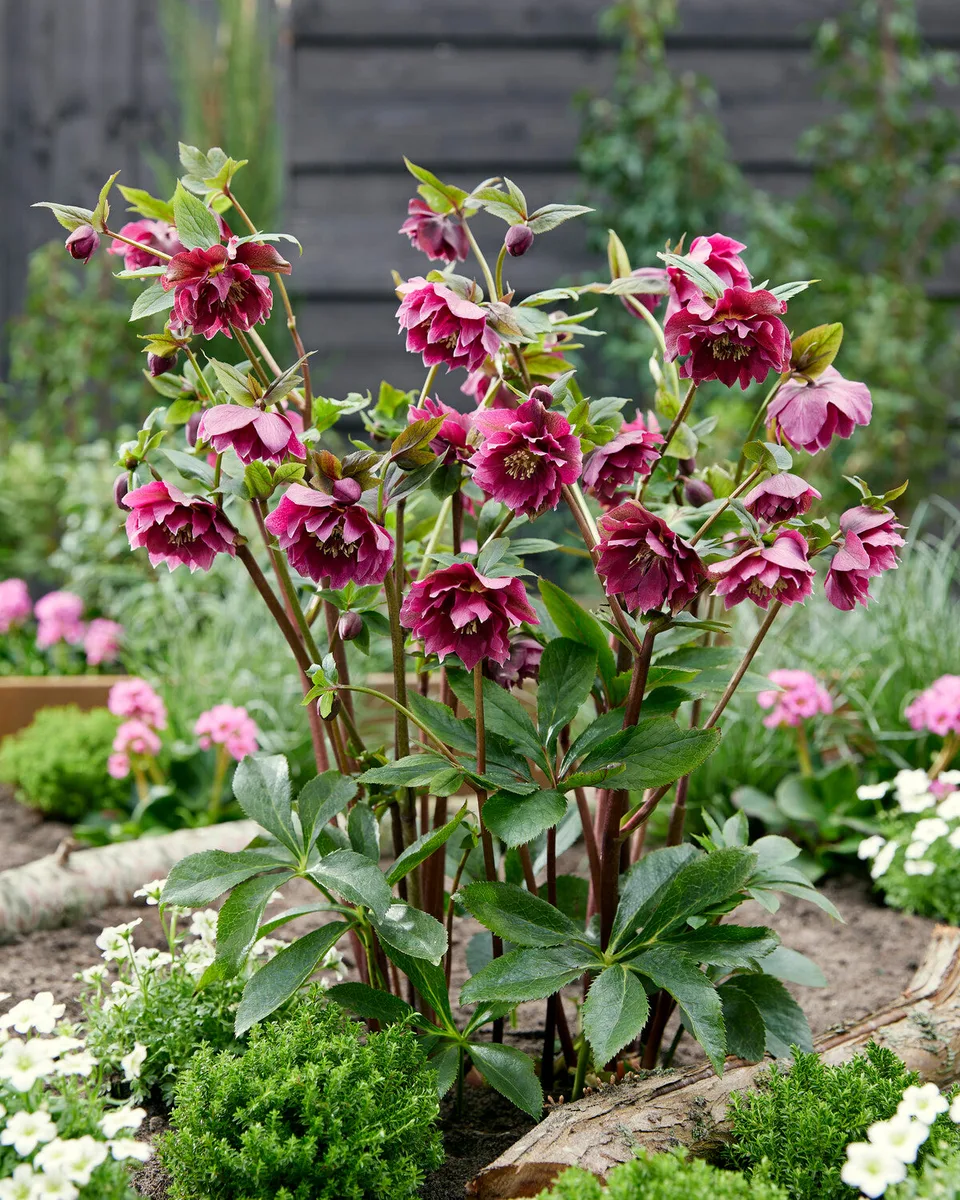
| Care difficulty | 2 / 5 |
|---|---|
| Watering schedule | Moderate regular watering, allowing brief slight drying between soakings |
| Sunlight requirements | Partial shade |
| Ideal temperature | Information to be completed |
| Soil type | Chalk · Clay · Loam · Sand |
| Soil pH | Alkaline · Neutral |
| Soil moisture | Moist but well drained |
| Fertilizing | Balanced perennial feed every four weeks from spring through summer |
| Toxicity | Harmful if eaten, skin irritant. Wear gloves and other protective equipment when handling] |
How to Water Helleborus × hybridus 'Double Ellen Red'?
Moderate regular watering, allowing brief slight drying between soakings
Learn more →What Are the Sunlight Requirements for Helleborus × hybridus 'Double Ellen Red'?
Partial shade
Learn more →What Soil Is Best for Helleborus × hybridus 'Double Ellen Red'?
- Soil type
- Chalk · Clay · Loam · Sand
- Soil pH
- Alkaline · Neutral
What Are the Moisture Requirements for Helleborus × hybridus 'Double Ellen Red'?
Moist but well drained
Learn more →How to Fertilize Helleborus × hybridus 'Double Ellen Red'?

Balanced perennial feed every four weeks from spring through summer
Learn more →How to Prune Helleborus × hybridus 'Double Ellen Red'?

Remove old leaves to expose the flowers and control hellebore leaf spot in winter before the flowers start appearing. Deadhead by removing the old faded flower stems.
Learn more →How to Propagate Helleborus × hybridus 'Double Ellen Red'?

Propagate large clumps by division in early spring or early autumn. Water well until established. Plants propagated by seed may be variable.
Learn more →How to Plant Helleborus × hybridus 'Double Ellen Red'?
Will tolerate a wide range of soil conditions, but it prefers fertile, neutral to alkaline, moisture retentive, humus –rich soils that are not prone to staying wet or drying out in summer. Improve lighter soil with organic matter such as garden compost or a manure-based soil conditioner prior to planting and mulch well. Plant in light shade with shelter from strong cold winds. For more advice, see hellebore cultivation.
Learn more →Common Pests & Diseases

Diseases
May be susceptible to hellebore leaf spot, hellebore black death, grey mould (botrytis) and virus diseases.
Pests
May be susceptible to hellebore aphid, slugs and snails.
Explore the plant health library →The Toxicity of Helleborus × hybridus 'Double Ellen Red'
Harmful if eaten, skin irritant. Wear gloves and other protective equipment when handling]