



Planting and Growing Delphinium elatum 'Dasante Blue'

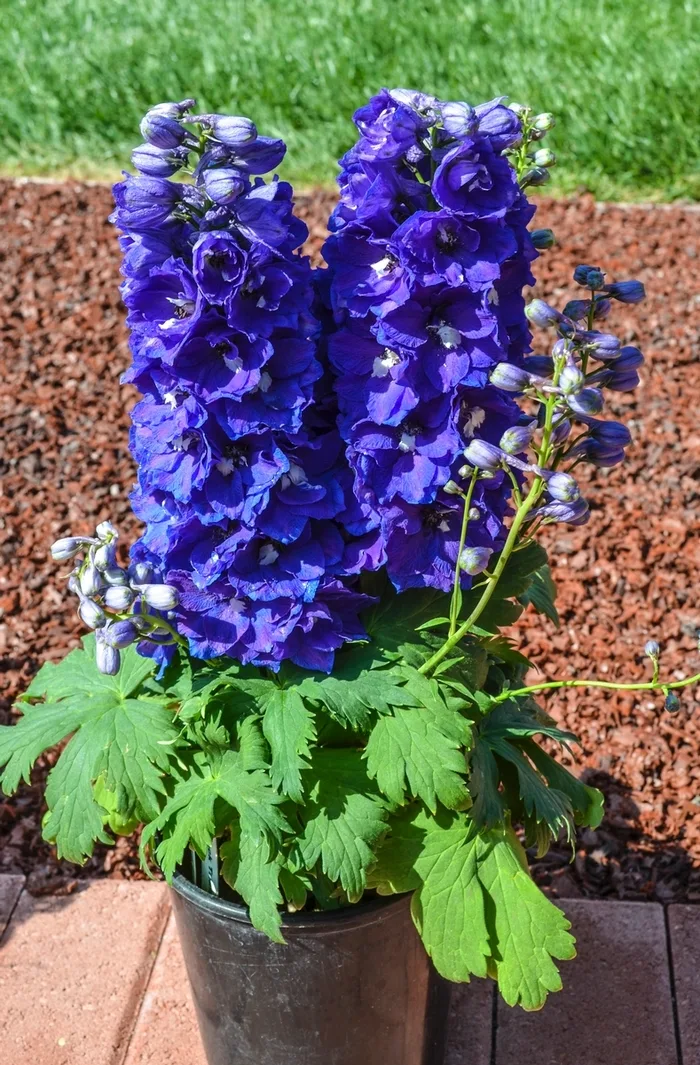
| Care difficulty | 3 / 5 |
|---|---|
| Watering schedule | Moderate regular watering, allowing brief slight drying between soakings |
| Sunlight requirements | Full sun |
| Ideal temperature | Information to be completed |
| Soil type | Chalk · Loam · Sand |
| Soil pH | Acid · Alkaline · Neutral |
| Soil moisture | Moist but well drained · Well drained |
| Fertilizing | Balanced perennial feed every four weeks from spring through summer |
| Toxicity | Harmful if eaten. Wear gloves and other protective equipment when handling |
How to Water Delphinium elatum 'Dasante Blue'?
Moderate regular watering, allowing brief slight drying between soakings
Learn more →What Are the Sunlight Requirements for Delphinium elatum 'Dasante Blue'?
Full sun
Learn more →What Soil Is Best for Delphinium elatum 'Dasante Blue'?
- Soil type
- Chalk · Loam · Sand
- Soil pH
- Acid · Alkaline · Neutral
What Are the Moisture Requirements for Delphinium elatum 'Dasante Blue'?
Moist but well drained · Well drained
Learn more →How to Fertilize Delphinium elatum 'Dasante Blue'?

Balanced perennial feed every four weeks from spring through summer
Learn more →How to Prune Delphinium elatum 'Dasante Blue'?

Deadhead main stem after flowering to encourage side shoots to flower. Cut back to ground level in autumn
Learn more →How to Propagate Delphinium elatum 'Dasante Blue'?

Propagate by division or by basal softwood cuttings in spring. As this plant is protected by Plant Breeders' Rights, any propagation should be for personal rather than commercial use
Learn more →How to Plant Delphinium elatum 'Dasante Blue'?
Grow in fertile, well-drained soil in full sun. Shelter from strong winds and provide support (see staking: perennials). Divide every 2-5 years to maintain vigour. See staking: perennials and delphinium cultivation for further advice
Learn more →Common Pests & Diseases

Diseases
May be susceptible to delphinium black blotch, Powdery mildews, grey moulds, crown rot (on mature plants) and occasionally cucumber mosaic virus
Pests
May be susceptible to aphids, slugs, snails, leaf miners and caterpillars, including swift moth caterpillar
Explore the plant health library →The Toxicity of Delphinium elatum 'Dasante Blue'
Harmful if eaten. Wear gloves and other protective equipment when handling