



Planting and Growing Dahlia 'Pacific Ocean'

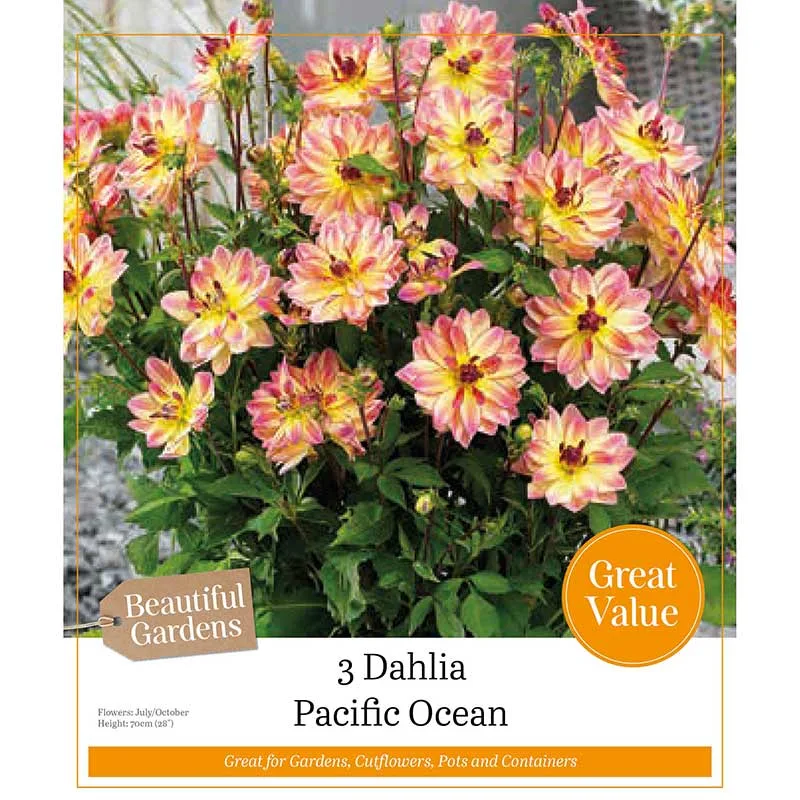
| Care difficulty | 2 / 5 |
|---|---|
| Watering schedule | Thorough watering when top soil dries, more irrigation under intense hot sun |
| Sunlight requirements | Full sun |
| Ideal temperature | Information to be completed |
| Soil type | Clay · Loam · Sand |
| Soil pH | Acid · Alkaline · Neutral |
| Soil moisture | Moist but well drained |
| Fertilizing | Diluted high-potassium bloom feed biweekly sprout to flower fading period |
| Toxicity | Information to be completed |
How to Water Dahlia 'Pacific Ocean'?
Thorough watering when top soil dries, more irrigation under intense hot sun
Learn more →What Are the Sunlight Requirements for Dahlia 'Pacific Ocean'?
Full sun
Learn more →What Soil Is Best for Dahlia 'Pacific Ocean'?
- Soil type
- Clay · Loam · Sand
- Soil pH
- Acid · Alkaline · Neutral
What Are the Moisture Requirements for Dahlia 'Pacific Ocean'?
Moist but well drained
Learn more →How to Fertilize Dahlia 'Pacific Ocean'?

Diluted high-potassium bloom feed biweekly sprout to flower fading period
Learn more →How to Prune Dahlia 'Pacific Ocean'?

Deadhead to prolong flowering. Cut back to near ground level in the autumn, before lifting and storing for the winter
Learn more →How to Propagate Dahlia 'Pacific Ocean'?

Propagate by softwood cuttings taken in spring from shoots from stored tubers, or divide the tubers ensuring each division has a viable bud
Learn more →How to Plant Dahlia 'Pacific Ocean'?
Grow in fertile, humus-rich, well-drained soil, enriched with organic matter and general purpose fertiliser, in full sun. Pinch out growing tips to encourage bushy plants and stake. Water freely in dry periods. Lift and store tubers in autumn to replant or use as a source of cuttings in spring. See dahlia cultivation for further advice
Learn more →Common Pests & Diseases

Diseases
May be susceptible to Powdery mildews in dry conditions. In wet weather grey moulds and other fungal rots can be a problem. Fungal rots can also damage stored tubers. A virus may cause stunting, leaf markings and distortion
Pests
May be susceptible to aphids, leaf miners, glasshouse red spider mite and slugs. Earwigs sometimes damage blooms. Capsid bug and caterpillars are occasional pests
Explore the plant health library →