



Planting and Growing Canna × generalis Cannova Yellow ('Fcaa02')

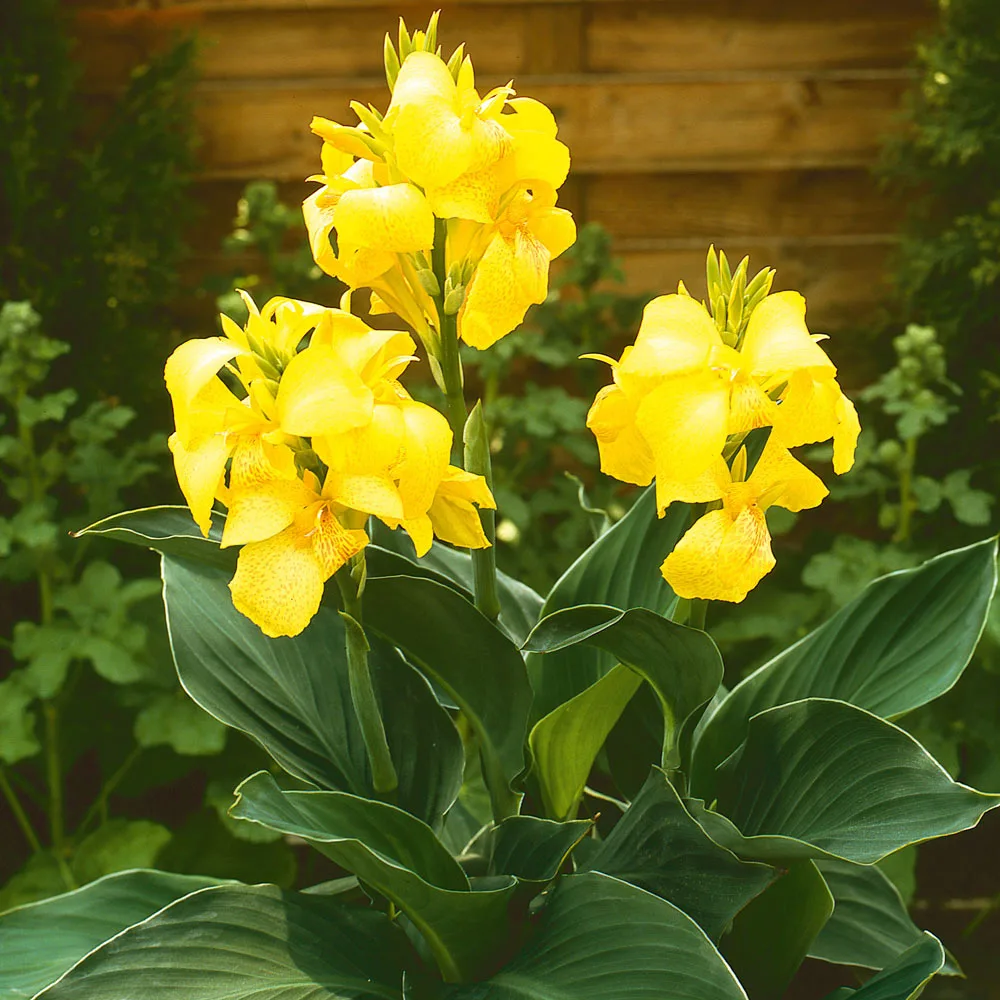
| Care difficulty | 3 / 5 |
|---|---|
| Watering schedule | Consistently damp loamy soil, regular irrigation active blooming growth |
| Sunlight requirements | Full sun |
| Ideal temperature | Information to be completed |
| Soil type | Loam · Sand |
| Soil pH | Neutral · Acid · Alkaline |
| Soil moisture | Moist but well drained |
| Fertilizing | High-potassium canna tropical feed every two weeks warm growing months |
| Toxicity | Information to be completed |
How to Water Canna × generalis Cannova Yellow ('Fcaa02')?
Consistently damp loamy soil, regular irrigation active blooming growth
Learn more →What Are the Sunlight Requirements for Canna × generalis Cannova Yellow ('Fcaa02')?
Full sun
Learn more →What Soil Is Best for Canna × generalis Cannova Yellow ('Fcaa02')?
- Soil type
- Loam · Sand
- Soil pH
- Neutral · Acid · Alkaline
What Are the Moisture Requirements for Canna × generalis Cannova Yellow ('Fcaa02')?
Moist but well drained
Learn more →How to Fertilize Canna × generalis Cannova Yellow ('Fcaa02')?

High-potassium canna tropical feed every two weeks warm growing months
Learn more →How to Prune Canna × generalis Cannova Yellow ('Fcaa02')?

Remove dead flowers individually to promote continued flowering then leave to die back in autumn
Learn more →How to Propagate Canna × generalis Cannova Yellow ('Fcaa02')?

Propagate by division in early spring
Learn more →How to Plant Canna × generalis Cannova Yellow ('Fcaa02')?
Outdoors grow in a sheltered site in fertile soil in full sun, planting in early summer once frosts have passed. Water freely in dry weather and apply a high potassium fertiliser monthly. Lift the rhizomes in autumn when frost blackens the foliage. Store over winter in barely moist peat-free potting mix or leaf mould in frost-free conditions. In mild areas leave in the ground but cover with a dry mulch. See canna cultivation
Learn more →Common Pests & Diseases

Diseases
May be susceptible to canna viruses
Pests
May be susceptible to glasshouse red spider mite, slugs and caterpillars
Explore the plant health library →