



Planting and Growing greater snowdrop 'Edith'

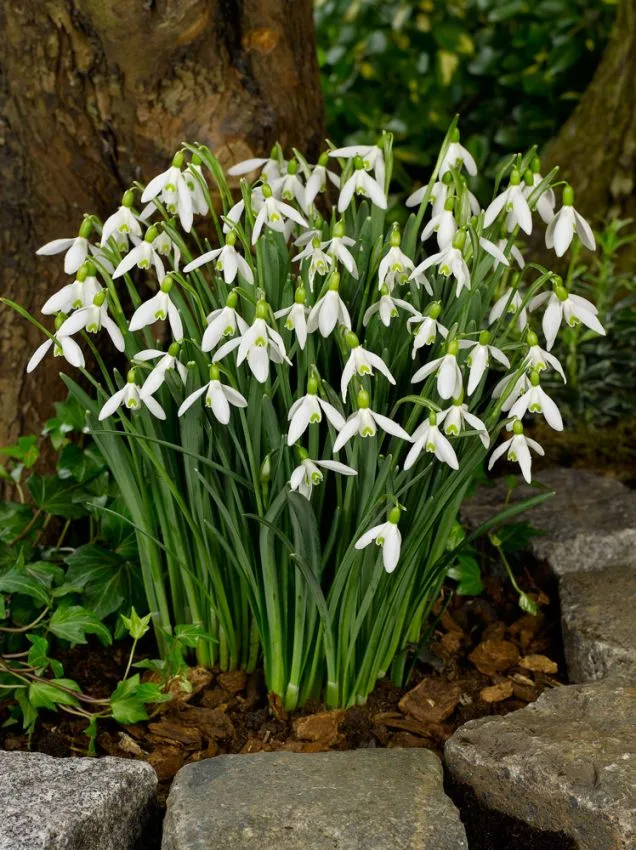
| Care difficulty | 2 / 5 |
|---|---|
| Watering schedule | Moist soil during active growth, then reduce watering after foliage yellows |
| Sunlight requirements | Partial shade |
| Ideal temperature | Information to be completed |
| Soil type | Chalk · Clay · Loam · Sand |
| Soil pH | Acid · Alkaline · Neutral |
| Soil moisture | Moist but well drained · Well drained |
| Fertilizing | Light bulb fertilizer at emergence and again after flowering |
| Toxicity | Harmful if eaten. Wear gloves and other protective equipment when handling |
How to Water greater snowdrop 'Edith'?
Moist soil during active growth, then reduce watering after foliage yellows
Learn more →What Are the Sunlight Requirements for greater snowdrop 'Edith'?
Partial shade
Learn more →What Soil Is Best for greater snowdrop 'Edith'?
- Soil type
- Chalk · Clay · Loam · Sand
- Soil pH
- Acid · Alkaline · Neutral
What Are the Moisture Requirements for greater snowdrop 'Edith'?
Moist but well drained · Well drained
Learn more →How to Fertilize greater snowdrop 'Edith'?

Light bulb fertilizer at emergence and again after flowering
Learn more →How to Prune greater snowdrop 'Edith'?

No pruning required
Learn more →How to Propagate greater snowdrop 'Edith'?

Propagate by seed, sown in containers in an open frame when ripe or division when foliage dies back. Seed may not come true
Learn more →How to Plant greater snowdrop 'Edith'?
Grow in humus-rich, moist but well-drained soil that does not dry out in summer.
Learn more →Common Pests & Diseases

Diseases
May be susceptible to snowdrop grey mould
Pests
May be susceptible to narcissus bulb fly
Explore the plant health library →The Toxicity of greater snowdrop 'Edith'
Harmful if eaten. Wear gloves and other protective equipment when handling