



Planting and Growing Fargesia apicirubens

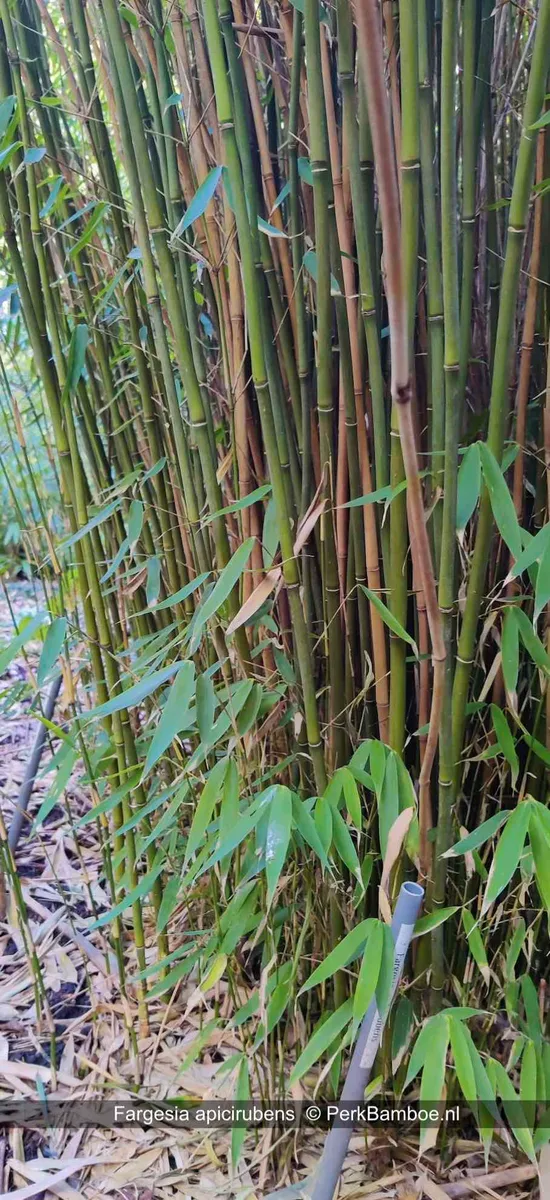
| Care difficulty | 3 / 5 |
|---|---|
| Watering schedule | Moderate regular watering, avoid prolonged drought or waterlogging |
| Sunlight requirements | Partial shade · Full sun |
| Ideal temperature | Information to be completed |
| Soil type | Clay · Loam |
| Soil pH | Acid · Alkaline · Neutral |
| Soil moisture | Moist but well drained |
| Fertilizing | Balanced feed in spring and light repeat in growth season |
| Toxicity | Information to be completed |
How to Water Fargesia apicirubens?
Moderate regular watering, avoid prolonged drought or waterlogging
Learn more →What Are the Sunlight Requirements for Fargesia apicirubens?
Partial shade · Full sun
Learn more →What Soil Is Best for Fargesia apicirubens?
- Soil type
- Clay · Loam
- Soil pH
- Acid · Alkaline · Neutral
What Are the Moisture Requirements for Fargesia apicirubens?
Moist but well drained
Learn more →How to Fertilize Fargesia apicirubens?

Balanced feed in spring and light repeat in growth season
Learn more →How to Prune Fargesia apicirubens?

Remove weak, dead, damaged or spindly stems in spring and thin to show off stems to best effect. Cut out any flowering shoots promptly to discourage more from forming - see bamboo cultivation
Learn more →How to Propagate Fargesia apicirubens?

Propagate by division or take cuttings of sections of young rhizomes in spring
Learn more →How to Plant Fargesia apicirubens?
Grow in fertile, moisture retentive soil, in partial shade, or in sun if soil is reliably moist. Suited to container cultivation. See bamboo cultivation. Some bamboos can become invasive – for more information, read our advice on bamboo control
Learn more →Common Pests & Diseases

Diseases
Generally disease-free
Pests
May be susceptible to damage from slugs on new growth
Explore the plant health library →