



Planting and Growing earth star 'Pink Starlite'

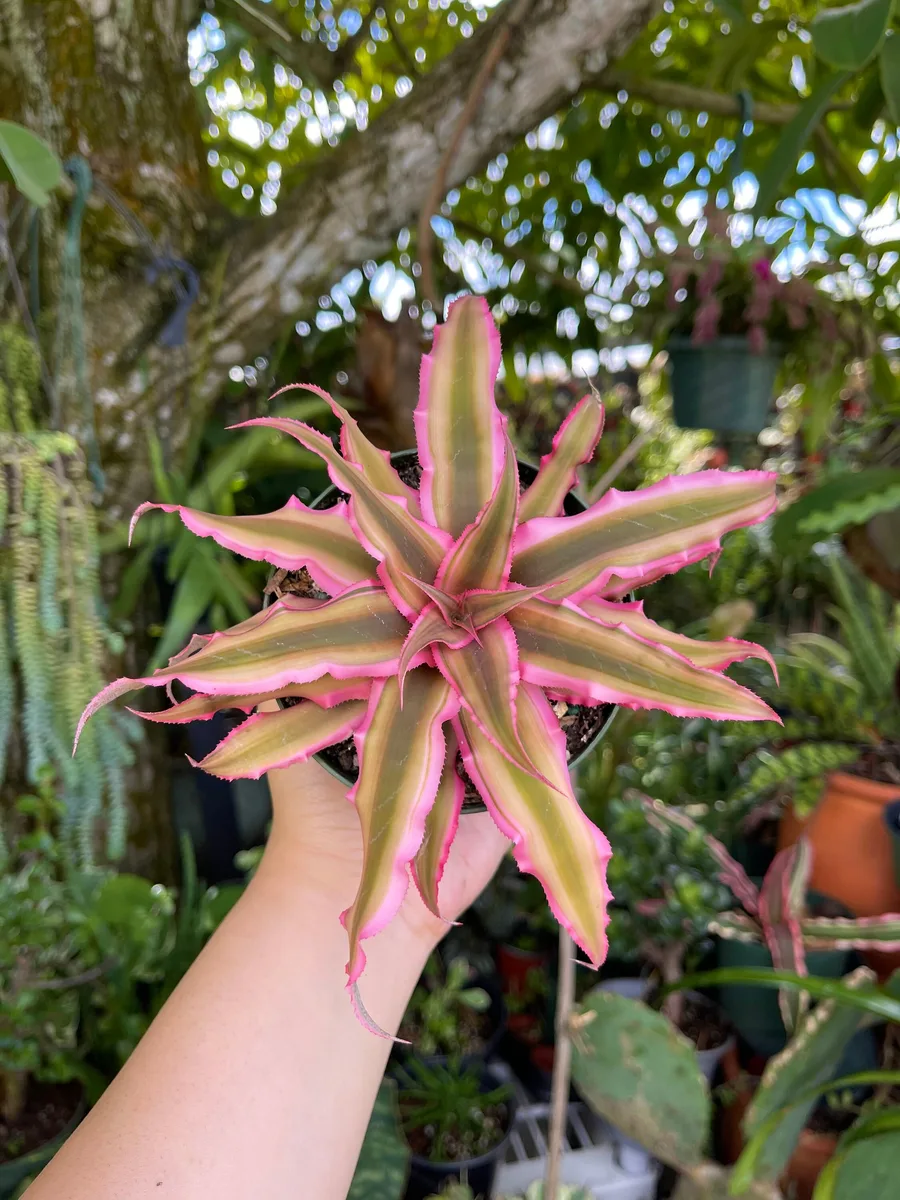
| Care difficulty | 3 / 5 |
|---|---|
| Watering schedule | Moderate regular watering, allowing brief slight drying between soakings |
| Sunlight requirements | Partial shade |
| Ideal temperature | 18 – 27 °C |
| Soil type | Loam · Sand |
| Soil pH | Acid |
| Soil moisture | Moist but well drained |
| Fertilizing | Balanced perennial feed every four weeks from spring through summer |
| Toxicity | Information to be completed |
How to Water earth star 'Pink Starlite'?
Moderate regular watering, allowing brief slight drying between soakings
Learn more →What Are the Sunlight Requirements for earth star 'Pink Starlite'?
Partial shade
Learn more →What Is the Ideal Temperature Range for earth star 'Pink Starlite'?

18 – 27 °C
Learn more →What Soil Is Best for earth star 'Pink Starlite'?
- Soil type
- Loam · Sand
- Soil pH
- Acid
What Are the Moisture Requirements for earth star 'Pink Starlite'?
Moist but well drained
Learn more →How to Fertilize earth star 'Pink Starlite'?

Balanced perennial feed every four weeks from spring through summer
Learn more →How to Prune earth star 'Pink Starlite'?

No pruning required
Learn more →How to Propagate earth star 'Pink Starlite'?

Propagate by seed sown, as soon as ripe, at 27°C or remove offsets in early summer
Learn more →How to Plant earth star 'Pink Starlite'?
Grow indoors as a houseplant or under glass in a terrestial bromeliad compost. Site in bright filtered light and maintain moderate to high humidity. When in growth water moderately but carefully and mist regularly with tepid soft water. Apply a dilute fertilser monthly but reduce water in winter
Learn more →Common Pests & Diseases

Diseases
May be subject to root rot
Pests
Generally pest-free
Explore the plant health library →Troubleshooting
Yellowing Lower Leaves, Root Rot, or Crispy Brown Edges
earth star 'Pink Starlite' (Cryptanthus bivittatus 'Pink Starlite') thrives in warm, humid conditions with evenly moist, well-aerated compost; soggy soil suffocates roots, while dry indoor air, hard tap water, or direct hot sun crisps leaf margins.
| What you notice | Possible explanation | What to check next |
|---|---|---|
| Multiple lower or inner leaves turn yellow and limp while potting mix remains heavy and wet | Overwatering, dense poorly drained compost, or cold drafts causing root rot | Feel two inches into the potting mix, check drainage holes, and verify room temperature stays above 15°C (59°F) |
| Leaf tips or margins turn brown and dry while center leaves stay green, or bleached patches appear on sunny sides | Low indoor air humidity, mineral/fluoride buildup from hard tap water (common in Marantaceae/Dracaena/palms), or harsh direct sun scorch | Check proximity to heaters/vents, water quality, and whether midday direct sun hits the foliage |
- Pot in an airy, humus-rich, well-drained mix (amended with bark, perlite, or coarse grit) in a container with open drainage holes.
- Water properly: Moderate regular watering, allowing brief slight drying between soakings, and reduce watering during cooler winter months without letting the root ball desiccate completely.
- Provide bright indirect light out of scorching midday sun, boost ambient humidity with a pebble tray or humidifier (using rainwater or distilled water for salt-sensitive prayer plants and dracaenas), and keep away from cold drafts.
Stop watering and inspect roots if stems or rhizomes turn mushy at the soil line; trim decayed roots and repot into fresh airy mix.
Fine Webbing, Sticky Residue, or Leaf Spots
Warm, dry indoor air favors spider mites, mealybugs, and scale on earth star 'Pink Starlite' (Cryptanthus bivittatus 'Pink Starlite'), while stagnant wet foliage encourages fungal or bacterial leaf spots.
| What you notice | Possible explanation | What to check next |
|---|---|---|
| Speckled pale stippling with fine webbing under leaves, or white cottony clusters along petioles and veins | Sap-sucking pests (Generally pest-free) | Inspect leaf undersides, midribs, and petiole sheaths with a magnifier |
| Dark water-soaked or yellow-haloed spots expanding on leaves in cool, stagnant, humid conditions | Suspected leaf spot or fungal blight (May be subject to root rot) | Check whether water sits on leaves overnight and assess room airflow |
- Isolate affected plants, wipe leaf surfaces and undersides gently with a damp cloth, and apply insecticidal soap or horticultural oil per label directions.
- Remove heavily spotted leaves at the base with sterilized shears, water at the soil surface rather than over the crown, and improve gentle air circulation.
- Keep foliage clean of dust so leaves photosynthesize efficiently.
Avoid spraying foliage in stagnant, cool rooms where leaves cannot dry within a few hours.