



Planting and Growing Cistus laurifolius subsp. atlanticus

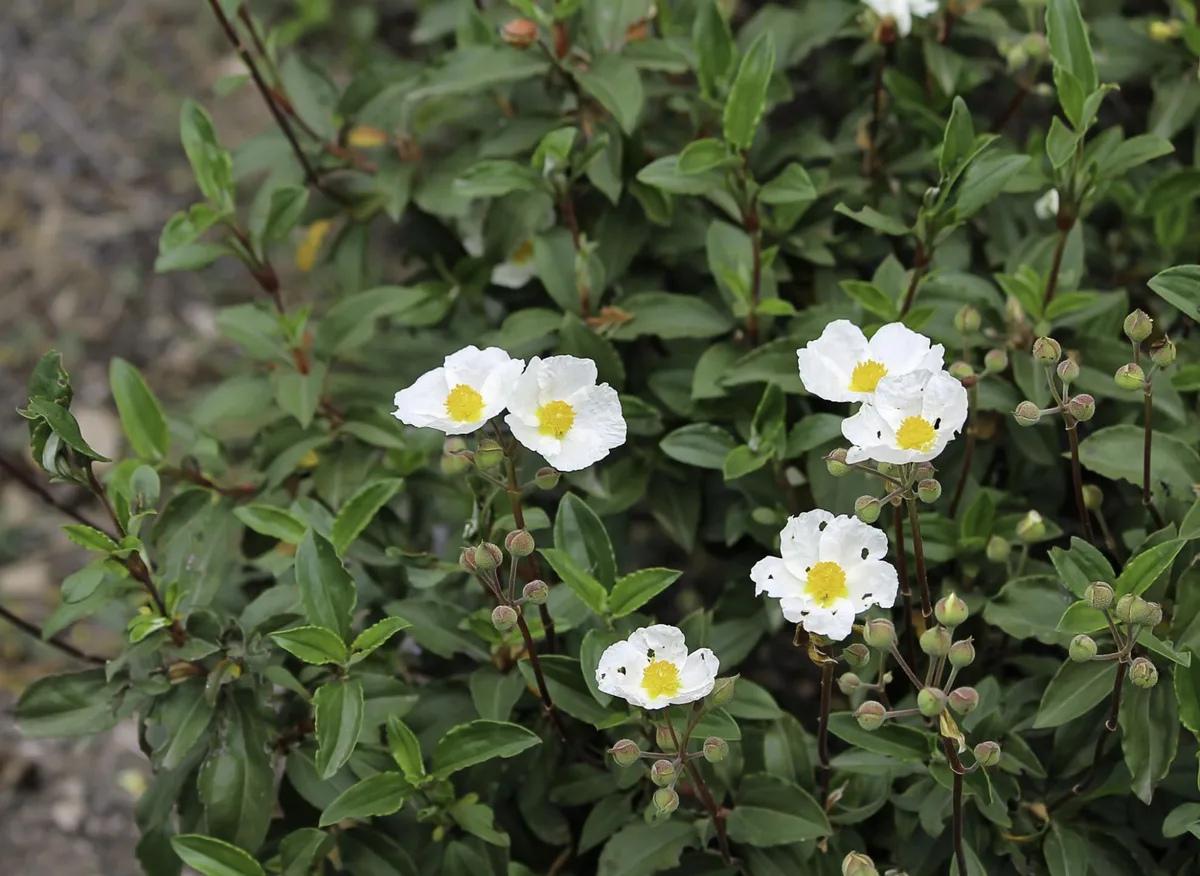
| Care difficulty | 2 / 5 |
|---|---|
| Watering schedule | Water sparingly once established, with excellent drainage |
| Sunlight requirements | Full sun |
| Ideal temperature | Information to be completed |
| Soil type | Chalk · Loam · Sand |
| Soil pH | Acid · Alkaline · Neutral |
| Soil moisture | Well drained |
| Fertilizing | Light low nitrogen feed in spring |
| Toxicity | Information to be completed |
How to Water Cistus laurifolius subsp. atlanticus?
Water sparingly once established, with excellent drainage
Learn more →What Are the Sunlight Requirements for Cistus laurifolius subsp. atlanticus?
Full sun
Learn more →What Soil Is Best for Cistus laurifolius subsp. atlanticus?
- Soil type
- Chalk · Loam · Sand
- Soil pH
- Acid · Alkaline · Neutral
What Are the Moisture Requirements for Cistus laurifolius subsp. atlanticus?
Well drained
Learn more →How to Fertilize Cistus laurifolius subsp. atlanticus?

Light low nitrogen feed in spring
Learn more →How to Prune Cistus laurifolius subsp. atlanticus?

Usually little pruning is needed. Lightly shape if necessary, removing dead, damaged or diseased shoots. Prune after flowering.
Learn more →How to Propagate Cistus laurifolius subsp. atlanticus?

Propagate by seed, softwood cuttings in spring and by semi-ripe cuttings from midsummer to early autumn
Learn more →How to Plant Cistus laurifolius subsp. atlanticus?
Grows well in poor, but well drained soil, in a sheltered site and full sun. The foliage may become chlorotic with age when the shrubs are grown on chalky soil.
Learn more →Common Pests & Diseases

Diseases
May be susceptible to honey fungus
Pests
Generally pest-free
Explore the plant health library →