



Planting and Growing bleeding glory bower


| Care difficulty | 3 / 5 |
|---|---|
| Watering schedule | Moderate regular watering, allowing brief slight drying between soakings |
| Sunlight requirements | Full sun |
| Ideal temperature | Information to be completed |
| Soil type | Clay · Loam · Sand |
| Soil pH | Acid · Alkaline · Neutral |
| Soil moisture | Moist but well drained |
| Fertilizing | Balanced perennial feed every four weeks from spring through summer |
| Toxicity | Information to be completed |
How to Water bleeding glory bower?
Originating from the tropical rainforests, bleeding-heart vine thrives in high humidity and consistently moist soil conditions. This species exhibits a preference for regular moisture but can tolerate short periods of dryness. It should be watered once every 1-2 weeks, ensuring the soil remains hydrated without becoming waterlogged. As an evergreen plant commonly grown indoors, bleeding-heart vine benefits greatly from increased ambient humidity to mimic its native environment, promoting lush foliage and vibrant blooms.
Learn more →What Are the Sunlight Requirements for bleeding glory bower?
Bleeding-heart vine thrives under full sunlight, which is paramount for its vigorous growth and prolific blooming. The preferred intensity is bright, unfiltered light for at least 6 hours a day. However, bleeding-heart vine can also tolerate partial sun, where it receives some dappled light or direct morning rays followed by afternoon shade. Deviation from full sun might result in reduced flowering and leggier growth, though bleeding-heart vine remains resilient in less than ideal light. When planted outdoors, bleeding-heart vine should be positioned in a sunny spot. Indoors, bleeding-heart vine favors south-facing windows where ample light is assured. Its leaves may exhibit adaptive changes to optimize light absorption under varying conditions, ensuring its survival and decorative appeal.
Learn more →What Is the Ideal Temperature Range for bleeding glory bower?

Bleeding-heart vine demonstrates a moderate tolerance to temperature variations, enduring extremes from 0℃ (32℉) to 43℃ (109℉). Though resilient, bleeding-heart vine can exhibit stress at these limits, showing wilting, leaf browning, or growth stunting under prolonged cold or heat exposure. Its adaptability necessitates attentive care during harsh weather, requiring frost protection, such as covering or relocating indoors during cold spells, and adequate shading and hydration during heatwaves. Such measures ensure bleeding-heart vine thrives and maintains its ornamental appeal despite fluctuating temperatures.
Learn more →What Soil Is Best for bleeding glory bower?
Bleeding-heart vine thrives in well-draining soil, as its roots are susceptible to rot from excess moisture. For growing bleeding-heart vine, mix equal parts potting soil, peat, and perlite to ensure proper drainage and aeration. If peat is unavailable, coconut coir is an excellent substitute. Regularly apply a balanced, water-soluble fertilizer during the growing season to boost bleeding-heart vine's growth. Avoid waterlogging by using pots with sufficient drainage holes.
- Soil type
- Clay · Loam · Sand
- Soil pH
- Acid · Alkaline · Neutral
What Are the Moisture Requirements for bleeding glory bower?
Moist but well drained
Learn more →How to Fertilize bleeding glory bower?

For optimal growth, bleeding-heart vine thrives with high phosphorus fertilizers, which bolster blossoming and fortify roots. During the growing season, apply a balanced liquid fertilizer bi-weekly at half-strength. In dormancy (winter), reduce feeding to once a month to avoid nutrient excess. Measure according to the product label to prevent burn. Special care: avoid direct contact with leaves and stems. Seasonal variations in light and temperature will guide adjustments in the feeding schedule, ensuring bleeding-heart vine's vitality.
Learn more →How to Prune bleeding glory bower?

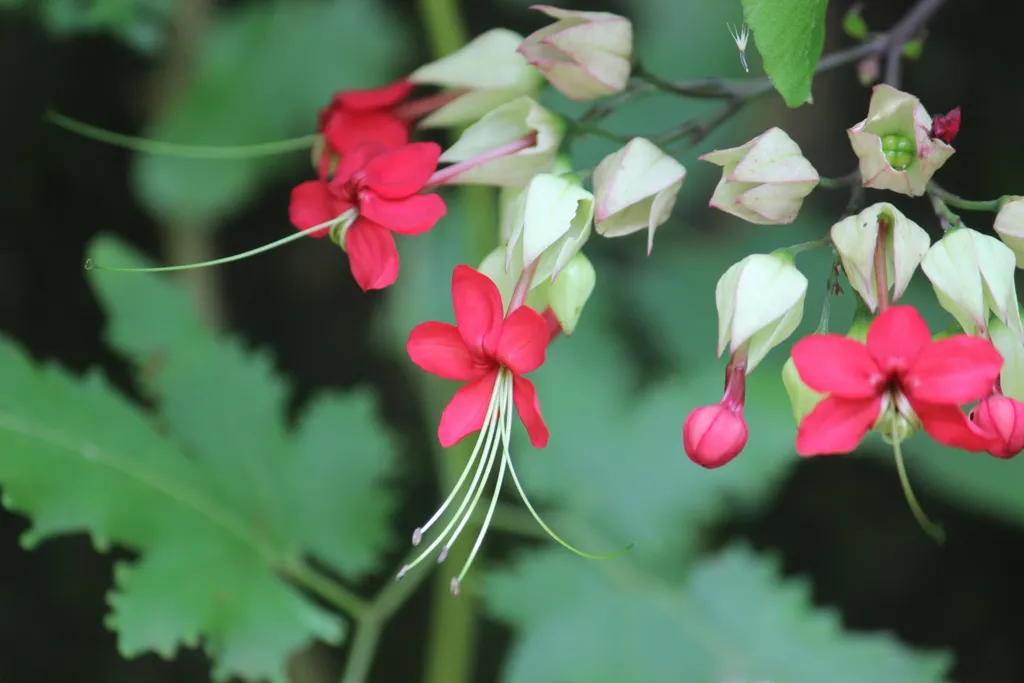
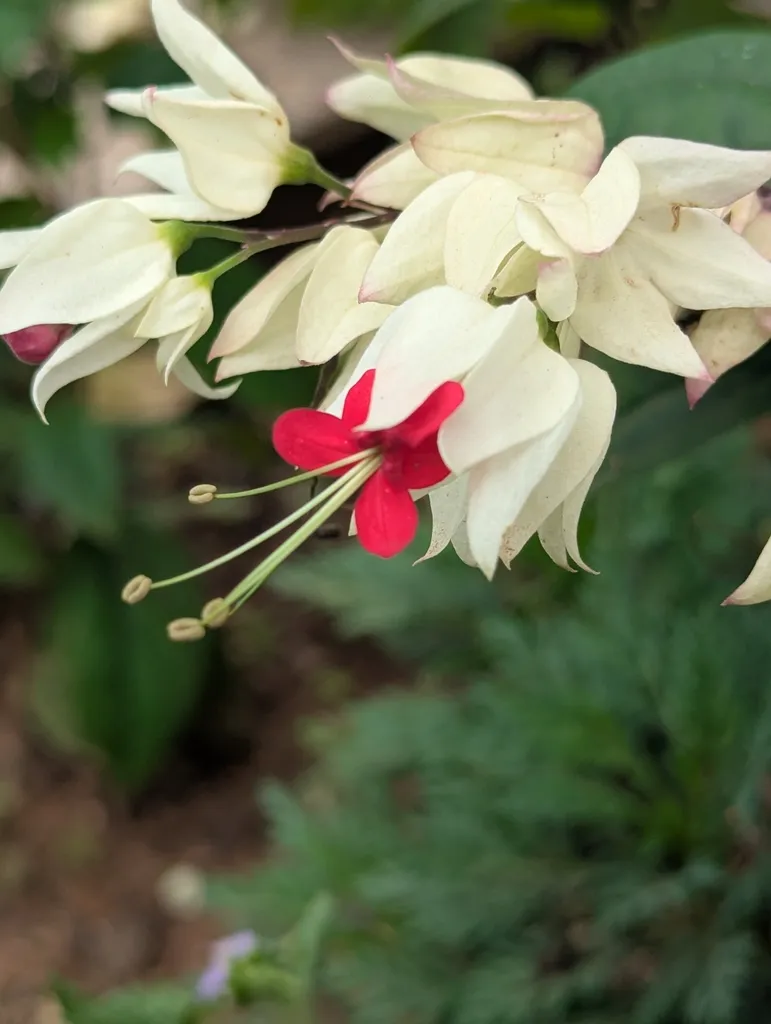
Bleeding-heart vine is known for its attractive clusters of red and white flowers. Prune in late winter to early spring before new growth starts. Trim back long, leggy stems to encourage bushier growth and remove any dead or diseased branches. Regular pruning promotes better air circulation and flowering. This plant responds well to pruning, enhancing its ornamental appeal and overall health. Ensure cleanliness to prevent disease spread.
Learn more →How to Propagate bleeding glory bower?

This attractive tropical vine, known for its unique heart-shaped flowers with a reddish hue, thrives when propagated through cuttings. To achieve successful growth, take stem cuttings with several leaf nodes. Use a rooting hormone to enhance root development, and plant them in a well-draining medium, keeping the environment humid. Ensure the cuttings are placed in indirect light and maintain consistent moisture levels without waterlogging. With proper care, bleeding-heart vine will begin to establish a strong root system, encouraging a flush of new growth indicative of a successful propagation process.
Learn more →How to Transplant bleeding glory bower?
The ideal season for transplanting bleeding-heart vine is from early summer to late fall, ensuring optimal growth conditions. Bleeding-heart vine thrives in well-drained soil and a partially shaded location. When transplanting, be gentle with the roots to avoid damage. This friendly advice ensures a successful transplanting experience!
Learn more →How to Care for bleeding glory bower in Winter?

Bleeding-heart vine hails from warm West Africa, where virtually non-existent winters allow it to flourish year-round. Naturally, bleeding-heart vine is not frost-tolerant and may suffer in extreme cold. For gardeners, relocating bleeding-heart vine to an indoor environment, ensuring a well-draining soil medium, and moderating watering routines should headline winter care, helping the plant survive those frigid months with minimal damage.
Learn more →How to Plant bleeding glory bower?
Indoors-potted: When bleeding-heart vine graces your indoor space, ensure it has a sturdy support to climb - a small trellis or pole will do. It loves to show off its vining elegance. Outdoors-potted: Keep bleeding-heart vine's adventurous roots in check outdoors; a contained environment helps manage growth while still allowing for an impressive floral display. Outdoors-in the ground: Bleeding-heart vine might not withstand harsh winters outside; provide a warm shelter or consider seasonal replanting in colder regions to maintain its vibrant flourish.
Learn more →How to Repot bleeding glory bower?
Bleeding-heart vine, a stunning climber, favors repotting every 2-3 years to accommodate its rapid growth. Ideal in spring, repotting ensures vigorous health and abundant blooms. Select a pot one size larger to support its growth. Post-repotting, provide bright indirect light and keep soil moist for recovery. Aim for well-draining soil in a pot with ample vertical support.
Learn more →How to Harvest bleeding glory bower?

Information to be completed
Learn more →Common Pests & Diseases

Diseases
May be susceptible to honey fungus (rarely)
Pests
May be susceptible to mealybugs, glasshouse red spider mite and glasshouse whitefly
Explore the plant health library →The Toxicity of bleeding glory bower
Information to be completed