



Planting and Growing grape hyacinth 'Saffier'

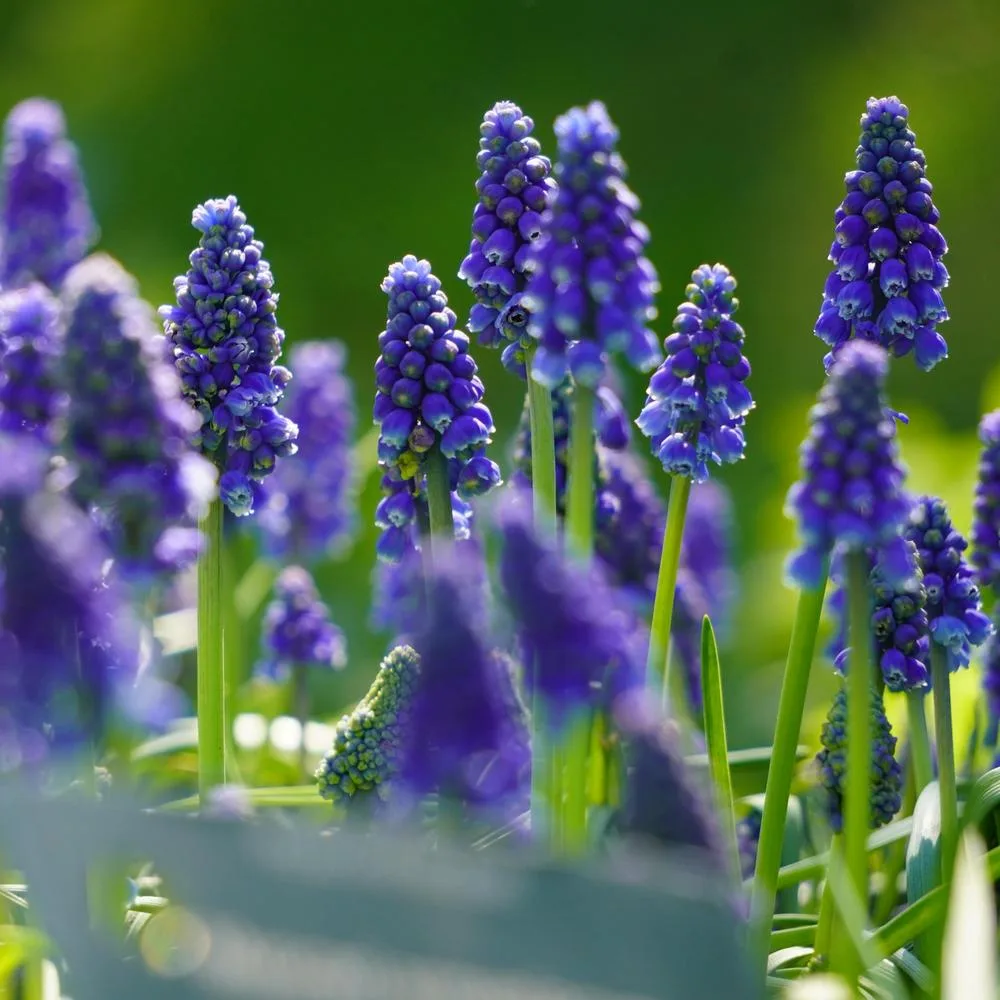
| Care difficulty | 2 / 5 |
|---|---|
| Watering schedule | Moist soil during active growth, then reduce watering after foliage yellows |
| Sunlight requirements | Full sun · Partial shade |
| Ideal temperature | Information to be completed |
| Soil type | Chalk · Clay · Loam · Sand |
| Soil pH | Acid · Alkaline · Neutral |
| Soil moisture | Moist but well drained · Well drained |
| Fertilizing | Light bulb fertilizer at emergence and again after flowering |
| Toxicity | Ornamental bulbs, not to be eaten. Wear gloves and other protective equipment when handling |
How to Water grape hyacinth 'Saffier'?
Moist soil during active growth, then reduce watering after foliage yellows
Learn more →What Are the Sunlight Requirements for grape hyacinth 'Saffier'?
Full sun · Partial shade
Learn more →What Soil Is Best for grape hyacinth 'Saffier'?
- Soil type
- Chalk · Clay · Loam · Sand
- Soil pH
- Acid · Alkaline · Neutral
What Are the Moisture Requirements for grape hyacinth 'Saffier'?
Moist but well drained · Well drained
Learn more →How to Fertilize grape hyacinth 'Saffier'?

Light bulb fertilizer at emergence and again after flowering
Learn more →How to Prune grape hyacinth 'Saffier'?

No pruning required, but remove spent foliage and cutting back in autumn may be needed
Learn more →How to Propagate grape hyacinth 'Saffier'?

Separate offsets in summer or propagate by seed, sown in autumn, in containers in a cold frame; cultivars may not come true from seed
Learn more →How to Plant grape hyacinth 'Saffier'?
Plant 10cm deep in autumn in any moderately fertile, well-drained soil. Lift and divide (when dormant in summer) congested clumps to maintain vigour. May be invasive
Learn more →Common Pests & Diseases

Diseases
May be susceptible to fungal infections including anther smuts and bluebell rust (see rust diseases), and bacterial soft rot and some virus diseases
Pests
Generally pest-free
Explore the plant health library →The Toxicity of grape hyacinth 'Saffier'
Ornamental bulbs, not to be eaten. Wear gloves and other protective equipment when handling