



Planting and Growing heather 'John Pook'

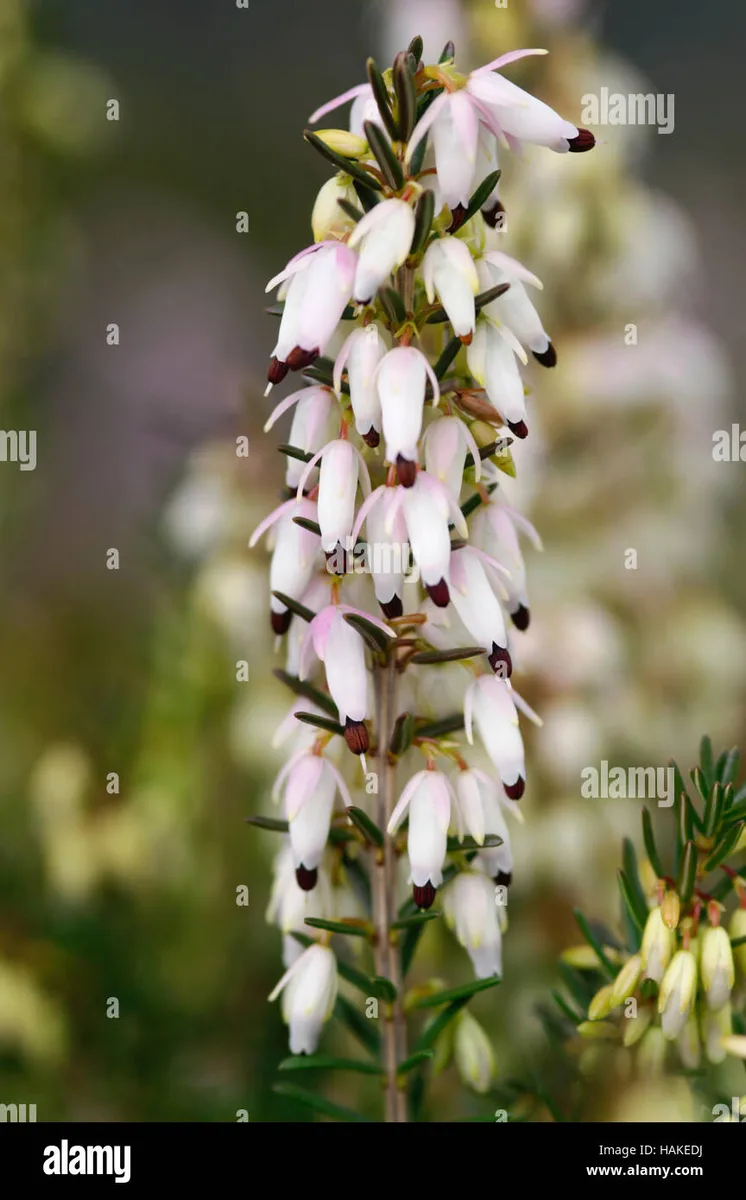
| Care difficulty | 3 / 5 |
|---|---|
| Watering schedule | Maintain damp acidic peat soil, prevent full drying of root ball mass |
| Sunlight requirements | Full sun · Partial shade |
| Ideal temperature | Information to be completed |
| Soil type | Chalk · Clay · Loam · Sand |
| Soil pH | Acid · Alkaline · Neutral |
| Soil moisture | Moist but well drained · Well drained |
| Fertilizing | Diluted ericaceous liquid feed every four weeks spring-autumn |
| Toxicity | Information to be completed |
How to Water heather 'John Pook'?
Maintain damp acidic peat soil, prevent full drying of root ball mass
Learn more →What Are the Sunlight Requirements for heather 'John Pook'?
Full sun · Partial shade
Learn more →What Soil Is Best for heather 'John Pook'?
- Soil type
- Chalk · Clay · Loam · Sand
- Soil pH
- Acid · Alkaline · Neutral
What Are the Moisture Requirements for heather 'John Pook'?
Moist but well drained · Well drained
Learn more →How to Fertilize heather 'John Pook'?

Diluted ericaceous liquid feed every four weeks spring-autumn
Learn more →How to Prune heather 'John Pook'?

Shorten flowered shoots to about 1.5–2.5 cm from the previous year's growth. Prune after flowering has finished.
Learn more →How to Propagate heather 'John Pook'?

Propagate by semi-hardwood cuttings
Learn more →How to Plant heather 'John Pook'?
A lime-tolerant heather, prefers well-drained neutral to acid soil in full sun but tolerant of alkaline soils and some shade. See Hardy heathers for further advice
Learn more →Common Pests & Diseases

Diseases
May be susceptible to fungal diseases, including honey fungus (rarely), and Phytophthora root rot, in wet conditions
Pests
Generally pest-free
Explore the plant health library →