



Planting and Growing zebra haworthia

| Care difficulty | 2 / 5 |
|---|---|
| Watering schedule | Let gritty soil dry fully before each thorough watering cycle |
| Sunlight requirements | Full sun |
| Ideal temperature | 18 – 28 °C |
| Soil type | Loam · Sand |
| Soil pH | Acid · Alkaline · Neutral |
| Soil moisture | Well drained |
| Fertilizing | Very dilute low-nitrogen succulent feed monthly in warm growth |
| Toxicity | Information to be completed |
How to Water zebra haworthia?
Originating from the arid regions of South Africa, zebra plant has adapted to survive with minimal moisture. It thrives in environments that mimic its native dry conditions, showing a preference for low humidity and possessing drought tolerance. Consequently, zebra plant requires watering once every two weeks to maintain its health without risking overhydration. As an indoor plant often favored for its decorative appeal, zebra plant is particularly sensitive to overwatering during its dormant winter period; hence, careful monitoring of soil moisture is crucial to avoid root rot.
Learn more →What Are the Sunlight Requirements for zebra haworthia?
Zebra plant thrives in partial sun, receiving bright but indirect light for optimal growth. Tolerant of a range of light conditions, from full sun to full shade, zebra plant adapts by reducing growth rate in less than ideal lighting. In full sun, zebra plant's leaves may exhibit a deeper coloration as a protective response to intense light, while in full shade, growth may be slowed. For those cultivating zebra plant indoors, a spot near an east or south-facing window suits it well, ensuring a balance of light without scorching. Outdoors, zebra plant should be placed in a position that offers morning light and afternoon shade to mimic its ideal environment.
Learn more →What Is the Ideal Temperature Range for zebra haworthia?

Zebra plant is a resilient plant with the ability to tolerate temperatures ranging from 0℃ (32℉) to 43℃ (109℉). Despite this wide tolerance, zebra plant can be sensitive to extreme cold or heat. During cold conditions below 0℃, zebra plant may exhibit symptoms like discoloration and a mushy texture, necessitating protective measures such as insulation. In high temperatures above 43℃, the plant may show signs of sunburn or dehydration, requiring shading and increased watering. Understanding zebra plant's temperature tolerance is essential for its care, ensuring it thrives by avoiding prolonged exposure to temperature extremes.
Learn more →What Soil Is Best for zebra haworthia?
Zebra plant thrives in well-draining soil. Use a commercial succulent & cactus mix or create your own with 2 parts potting soil, 1 part perlite, and 1 part sand for optimal drainage. Ensure pots have drainage holes to prevent water-logging. Enhance growth with a half-strength balanced fertilizer during the growing season, avoiding winter.
- Soil type
- Loam · Sand
- Soil pH
- Acid · Alkaline · Neutral
What Are the Moisture Requirements for zebra haworthia?
Well drained
Learn more →How to Fertilize zebra haworthia?

For zebra plant, a balanced fertilizer specifically designed for succulents and cacti promotes robust growth. Apply quarterly during the growing season, sparingly to avoid overfeeding which can damage roots. Skip fertilization in the dormant winter period to align with zebra plant's natural growth cycle. Dilute fertilizer to half-strength to prevent nutrient overload, ensuring plant vitality. Over-fertilization can lead to undesirable salt buildup, so flush soil with water periodically. Adhering to these guidelines will ensure zebra plant thrives, showcasing its distinctive striped leaves.
Learn more →How to Prune zebra haworthia?

No pruning required
Learn more →How to Propagate zebra haworthia?

Zebra plant propagates best through cuttings during spring or autumn. The process is moderately easy, with successful propagation indicated by new root development. Ensure well-draining soil and avoid overwatering to promote healthy growth.
Learn more →How to Transplant zebra haworthia?
The best time to transplant zebra plant is from early summer to late fall, as it favors root development and healthy growth. Choose a location with well-draining soil and indirect sunlight. If necessary, enhance drainage by adding sand or perlite. Happy transplanting!
Learn more →How to Care for zebra haworthia in Winter?

Endemic to South Africa, zebra plant is a drought-tolerant species, evolved to survive harsh winters. In its natural habitat, it comfortably withstands cooler conditions, going dormant if necessary. Outside its subtropical home, winter can pose a bleak challenge. Expert gardeners recommend ensuring zebra plant receives bright, indirect light, limiting water exposure, and keeping it in a cool room with temperatures above freezing to replicate its habitat, maximizing its potential to flourish.
Learn more →How to Plant zebra haworthia?
Indoors-potted: In an indoor setting, zebra plant thrives with occasional rotation to ensure uniform growth due to its light-seeking behavior. Outdoors-potted: When potted outdoors, zebra plant requires a sheltered spot as it may not tolerate extreme weather conditions well. Outdoors-in the ground: Zebra plant can struggle in direct outdoor elements; best to plant in a space that mimics its natural rocky outcrops.
Learn more →How to Repot zebra haworthia?
Repot zebra plant biennially in spring to accommodate its succulent rosette growth, which remains compact at a modest size. Select a container slightly larger than the previous one, ensuring it has good drainage to prevent root rot. Post-repotting, provide bright, indirect light and refrain from watering for a week to allow the roots to settle and heal, ensuring zebra plant's robust health.
Learn more →Common Pests & Diseases

Diseases
Generally disease-free
Pests
May be susceptible to mealybugs
Explore the plant health library →Troubleshooting
Translucent, Mushy Basal Leaves and Root Rot
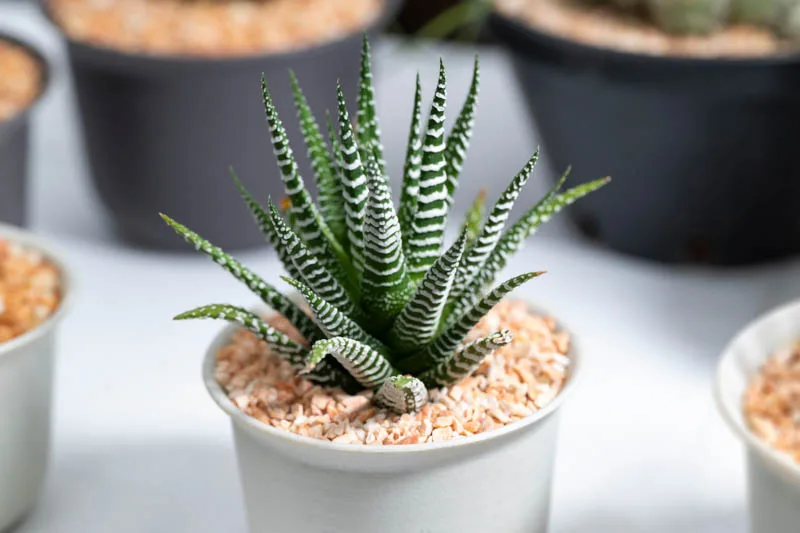
Haworthiopsis fasciata (zebra haworthia, formerly Haworthia fasciata) is a compact South African succulent with thick, white-striped leaves that rot quickly if overwatered or planted in heavy, moisture-retentive soil.
| What you notice | Possible explanation | What to check next |
|---|---|---|
| Lower leaves turn yellow-brown, translucent, or mushy at the base while potting mix stays damp | Overwatering or poorly draining soil causing root rot | Stop watering immediately, empty standing water, and unpot to inspect the thick roots. |
| Leaves look thin, curled inward (U-shaped groove deepens), and dull in bone-dry soil | Underwatering during active spring/autumn growth | Confirm the gritty potting mix is dry from top to bottom, then soak thoroughly and drain. |
- Allow the gritty potting mix to dry out completely between thorough waterings, and avoid letting water sit in the center of the rosette.
- Grow in a fast-draining cactus/succulent mix (high in pumice, perlite, or coarse grit) in a pot with open drainage holes.
- If roots have rotted, trim damaged roots with clean scissors, let the base dry for 2 to 3 days, and repot into dry gritty mix.
Haworthiopsis fasciata is listed as non-toxic to cats and dogs by the ASPCA.
Reddish-Brown Sun Stress or Stretching Rosette
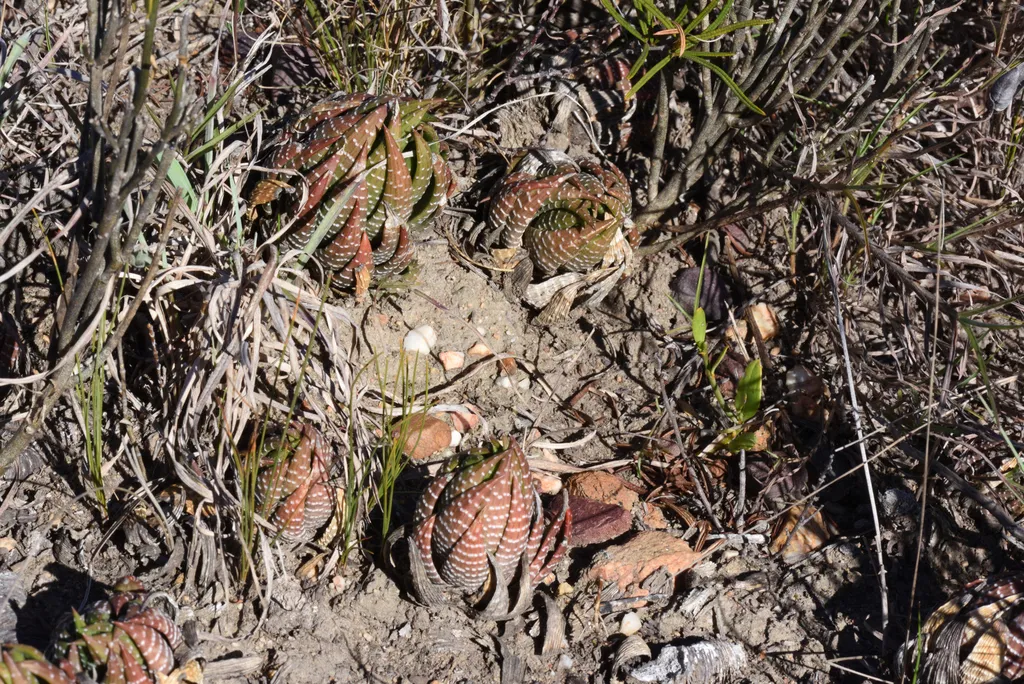
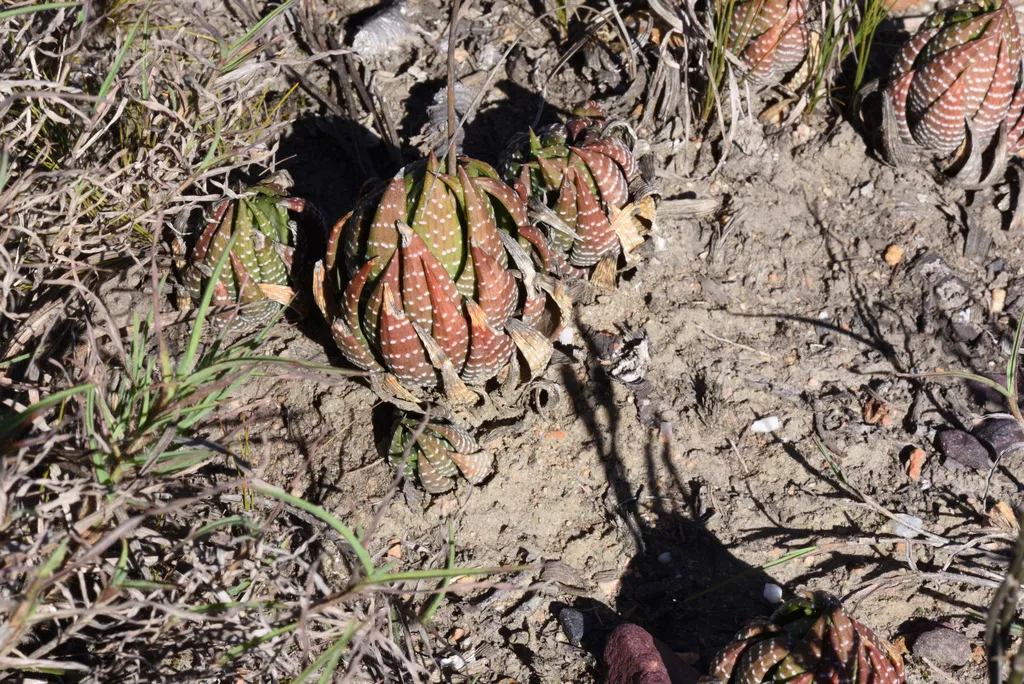
Unlike desert cacti that demand blazing afternoon sun, Haworthiopsis fasciata grows naturally tucked beside shrubs and rocks in bright indirect or dappled light.
| What you notice | Possible explanation | What to check next |
|---|---|---|
| Leaves turn reddish-brown or purplish-bronze near a sunny south/west window | Excessive direct afternoon sun | Move the pot slightly back from harsh afternoon sun into bright, filtered light or morning sun. |
| Rosette opens wide with long, pale green leaves stretching upward | Very low light | Move closer to an east-facing window or bright filtered window. |
- Place in bright, indirect light or gentle morning sun (such as an east-facing windowsill) out of intense afternoon heat.
- Feed very lightly once or twice in spring/early autumn with a diluted succulent fertilizer, and water sparingly in winter.
- Separate rooted offsets (pups) in spring or summer if you wish to propagate new plants, or leave them clustered for a specimen mound.
Most retail plants sold as 'zebra haworthia' are closely related Haworthiopsis attenuata (which has white tubercles on both leaf surfaces) or H. fasciata (smooth inner leaf surface); care requirements are identical.