



Planting and Growing golden barrel cactus

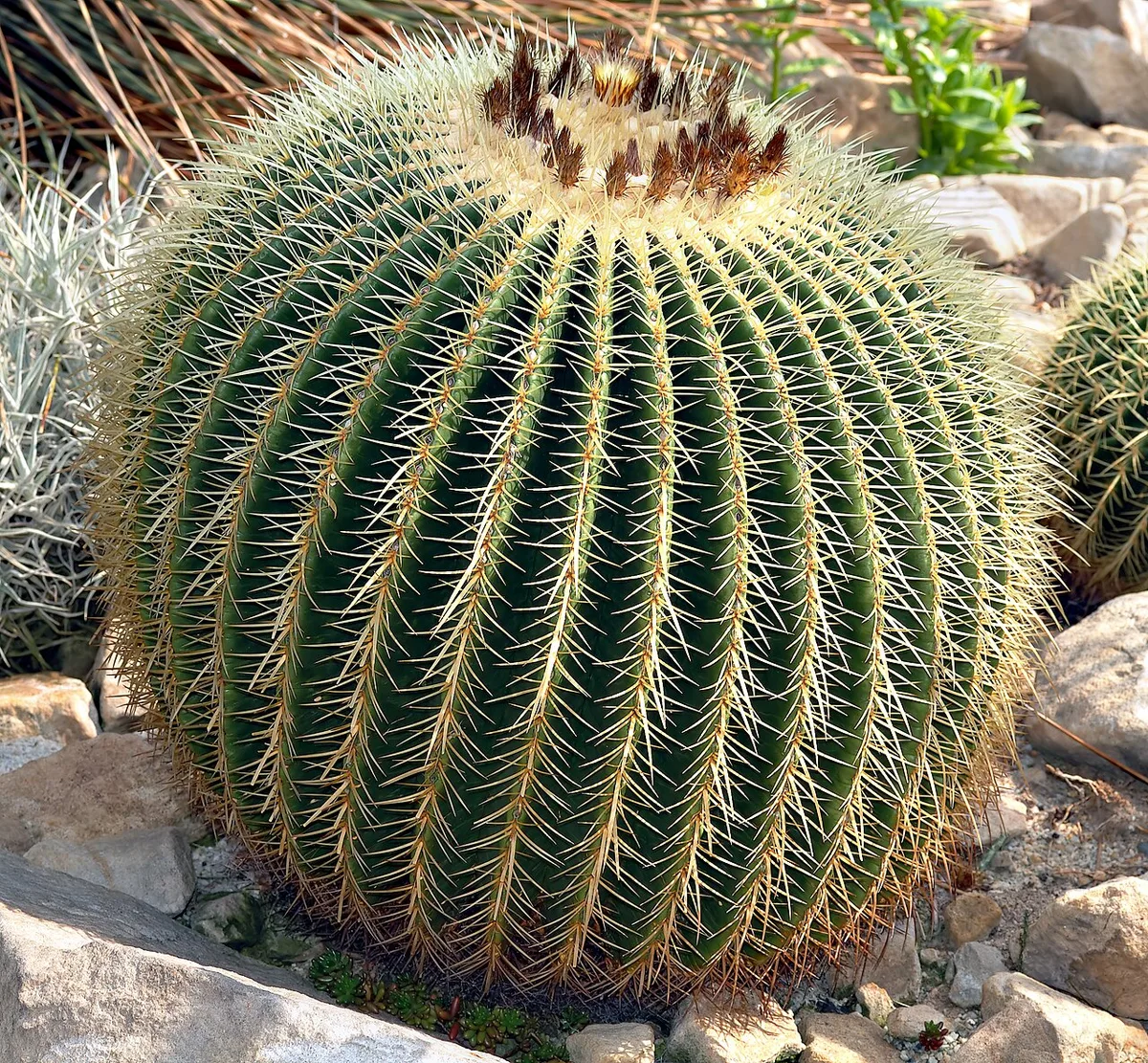
| Care difficulty | 2 / 5 |
|---|---|
| Watering schedule | Moderate regular watering, allowing brief slight drying between soakings |
| Sunlight requirements | Full sun |
| Ideal temperature | 18 – 28 °C |
| Soil type | Loam · Sand |
| Soil pH | Acid · Alkaline · Neutral |
| Soil moisture | Well drained |
| Fertilizing | Balanced perennial feed every four weeks from spring through summer |
| Toxicity | Information to be completed |
How to Water golden barrel cactus?
Golden barrel cactus is a plant that thrives in arid conditions, demonstrating high drought tolerance. It originates from regions with minimal rainfall and harsh climates, thus it has adapted to conserve water efficiently. Its watering needs are relatively low, requiring hydration once every three weeks. As an evergreen plant often grown outdoors, golden barrel cactus prefers well-drained soil which prevents waterlogging and mimics its natural desert habitat.
Learn more →What Are the Sunlight Requirements for golden barrel cactus?
Golden barrel cactus thrives in conditions of full sunlight, which stimulates healthy growth and enhances its natural golden hue. These optimal conditions involve exposure to direct sun for most of the day. While golden barrel cactus has some tolerance for partial sun, insufficient light may lead to a decrease in growth rate and vitality. Its barrel-shaped body and spiny surface are well-adapted for high light environments, offering protection from intense rays and preventing water loss. Ideally, golden barrel cactus should be planted outdoors in bright, unobstructed locations to ensure adequate sunlight. Its hardiness is reflected in its ability to endure under bright conditions but may require protection or adjustment when light conditions are not ideal.
Learn more →What Is the Ideal Temperature Range for golden barrel cactus?

Golden barrel cactus shows remarkable resilience to temperature variations. It can tolerate cold temperatures as low as 0℃ (32℉) and withstand heat up to 43℃ (109℉). This adaptability means golden barrel cactus may not require extensive protective measures in moderate climates but needs shielding during extreme cold or heat. Symptoms of stress include discoloration or mushy stems under cold and sunburn or desiccation under heat. To protect golden barrel cactus, bring it indoors during frosts and provide shade during intense heat. These care measures ensure its longevity and thriving condition, even in fluctuating temperatures.
Learn more →What Soil Is Best for golden barrel cactus?
Golden barrel cactus's health relies on excellent drainage to avoid root rot. For a suitable soil mix, blend equal parts of succulent & cactus soil with coarse sand and perlite to facilitate aeration. If sand is unavailable, pumice or gravel are adequate substitutes. Ensure containers have drainage holes. Periodically mix in a cactus-appropriate fertilizer, following package instructions, to boost growth.
- Soil type
- Loam · Sand
- Soil pH
- Acid · Alkaline · Neutral
What Are the Moisture Requirements for golden barrel cactus?
Well drained
Learn more →How to Fertilize golden barrel cactus?

Fertilize golden barrel cactus quarterly with succulents and cacti food, promoting vitality and potential bloom. Apply per product instructions, usually 1/2 teaspoon per gallon of soil, during spring and summer growth periods. Minimize in fall, hault in winter. Over-fertilization leads to root burn; under-fertilization stunts growth. For balanced nourishment, ensure fertilizer includes equal NPK ratios. Water golden barrel cactus thoroughly before fertilization to prevent root damage. Use a well-measured, diluted solution to safeguard golden barrel cactus's health.
Learn more →How to Prune golden barrel cactus?

Golden barrel cactus does not require much pruning. Remove withered flowers and branches so the plant uses nutrients on healthy growth.
Learn more →How to Propagate golden barrel cactus?

Golden barrel cactus can be propagated by taking cuttings, which should include a portion of mature stem. The cut end must be allowed to callous over for a few days to prevent rotting when planted. Once calloused, place the cutting in a well-draining cactus mix, ensuring that it receives bright, indirect light. Water sparingly until roots have formed and new growth is evident, which indicates successful propagation.
Learn more →How to Transplant golden barrel cactus?
The perfect season for transplanting golden barrel cactus falls between early to mid-summer, as warmer temperatures encourage root growth. For successful transplanting, place golden barrel cactus in a bright, well-draining spot. Remember - occasional transplanting tips may be needed to ensure a seamless move!
Learn more →How to Care for golden barrel cactus in Winter?

Golden barrel cactus hails from arid regions where winter is quite mild. Its ability to retain water helps it survive cold periods. In caretaking, it's crucial to mimic this dry, cold bias. Adequate warmth, minimal watering, and good drainage are key. Protect golden barrel cactus from frost, as it can cause damage, and consider indoor housing in particularly frigid climates, highlighting the plant’s resilience in harsh conditions.
Learn more →How to Plant golden barrel cactus?
Indoors-potted: Thriving in the cozy indoors, golden barrel cactus appreciates a stable environment away from drafts to maintain its sculptural form. Outdoors-potted: In an outdoor pot, golden barrel cactus enjoys the freedom to bask in the day's warmth while ensuring proper drainage to avoid root rot. Outdoors-in the ground: Planted in the ground, golden barrel cactus becomes a low-maintenance centerpiece that can withstand dry spells, symbolizing resilience.
Learn more →How to Repot golden barrel cactus?
Golden barrel cactus thrives best when repotted every 2-3 years to accommodate its spherical growth, reaching up to 90 cm in diameter. The ideal repotting period is late spring or early summer, aligning with its growth spurt. Use a slightly larger pot with ample drainage. After repotting, water sparingly to prevent root rot and place in bright, indirect light to foster recovery and robust health.
Learn more →How to Harvest golden barrel cactus?

Most fruits of golden barrel cactus are edible. Pick the fruit when they turn red. Avoid food safety issues by confirming the species with experts. Wear gloves or use scissors and other tools to harvest.
Learn more →Common Pests & Diseases

Diseases
Generally disease-free
Pests
May be susceptible to mealybugs
Explore the plant health library →The Toxicity of golden barrel cactus
Information to be completed