



Planting and Growing montbretia 'Emily McKenzie'

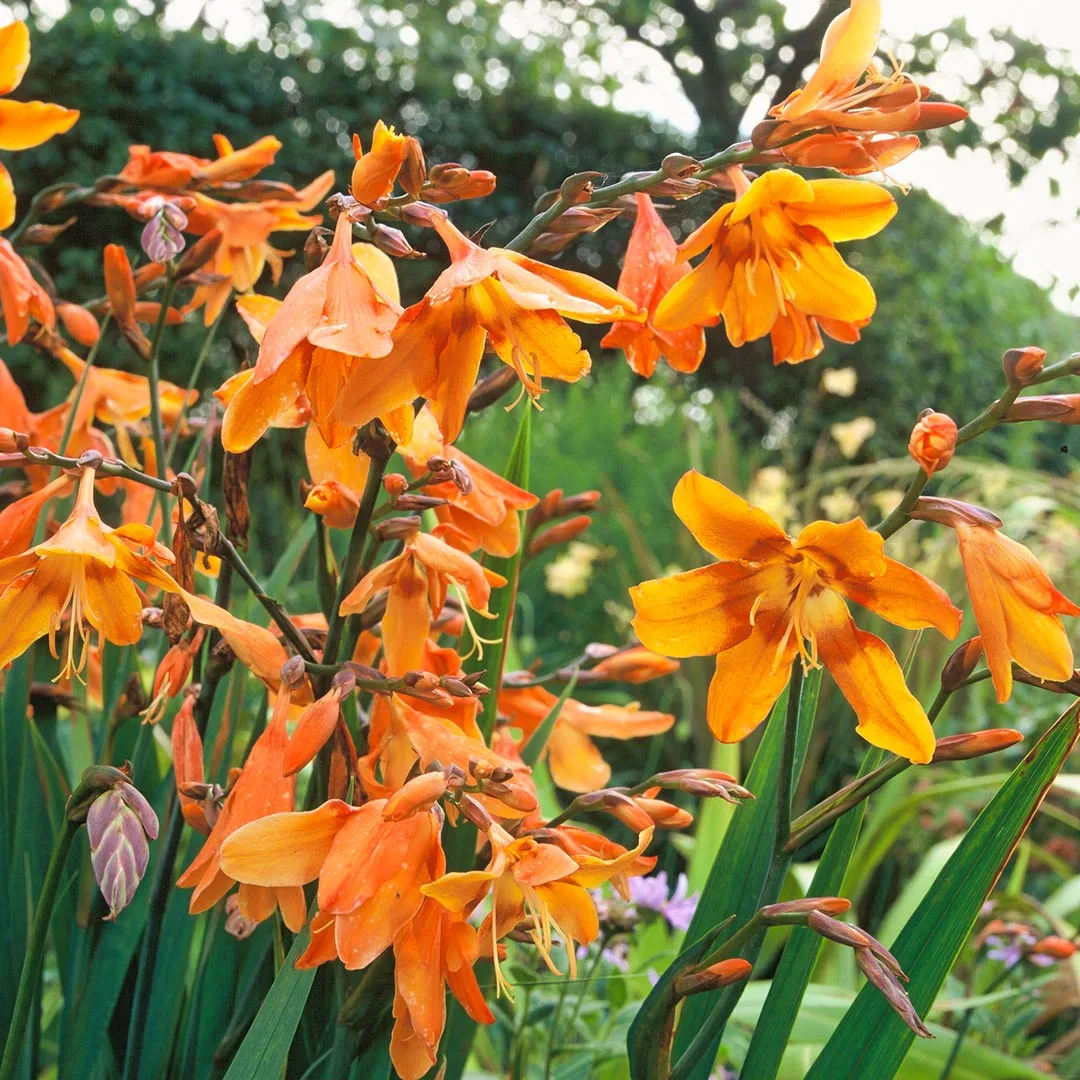
| Care difficulty | 3 / 5 |
|---|---|
| Watering schedule | Water moderately when upper soil dries, good drainage required |
| Sunlight requirements | Full sun · Partial shade |
| Ideal temperature | Information to be completed |
| Soil type | Chalk · Clay · Loam · Sand |
| Soil pH | Acid · Alkaline · Neutral |
| Soil moisture | Moist but well drained |
| Fertilizing | Diluted crocosmia feed every three weeks from spring to early fall |
| Toxicity | Information to be completed |
How to Water montbretia 'Emily McKenzie'?
Water moderately when upper soil dries, good drainage required
Learn more →What Are the Sunlight Requirements for montbretia 'Emily McKenzie'?
Full sun · Partial shade
Learn more →What Soil Is Best for montbretia 'Emily McKenzie'?
- Soil type
- Chalk · Clay · Loam · Sand
- Soil pH
- Acid · Alkaline · Neutral
What Are the Moisture Requirements for montbretia 'Emily McKenzie'?
Moist but well drained
Learn more →How to Fertilize montbretia 'Emily McKenzie'?

Diluted crocosmia feed every three weeks from spring to early fall
Learn more →How to Prune montbretia 'Emily McKenzie'?

No pruning required, except the removal of dead leaves and flower stems before new growth starts in spring.
Learn more →How to Propagate montbretia 'Emily McKenzie'?

Propagate by division in early spring when clumps become congested or Propagate by seed sown in containers in a cold frame as soon as ripe
Learn more →How to Plant montbretia 'Emily McKenzie'?
Corms should be planted in moderately fertile, humus rich soil approximately 10cm deep and 7.5–10cm apart in groups to form clumps. Water if it is a dry season as a lack of water reduces flowering. This species is listed on Schedule 9 of the UK Wildlife and Countryside Act as an invasive, non-native species. While this does not prevent it or its cultivars from being sold in the UK, or from being grown in gardens, the RHS encourages those that do grow it to take great care with managing it and with disposing of unwanted material to ensure that it does not spread outside of the garden.
Learn more →Common Pests & Diseases

Diseases
Generally disease-free
Pests
May be susceptible to glasshouse red spider mite
Explore the plant health library →