



Planting and Growing blue freesia

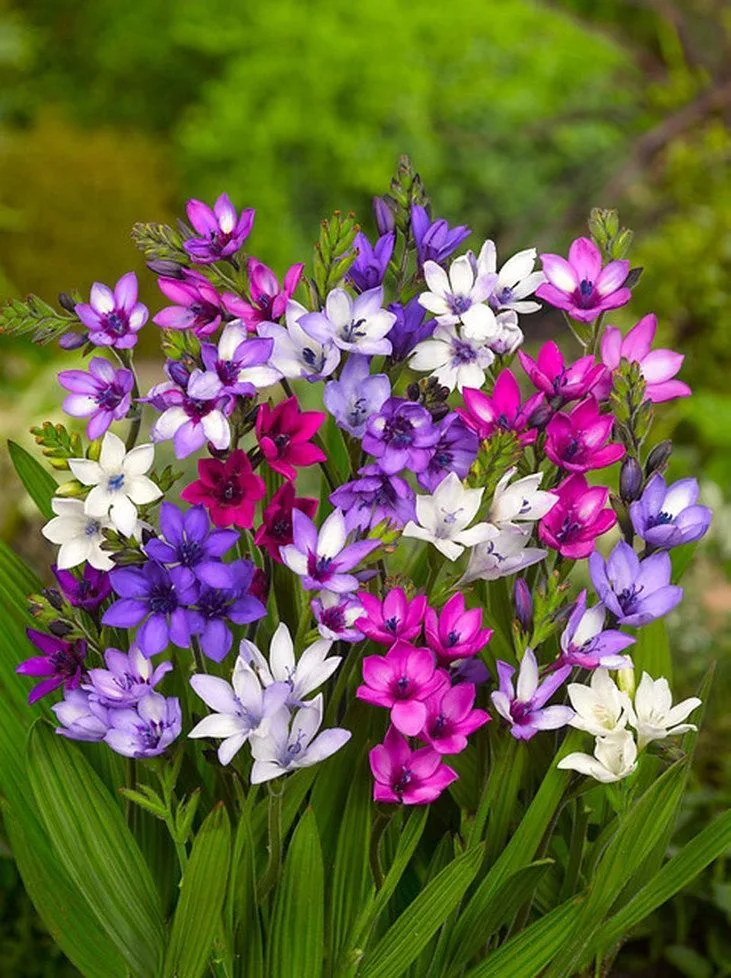
| Care difficulty | 3 / 5 |
|---|---|
| Watering schedule | Moderate regular watering, avoid prolonged drought or waterlogging |
| Sunlight requirements | Full sun |
| Ideal temperature | Information to be completed |
| Soil type | Loam · Sand |
| Soil pH | Neutral |
| Soil moisture | Well drained |
| Fertilizing | Balanced feed in spring and light repeat in growth season |
| Toxicity | Information to be completed |
How to Water blue freesia?
Moderate regular watering, avoid prolonged drought or waterlogging
Learn more →What Are the Sunlight Requirements for blue freesia?
Full sun
Learn more →What Soil Is Best for blue freesia?
- Soil type
- Loam · Sand
- Soil pH
- Neutral
What Are the Moisture Requirements for blue freesia?
Well drained
Learn more →How to Fertilize blue freesia?

Balanced feed in spring and light repeat in growth season
Learn more →How to Prune blue freesia?

None required
Learn more →How to Propagate blue freesia?

Propagate by seed as soon as ripe in autumn in a temperature of 13°C-15°C (55°F-59°F). Remove offsets when the corms are dormant in autumn. Pot into equal parts loam-based compost and sharp sand
Learn more →How to Plant blue freesia?
Grow under glass from corms in autumn. Plant into John Innes No 2 compost and grow on in full light. Apply a weak, balanced liquid fertiliser every 3 weeks before flowering. Dry off as the leaves die down in summer. Corms can also be bought in spring for planting outside for a one off summer blooming, but after this, would need to be grown under glass and allowed to winter grow. Plant corms 15cm (6in) deep
Learn more →Common Pests & Diseases

Diseases
Usually trouble free
Pests
Glasshouse red spider mite may be a problem
Explore the plant health library →