



Planting and Growing Mason's nerine

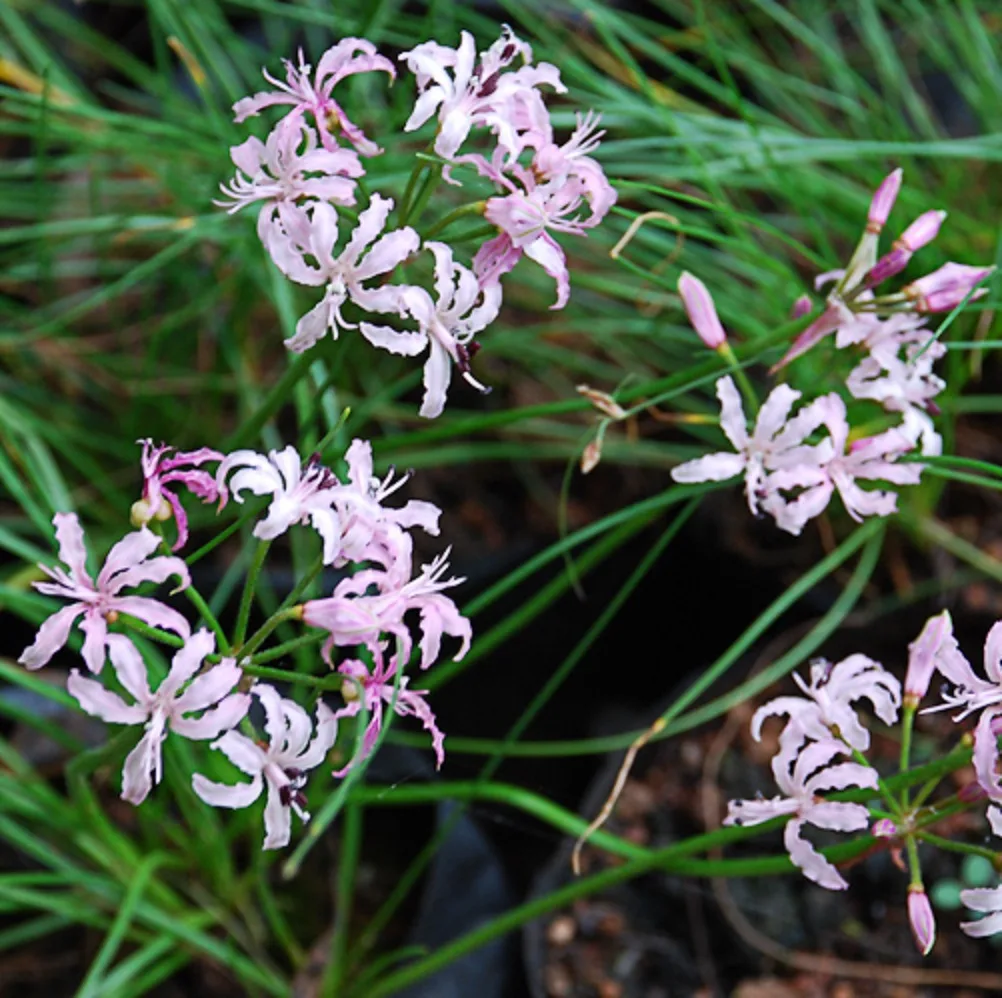
| Care difficulty | 3 / 5 |
|---|---|
| Watering schedule | Moist soil during active growth, then reduce watering after foliage yellows |
| Sunlight requirements | Full sun |
| Ideal temperature | Information to be completed |
| Soil type | Loam · Sand |
| Soil pH | Acid · Alkaline · Neutral |
| Soil moisture | Moist but well drained · Well drained |
| Fertilizing | Light bulb fertilizer at emergence and again after flowering |
| Toxicity | Ornamental bulbs - not to be eaten. Wear gloves and other protective equipment when handling |
How to Water Mason's nerine?
Moist soil during active growth, then reduce watering after foliage yellows
Learn more →What Are the Sunlight Requirements for Mason's nerine?
Full sun
Learn more →What Soil Is Best for Mason's nerine?
- Soil type
- Loam · Sand
- Soil pH
- Acid · Alkaline · Neutral
What Are the Moisture Requirements for Mason's nerine?
Moist but well drained · Well drained
Learn more →How to Fertilize Mason's nerine?

Light bulb fertilizer at emergence and again after flowering
Learn more →How to Prune Mason's nerine?

Deadhead after flowering
Learn more →How to Propagate Mason's nerine?

Propagate by seed or from offsets- see bulb propagation
Learn more →How to Plant Mason's nerine?
Grows best in light, sandy soils or compost. Plant in spring or autumn, so the bulb tips are above the compost surface. Provide full light, water freely when in active growth, give a low nitrogen feed after flowering, then keep dry when dormant in summer. See also nerine cultivation
Learn more →Common Pests & Diseases

Diseases
Generally disease-free
Pests
May be susceptible to slugs
Explore the plant health library →The Toxicity of Mason's nerine
Ornamental bulbs - not to be eaten. Wear gloves and other protective equipment when handling