



Planting and Growing Parthenocissus quinquefolia var. engelmannii

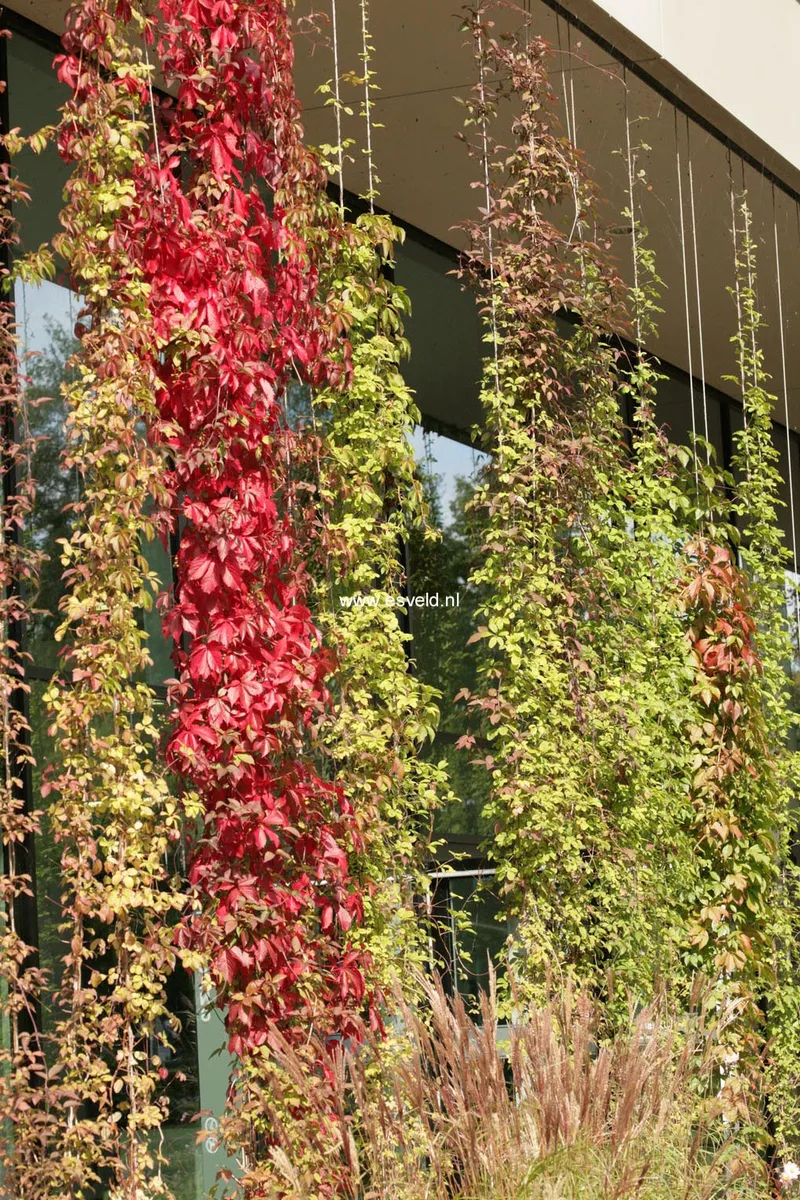
| Care difficulty | 2 / 5 |
|---|---|
| Watering schedule | Moderate regular watering, allowing brief slight drying between soakings |
| Sunlight requirements | Full sun · Partial shade |
| Ideal temperature | Information to be completed |
| Soil type | Chalk · Clay · Loam · Sand |
| Soil pH | Acid · Alkaline · Neutral |
| Soil moisture | Moist but well drained |
| Fertilizing | Balanced perennial feed every four weeks from spring through summer |
| Toxicity | Harmful if eaten, skin irritant. Wear gloves and other protective equipment when handling] |
How to Water Parthenocissus quinquefolia var. engelmannii?
Moderate regular watering, allowing brief slight drying between soakings
Learn more →What Are the Sunlight Requirements for Parthenocissus quinquefolia var. engelmannii?
Full sun · Partial shade
Learn more →What Soil Is Best for Parthenocissus quinquefolia var. engelmannii?
- Soil type
- Chalk · Clay · Loam · Sand
- Soil pH
- Acid · Alkaline · Neutral
What Are the Moisture Requirements for Parthenocissus quinquefolia var. engelmannii?
Moist but well drained
Learn more →How to Fertilize Parthenocissus quinquefolia var. engelmannii?

Balanced perennial feed every four weeks from spring through summer
Learn more →How to Prune Parthenocissus quinquefolia var. engelmannii?

Routine pruning is unnecessary; shorten overlong shoots to fit the available space. For last-year flowering growth, prune after flowering; for current-year flowering growth, prune in late winter or spring. This guidance is for established plants.
Learn more →How to Propagate Parthenocissus quinquefolia var. engelmannii?

See cultivation notes
Learn more →How to Plant Parthenocissus quinquefolia var. engelmannii?
This plant is listed on Schedule 9 of the UK Wildlife & Countryside Act as an invasive non-native species. Although not banned from sale, it is an offence to plant or cause these to grow in the wild IN ENGLAND AND WALES. Gardeners possessing them should undertake measures to control them. See RHS advice on invasive non-native species for further information
Learn more →Common Pests & Diseases

Diseases
May be susceptible to honey fungus
Pests
May be susceptible to glasshouse red spider mite and vine weevil
Explore the plant health library →The Toxicity of Parthenocissus quinquefolia var. engelmannii
Harmful if eaten, skin irritant. Wear gloves and other protective equipment when handling]